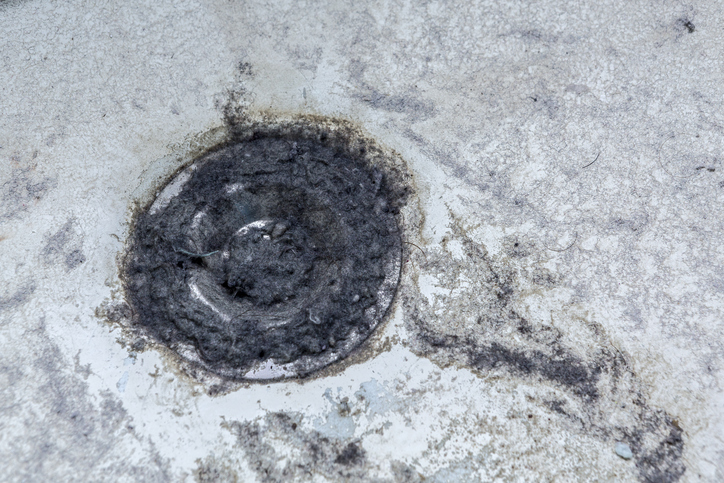
Black slime in a drain looks like a cleaning problem and behaves like a plumbing one. It comes back a week after you scrub it, it smells worse in summer, and the drain it lives in usually looks clear from above. In some homes the slime is not at the plughole. It is growing on the inside wall of the pipe, sometimes metres down the line, where nothing you pour down the sink can reach it. If the problem keeps returning, speak with a plumber in Melton about having your drains checked.
What Black Slime Actually Is
It helps to stop thinking of the black coating as dirt or grease. Dirt washes through. This attaches, grows and defends itself, which is why the usual household remedies behave so unpredictably against it.
A living biofilm rather than a stain
A biofilm forms when bacteria settle on a wet surface and secrete a sticky matrix of extracellular polymeric substances, or EPS. That matrix is the slime. It anchors the colony against flowing water and traps whatever passes by: hair, skin cells, soap residue, toothpaste, food fats and lint. The bacteria then feed on what they have caught, and the film thickens.
The EPS layer is also why chemical drain cleaner disappoints. A caustic product strips the outer surface and kills what it touches, but it does not reach the base layer where the colony is anchored. Within days the survivors recolonise from the pipe wall. A biofilm is a community rather than a single organism: bacteria, yeasts, moulds and protozoa living together at different depths depending on how much oxygen reaches them.
Why the slime is black
Colour is a useful clue. Once a biofilm is thick enough, oxygen stops reaching the base and anaerobic bacteria take over. Sulphate-reducing bacteria matter most here, because they produce hydrogen sulphide as a waste product. That gas reacts with metals in the water and in older pipework to form dark metal sulphides, which stain the film. Dark moulds and fungi add to the colour, and in ageing galvanised or cast iron lines some of the black is corrosion product held in the slime.
So black does not automatically mean mould, and it does not mean the pipe is collapsing. It does tell you the film is mature enough to have its own oxygen-free layer, which usually means months of growth rather than weeks.
Where in the drain it grows
Biofilm needs moisture, organic material and low flow velocity. Where those three line up, a colony forms.
- The tailpiece under the waste, where flow is thin and air is plentiful
- The top of the trap, and the horizontal run between the trap and the stack
- The overflow channel inside a basin, which almost never gets flushed
- The shower waste and the trap beneath it, where hair and soap collect first
- The kitchen line downstream of the trap, where fats congeal as water cools
- Any section with a slight backfall or belly, where water stands between uses
The slime at the grate is the accessible part, and it is rarely the part producing the smell. Odour travels up from further along the line.
Why Black Slime Keeps Coming Back
A biofilm returns because the conditions that created it have not changed. Removing the film without changing those conditions just resets the clock.
Water that moves too slowly
Drains are designed to be self-cleansing. AS/NZS 3500.2 sets minimum grades for sanitary drainage, and they are steeper than most homeowners expect: roughly 1 in 60 for a 100 mm line and 1 in 100 for a 150 mm line. When a drain is laid flatter, or when ground movement introduces a dip, the pipe stops scouring itself. Water trickles rather than surges, solids settle, and the film gets a permanent food supply.
This is the most common reason a drain smells while still draining freely. The pipe is not blocked. It is just not moving water fast enough to stay clean.
The organic load you cannot see
Hair is the most important binder, because it forms a mesh that catches everything else. Around it sits soap scum, body oils, dead skin, shampoo residue, laundry lint, cooking fats and small food particles.
- Hair acts as the structural frame for the whole film, particularly in showers and basins
- Soap and body wash leave a greasy residue that binds to the pipe wall
- Cooking fats cool and congeal on the way down, coating the pipe rather than passing through
- Products marketed as flushable often do not break down fast enough to clear a residential line
What It Does If You Leave It
Appearance is the least of it. Left alone, a mature biofilm causes a predictable set of problems, and some affect the pipe rather than just the smell.
- It narrows the bore, so the drain gets progressively slower until it blocks
- It produces hydrogen sulphide, the rotten egg smell, and in a poorly ventilated space that gas is a genuine health concern at high concentrations
- Bacteria in the pipe headspace convert hydrogen sulphide into sulphuric acid, which attacks the crown of concrete and cast iron pipes from the inside
- It provides breeding material for drain flies, which lay eggs in the film and return whenever it is disturbed but not removed
- It degrades seals and jointing compounds over time, turning a cleaning problem into a repair
- It hides defects, so a cracked or displaced pipe looks like a maintenance issue until it fails
Signs the Problem Goes Beyond Surface Cleaning
Some slime is ordinary maintenance. These signs below mean the problem is in the pipework, not your cleaning routine.
- The smell returns within days of cleaning rather than weeks
- More than one fixture on the same line drains slowly at once
- You hear gurgling in one drain when another fixture empties, which points to a venting or trap seal problem
- Water pools in the shower base or laundry tub before draining away slowly
- The same spot blocks repeatedly, even after being cleared
- Drain flies are present all year rather than just in warm weather
- There is a sewage smell outside near the boundary trap or inspection opening
How to Clear It Properly
There is a difference between knocking the slime back and removing it. One buys you a fortnight. The other solves the problem.
What works at home
Home treatment only reaches the fitting, the accessible trap and the first section of pipe. Within those limits, mechanical beats chemical.
- Pull hair out with a drain tool or hooked wire rather than trying to dissolve it
- Scrub the waste fitting and the overflow slot with a small brush, since water never reaches either
- Use an enzyme based maintainer, which digests organic matter instead of just killing surface bacteria
- Follow with a generous flush of hot, not boiling, water to move loosened material along
- Fit strainers to every sink and shower so hair and food stop entering the line
What does not work, and why
- Bleach kills the surface layer only, leaves the base of the film intact, and the colony regrows within days
- Caustic soda clears grease but does not remove an established EPS matrix
- Bicarbonate of soda and vinegar fizzes impressively and does very little to a thick film
- Repeated boiling water can stress solvent welded PVC joints, and still will not reach the base of the biofilm
- Snaking punches a hole through the middle of the deposit and leaves the walls coated, which is why the smell returns so fast
What a plumber can do that you cannot
Professional cleaning is not a bigger version of the same job. The difference is access to the full bore and to information about condition.
- A CCTV inspection shows exactly where the film, the restriction and any defect sits
- High pressure jetting shears the biofilm off the full circumference of the pipe rather than clearing a channel through it
- Root cutting deals with intrusion at the joint, which no chemical product will resolve
- A camera survey identifies a belly, displaced joint or cracked section that caused the slow flow in the first place
- Where the pipe is damaged but not collapsed, relining restores a smooth bore without excavation
How to Stop It from Coming Back
Once the line is genuinely clean, keeping it that way is a short list of habits rather than a maintenance contract.
- Deal with a slow drain while it is still slow, because a slow drain is a biofilm in progress
- Run water through spare bathrooms and unused taps weekly to keep traps sealed and lines flushed
- Keep strainers in every sink, shower and laundry tub and empty them regularly
- Never pour cooking fats down the sink, even with hot water, because they cool further down the line
- Use an enzyme maintainer monthly in lines that are long, flat or lightly used
- Have high use lines jetted periodically rather than waiting for a blockage
- Keep trees and large shrubs off the sewer alignment, or install a root barrier before planting
Frequently Asked Questions
Is black slime in a drain dangerous?
For most healthy people it is an odour and hygiene nuisance rather than a health hazard, but it is not entirely harmless. The biofilm can harbour opportunistic bacteria, and mould spores within it can irritate people with asthma or a compromised immune system. The hydrogen sulphide it produces is the bigger concern in an enclosed space, because at high concentrations it is toxic.
Does bleach kill black slime in a drain?
It kills the outer layer and temporarily reduces the smell, which is why it feels like it works. It does not penetrate the matrix protecting the colony, so the bacteria at the base survive and regrow within days. Repeated heavy bleach use also degrades rubber seals and jointing compounds.
Why does it come back so quickly after cleaning?
Because the conditions that produced it are still in place. If the drain runs slowly, holds water in a dip, or carries a heavy hair and soap load with little flush volume, the biofilm re-establishes as soon as a few bacteria remain. Cleaning the fitting also leaves the main colony untouched further down the line.
Can black slime damage my pipes?
The slime itself does not eat pipe material, but the conditions around it cause damage over time. Hydrogen sulphide in the headspace is converted by bacteria into sulphuric acid, which attacks the crown of concrete and cast iron. The film also holds moisture against joints and hides cracks that then worsen unnoticed.
Conclusion
Black slime is the visible end of a chain that starts with slow water and organic load and finishes with a blocked drain in Melton. Treating the slime is the shortest version of the fix. Finding out why the line is running slowly, and dealing with that, is the version that stops you repeating the job next year.
If your drain keeps going slimy, smells of rotten eggs, or has blocked more than once in the same place, New Image Plumbing & Gas can inspect the line with a camera and clear it properly rather than punching a hole through the blockage. Call 0489 246 667 or submit our online form, and we will tell you what is actually happening inside the pipe before you spend another cent on drain cleaner.