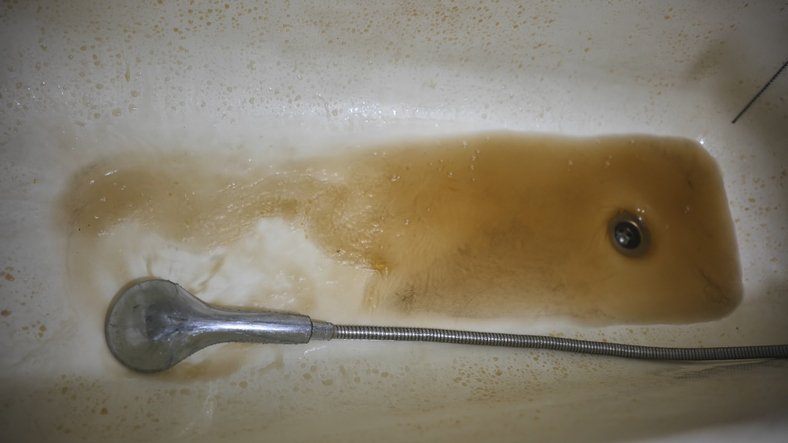
There are few things more unsettling in a home than standing in the bathroom and watching wastewater come up through the shower waste instead of going down it. It smells wrong, it looks wrong, and the instinct is to assume something catastrophic has happened under the slab.
The reality is usually more mundane and more fixable than that. Sewage appearing in a shower or bath is a symptom of a blocked drains in Bacchus Marsh, and it has chosen that fixture for a simple physical reason: it is the lowest point the water can escape from. Understanding why it happens, and what to do in the first ten minutes, makes a genuinely unpleasant situation considerably easier to manage.
Why Does Sewage Come Up in the Shower Instead of Somewhere Else?
Water finds the lowest available exit. When a sewer line downstream of your bathroom becomes restricted, everything flowing into it from the house backs up and rises until it reaches the lowest fixture connected to that line. In most bathrooms that is the shower base or the bath, because both sit almost at floor level.
- The shower is often the lowest fixture. A toilet pan has a rim well above floor level, so waste has to rise further before it spills. A shower base is only a few centimetres high, so it overflows first.
- The gully trap sits between you and the line. Floor wastes and shower drains discharge through a gully trap holding a water seal of roughly 75mm. When the line downstream surcharges, that gully is where it shows.
- It indicates a shared line, not a local problem. A single blocked shower waste affects one fixture. Sewage rising through it means the restriction is in the main run that several fixtures share.
- It can be the private drain or the main sewer. Which one it is determines who is responsible and how quickly it can be resolved.
So the shower is not the problem. It is the messenger. Clearing the shower waste itself will achieve nothing if the blockage is ten metres downstream in the yard.
What Is Actually Blocking the Line?
In residential plumbing, the same handful of causes accounts for the overwhelming majority of sewage backups. Which one applies usually comes down to the age of the property and what has been going down the drains.
Tree roots finding a joint
Roots are the most common cause of a sewer that backs up repeatedly rather than once. Roots do not usually crack a sound pipe. They find an existing weakness, often a joint in older earthenware or a hairline crack, and enter through it. Once inside, they form a dense mat that catches everything else passing through. A tree twenty metres away can still be the culprit, because roots travel.
Fat, oil and grease
Cooking fats are liquid when hot and solid when cool. Poured down the sink, they coat the inside of the pipe and gradually narrow it, and once the coating is thick enough it traps food particles and soap scum. Over months, a pipe that was 100mm wide becomes a 30mm channel. Grease rarely blocks a line on its own, but it is the reason a modest accumulation of solids suddenly becomes a complete blockage.
Wipes, hygiene products and things that never break down
Wet wipes are among the most damaging things flushed into modern sewers. Even the ones labelled flushable do not disperse the way toilet paper does, and they combine with grease and hair to form solid masses that cannot be jetted apart easily. Sanitary products, cotton buds, dental floss and nappies behave the same way. These blockages tend to occur in the section closest to the house, which is why the shower is often the first fixture to show it.
A collapsed, cracked or root-damaged pipe
Older clay and earthenware drains crack, shift and eventually collapse. Ground movement in reactive clay soils, heavy vehicle loads over a shallow line, or decades of root pressure all take a toll. Once a pipe is broken or misaligned, solids catch on the lip and the line blocks repeatedly. This is the scenario that needs repair rather than repeated clearing.
Displaced joints, scale and build-up
Joints that have separated by a few millimetres create a step that catches waste. In older properties, mineral scale and decades of sediment reduce the internal diameter of the pipe. Neither shows up as a dramatic failure, but both make the line progressively less able to handle a normal load, so the first sign is often a backup during heavy water use.
Where Is the Blockage, Yours or the Authority’s?
This matters more than most homeowners realise, because it determines who pays and who you call. The private drain runs from the house to the connection point, and the water authority is responsible for the main sewer beyond it. In many older properties the dividing line is marked by a boundary trap or inspection opening, usually near the front of the block.
- If only your property is affected, the blockage is most likely in your private drain, and it is your responsibility to clear and repair.
- If neighbours are affected at the same time, the problem is likely in the main sewer, and the water authority should be contacted.
- If sewage is coming up in multiple fixtures at once, the restriction is downstream of all of them, which points to the main run rather than a single branch.
- If it happens only during heavy rain, stormwater may be entering the sewer, which is a different problem again and often a shared one.
A camera inspection answers this question definitively rather than by elimination. Knowing whether the fault sits under your garden or under the street saves a lot of guesswork.
What Makes Some Properties More Prone to It?
Two houses on the same street can have completely different sewer histories, because the risk factors are about the property rather than the suburb.
- Age and pipe material. Earthenware with mortar joints, common in older housing stock, is far more vulnerable to root intrusion and displacement than modern PVC.
- Mature trees near the line. Large established trees, and particularly species with aggressive root systems, are a persistent risk wherever the drain runs.
- Additions and renovations. A granny flat, an extra bathroom or a relocated kitchen adds fixtures and flow to a line that may never have been sized for it.
- Improper stormwater connections. A downpipe or surface drain connected into the sewer sends roof water into a system designed only for waste, and it surcharges in heavy rain.
- A long, flat run with few inspection openings. Low gradient means slower flow and more deposition, and limited access points make clearing harder and costlier.
If a property has backed up more than once in a couple of years, that pattern is the most useful diagnostic there is. Repeat blockages almost always indicate a structural fault rather than bad luck.
What Should You Do the Moment It Happens?
The first response matters, both for limiting the mess and for protecting your health. Sewage is not just unpleasant water. It carries bacteria, viruses and parasites, and it should be treated as contaminated from the moment it appears.
- Stop using water immediately. No showers, no flushing, no washing machine, no dishwasher. Every litre added makes the overflow worse and pushes contamination further into the house.
- Turn off the water supply if it keeps rising. Closing the main isolation valve stops new water entering the system and is often the difference between a contained bathroom and a flooded hallway.
- Do not pour drain chemicals in. Caustic products do nothing against roots or a collapsed pipe, and they create a hazardous pool of corrosive liquid that the plumber then has to work around.
- Keep people and pets out. Close the bathroom door, and keep children and animals away from the affected area entirely.
- Protect yourself if you have to clean up. Gloves, boots and a mask, and wash hands thoroughly afterwards. Anything porous that has soaked up sewage, such as towels or a bath mat, should be discarded rather than laundered.
- Call a plumber in Bacchus Marsh and describe what you see. Whether it is clear water, grey water or solids, and whether neighbours are affected, changes how the job is approached.
One practical point: do not keep flushing to test whether it has cleared. Each flush adds volume and can push waste into parts of the bathroom that were previously dry.
How Is a Backup Cleared and Repaired?
Proper diagnosis comes before clearing, because the same symptom has several possible causes and the fix differs. A plumber will typically locate and open the nearest inspection opening first, then work from there.
Camera inspection
A drain camera pushed through the line shows exactly what is happening: roots, a break, a displaced joint, a belly in the pipe where it has settled, or simply a grease-bound section. It also shows where the fault sits relative to the boundary, which settles the question of responsibility. This is the step that turns guesswork into a plan.
High pressure water jetting
For grease, sediment and soft root growth, a high pressure jetter with a rotating nozzle scours the pipe wall back to full diameter. It is far more effective than an electric eel on grease, because an auger punches a hole through the blockage while a jetter cleans the surface. Jetting is also used to prepare a line for relining.
Root cutting
Where roots have entered at a joint, a root cutting tool clears them and restores flow quickly. It is a genuine fix for the immediate problem, but not a permanent one, because the roots remain outside the pipe and will return. Root cutting is best understood as buying time while a longer term repair is planned.
Pipe relining
A structural liner is pulled or inverted into the existing pipe and cured in place, creating a new smooth internal wall without excavation. It seals cracks and joints, which removes the entry points roots were using. Relining suits damaged but still structurally continuous pipe, and it avoids digging up established gardens, driveways or paving.
Excavation and replacement
Where a section has collapsed, is badly misaligned, or has a belly that holds water, replacement is the only reliable answer. Modern PVC is jointed and root resistant, so a replaced section usually ends the cycle of repeat blockages rather than postponing it.
Whatever method is used, the job is not finished until the line has been tested and, ideally, re-cameraed to confirm it is clear and sound. A blockage cleared without a look at why it happened tends to come back.
Frequently Asked Questions
Is it dangerous to use the bathroom after sewage has backed up?
Yes, until it has been cleared and cleaned. Sewage carries bacteria, viruses and parasites, and the affected area should be treated as contaminated. Keep everyone out, wear gloves and boots for any cleanup, and disinfect hard surfaces thoroughly before the bathroom is used again. Porous items that absorbed waste should be thrown away.
Why does it happen when I have not put anything unusual down the drain?
Because the cause is often outside your control. Tree roots entering a joint, a pipe that has cracked or settled, or a blockage in the shared main sewer will all produce the same result regardless of how careful you are. Nothing unusual has to go down the drain for a sewer to back up through a shower.
Will drain chemicals clear it?
Almost never, and they can make things worse. Caustic drain products work on minor grease and hair accumulations in a small waste, not on roots or a broken pipe. In a line with standing water they create a corrosive pool that is hazardous to handle, and they can damage older pipework.
Who pays if the blockage is in the main sewer?
Responsibility generally sits with the water authority for the main sewer beyond the connection point, and with the property owner for the private drain between the house and that point. A camera inspection establishes which side the fault is on, which is why it is worth doing before authorising any repair work.
How do I stop it happening again?
Deal with the underlying cause rather than clearing the symptom. Keep fats, wipes and hygiene products out of the system, have the line camera inspected if it has blocked more than once, and repair or reline damaged sections. Repeat blockages at the same point are a structural warning, not bad luck.
Conclusion
Sewage in a shower is alarming, but it is rarely mysterious. It means something downstream is restricting the line, and the shower is simply the lowest place the water can escape. Stop adding water, keep the area clear, and get the line looked at properly rather than pouring chemicals into it and hoping.
If it has happened once, clear it and find out why. If it has happened twice, the answer is almost always a camera inspection and a repair. New Image Plumbing & Gas clears blocked sewers across Melbourne’s west, using camera diagnosis and high pressure jetting to find the actual cause rather than guessing at it, and we can reline or replace damaged sections where clearing alone will not hold. Call 0489 246 667, and if sewage is currently rising, tell us that when you ring so we can prioritise it.