A hidden water leak can be silently damaging your home for weeks or even months before you notice the signs. Rising water bills, damp patches on walls, or a faint musty smell are often the first clues — but by then, the damage is already underway. Traditional detection often meant cutting into walls, lifting floors, or digging up your garden to find the source. Today, thermal imaging technology has changed all of that.
We use thermal imaging cameras as part of our water leak detection in Melton to locate hidden leaks quickly, accurately, and without unnecessary damage to your property. In this article, we explain exactly how thermal imaging works, what it can and cannot detect, and why it is one of the most effective tools available for leak detection.
What Is Thermal Imaging?
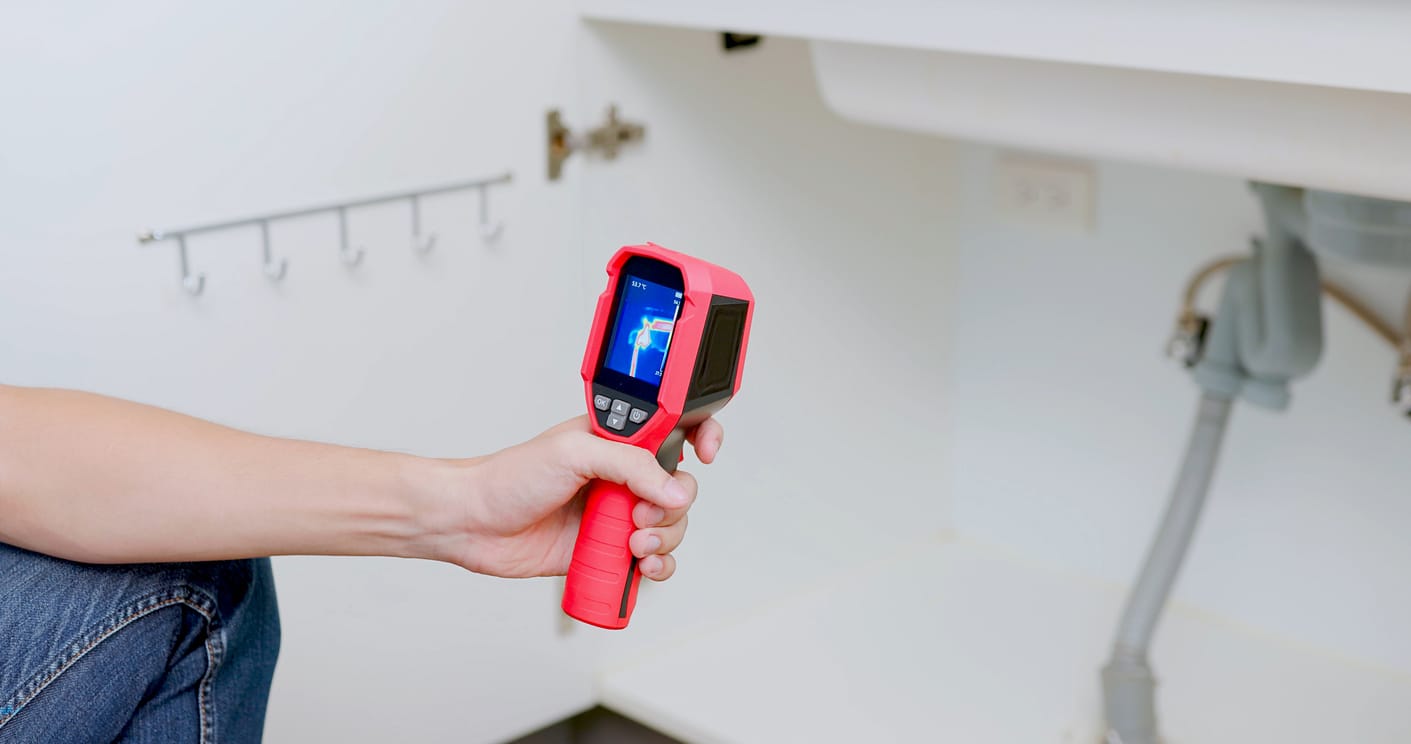
Thermal imaging — also called infrared thermography — is a technology that detects and visualises heat differences across surfaces. Every object emits infrared radiation based on its temperature, and a thermal imaging camera captures this invisible radiation and converts it into a colour-coded image called a thermogram. Warmer areas typically appear in reds and oranges, while cooler areas appear in blues and purples.
In the context of plumbing, water and moisture affect the surface temperature of walls, ceilings, floors, and slabs. A leak creates a localised temperature difference that shows up clearly on a thermal image — even when there is no visible staining, no damp patch, and no sign of damage to the naked eye.
How Does Thermal Imaging Detect Water Leaks?
The process works by identifying the thermal signature that water leaves behind. When water escapes from a pipe, it absorbs heat from the surrounding material (such as concrete, plasterboard, or timber framing), creating a cooler zone around the leak. This temperature differential is picked up by the thermal camera and shows as a distinctly different colour compared to the surrounding dry area.
Step 1: Initial Inspection and Preparation
Before the camera is used, the plumber in Melton assesses the property and identifies suspect areas — areas where moisture damage, high water bills, or visible staining suggest a possible leak. For the thermal image to be accurate, there needs to be a sufficient temperature difference between the wet and dry areas, which is why conditions like time of day and ambient temperature matter.
Step 2: Scanning with the Thermal Camera
The plumber moves the thermal camera across the surfaces in question — walls, ceilings, floors, and around the slab perimeter. The camera produces a real-time image that immediately highlights any temperature anomalies. Experienced operators know how to interpret these patterns and distinguish between a water leak and other heat sources such as electrical components or insulation gaps.
Step 3: Pinpointing the Source
Once a thermal anomaly is identified, the plumber can pinpoint the location of the leak to within a very tight area. Rather than cutting open a large section of wall or digging up a wide area of the garden, the repair work can be targeted precisely — saving time, money, and disruption to your property.
Step 4: Confirming with Acoustic Detection
In many cases, thermal imaging is used alongside acoustic leak detection equipment. While thermal imaging identifies where moisture is accumulating, acoustic sensors listen for the sound of water escaping under pressure. Together, these two technologies provide a highly accurate and reliable diagnosis — particularly for pressurised water mains and supply lines running under concrete slabs.
What Types of Leaks Can Thermal Imaging Find?
Thermal imaging is particularly effective for detecting leaks that are hidden within the structure of a building. Here are the most common applications:
- Under-slab leaks: Water supply pipes running beneath a concrete slab are among the hardest leaks to find using traditional methods. Thermal imaging can detect the heat loss pattern through the slab surface, often identifying the leak zone without any excavation.
- In-wall pipe leaks: Copper or PEX pipes running inside wall cavities can develop pinhole leaks. The thermal camera reveals the moisture migration pattern through the plasterboard, allowing targeted repair without full wall demolition.
- Roof and ceiling leaks: Water penetrating from above creates a distinct cooling pattern on ceiling surfaces. Thermal imaging can help trace the path of water ingress back to its origin point on the roof or in the ceiling cavity.
What Are the Limitations of Thermal Imaging?
Thermal imaging is a powerful diagnostic tool, but it does have limitations that are important to understand.
- It detects moisture, not pipes directly: The camera reads temperature differences caused by moisture or water flow. It cannot see through solid concrete to map pipe locations — it reads the surface effect of the leak, not the leak itself.
- Conditions matter: For effective thermal imaging, there needs to be a reasonable temperature differential between the wet and dry areas. In very hot or very cold conditions where the whole surface is close to the same temperature, the contrast may be reduced. Evening or early morning inspections often produce better results.
- Slow leaks can be harder to detect: A very slow drip that has not yet saturated the surrounding material may not create a significant enough thermal signature. In these cases, additional diagnostic methods are used alongside thermal imaging.
Interpreting thermal images accurately requires training and experience. A correctly trained plumber will distinguish between a leak signature and other anomalies such as building insulation patterns, condensation, or residual heat from appliances.
Signs You May Have a Hidden Water Leak
Not all leaks announce themselves with dripping water. In homes, particularly those built on concrete slabs, leaks can develop slowly and invisibly. Watch for these warning signs:
- Unexplained increase in water bills: If your consumption has gone up but your usage habits have not changed, a hidden leak is a likely cause. Even a small pinhole leak can waste thousands of litres per month.
- Hot or warm spots on a concrete floor: A warm patch on your floor — particularly in a tiled or concrete area — can indicate a hot water pipe leaking beneath the slab.
- Damp or discoloured patches on walls or ceilings: Moisture staining, paint bubbling, or wallpaper peeling away from the surface are classic signs of water migrating through the wall structure.
- Musty or mouldy odour: Persistent damp smells, even in areas that appear dry to the touch, can indicate water accumulation within wall cavities or subfloor spaces.
- Sound of running water when nothing is on: If you can hear water movement in walls or floors when all taps and appliances are switched off, this warrants immediate investigation.
- Cracks in the slab or floor tiles: In severe cases, water undermining a concrete slab can cause movement, leading to cracking in floor tiles or the slab surface itself.
Frequently Asked Questions
Does thermal imaging always find the leak?
Thermal imaging is highly effective but is best used as part of a combined detection approach. In cases where the leak is very slow or conditions are not ideal for thermal contrast, acoustic detection or pressure testing may be used alongside the camera to confirm the diagnosis. An experienced plumber will always use the most appropriate combination of tools for your specific situation.
How long does a thermal imaging inspection take?
For a standard residential property in Melton, a thermal imaging scan typically takes between 30 minutes and 1.5 hours depending on the size of the property and the number of areas being investigated. If acoustic detection is also required, allow a little more time. Your plumber will give you a time estimate before starting.
Can thermal imaging detect leaks in hot water systems?
Yes, and in fact hot water pipe leaks are among the clearest thermal signatures to detect. Because the leaking water is warm, it creates a strong temperature contrast against the cooler surrounding materials. Leaks in hot water supply lines running under slabs or within walls are routinely detected using thermal imaging with a high degree of accuracy.
Conclusion
A hidden water leak does not get better on its own — it gets worse. The longer it goes undetected, the more damage it causes to your home’s structure, and the more costly the repairs become. Thermal imaging gives you an accurate, non-invasive answer fast, so you can get the problem fixed before it escalates.
New Image Plumbing & Gas serves Melton and all of western Melbourne, 24 hours a day, 7 days a week. Our team is fully licensed and equipped with professional-grade thermal imaging and acoustic detection technology. Whether you have noticed the warning signs already or simply want peace of mind, we are ready to help.
Call us today at 0489 246 667 for a no-obligation quote, or use our online form to arrange a leak detection inspection at a time that suits you. Fast response times, honest advice, and results you can see.