How Do I Know If My Toilet Is Leaking?
Some toilet leaks are obvious — water pooling on the floor, a cistern that never stops hissing, or a visible crack in the pan. Others are silent. The most insidious toilet leaks are internal: water slowly seeping from the cistern into the pan without making any noise. You won’t see it, but your water bill will.
The simplest test for a silent internal leak is the food dye test: drop a few drops of food colouring into the cistern (not the pan), wait 10–15 minutes without flushing, then check the pan water. If the colouring has appeared in the pan, your flush valve is leaking. A toilet with a faulty flush valve can waste up to 200,000 litres of water per year — that’s thousands of dollars in water bills and a significant hit to the environment.
Where Are the Most Common Toilet Leak Points?
There are four main places a domestic toilet can leak:
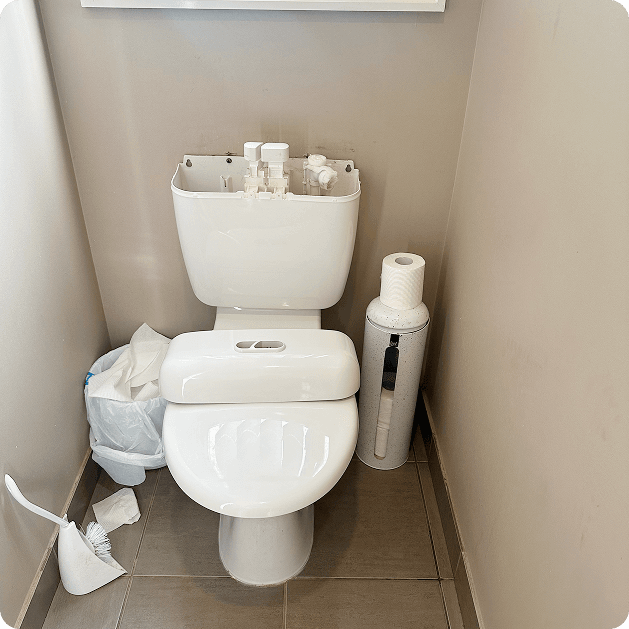
- The inlet valve (ball cock or fill valve): The valve that refills the cistern after flushing. When it fails, the cistern overfills, water enters the overflow tube, and the toilet runs constantly — usually with a hissing or trickling sound.
- The flush valve (flapper or syphon): The seal between the cistern and the pan. When the rubber degrades or warps, water leaks slowly from the cistern into the pan without triggering a flush. Silent but very wasteful.
- The pan connector and rubber collar: The flexible connector joining the toilet pan to the soil pipe inside the wall. When this degrades, water and sewage can leak at the base of the toilet or inside the wall cavity. This type of leak can cause serious damage before it becomes visible.
- The base seal: The seal between the bottom of the toilet and the floor. Water visible at the base of the pan after flushing almost always indicates a failed base seal. This is not a DIY repair — incorrectly sealed toilets can leak sewage gases into the living space.
Why Is My Toilet Running Constantly?
A toilet that runs continuously after flushing — sometimes described as “ghost flushing” or a “running toilet” — is almost always caused by one of two things:
- A faulty inlet valve that can’t shut off properly, allowing water to continuously trickle in and out through the overflow.
- A worn flush valve seal that allows water to seep from the cistern into the pan, which triggers the fill valve to top up the cistern repeatedly in short cycles.
Both issues are fixable and both waste significant water. A constantly running toilet can add $200–$400 to annual water bills depending on how severe the leak is.
Can I Fix a Leaking Toilet Myself?
In Victoria, you can legally replace a cistern washer or a tap washer without a plumbing licence — these are classified as minor maintenance. So if your inlet valve just needs a new washer, that’s within the scope of a capable DIYer.
However, the following toilet repairs require a licensed plumber:
- Replacing the inlet valve or fill valve assembly
- Replacing the entire flush valve (syphon or flapper mechanism)
- Replacing or reseating the pan connector
- Resealing the toilet base
- Any work involving the soil pipe or internal drainage
- Installing a new toilet
Attempting these jobs unlicensed risks making the leak worse, causing sewage contamination, and voiding your home insurance in the event of subsequent water damage.
What Does a Leaking Toilet Actually Cost If Left Unfixed?
The numbers are sobering:
| Leak Type | Estimated Water Loss | Estimated Annual Cost |
|---|---|---|
| Slow cistern drip to pan (silent leak) | Up to 60 litres/hour | $400–$800 |
| Running toilet (continuous) | Up to 200 litres/hour | $1,500–$3,000 |
| Dripping base seal | Varies — also causes structural damage | $500–$5,000+ (repairs) |
A toilet repair by a licensed plumber typically costs $150–$350 for most internal mechanism replacements — a fraction of what the leak will cost if left for a season.
What Are the Signs of a Cracked Toilet Pan?
Cracks in the ceramic pan are less common but not rare, particularly in older homes. Signs include:
- Water visible at the base after flushing even with a good base seal
- A hairline crack visible on the outside of the pan, particularly at the back near the pan connector
- Discolouration or staining around the pan base that persists despite cleaning
Cracked pans cannot be repaired — the toilet must be replaced. For toilet repairs and replacements in Melton and Melbourne’s west, we carry common pan and cistern combinations in the van and can usually complete a full replacement in a single visit.
Why Does Water Appear at the Base of My Toilet?
Water at the toilet base is one of the most important leak symptoms to act on quickly. The most common causes are:
- Failed base seal: The wax or rubber seal between the pan and the floor has degraded. This needs professional resealing immediately, as sewage gases can enter the room.
- Loose pan bolts: The toilet is rocking slightly, breaking the base seal. The toilet needs to be re-anchored and re-sealed.
- Condensation: In humid weather, cold cisterns can sweat. This is harmless but looks like a leak. Check by drying the area and monitoring over 24 hours.
- Cracked pan: See above.
Water at the base is never something to monitor and wait on. The risk of slow sewage contamination under the floor makes it urgent.
Toilet Repairs in Melton and Melbourne’s Western Suburbs
New Image Plumbing & Gas handles all toilet repairs across Melton, Bacchus Marsh, Caroline Springs, Hoppers Crossing, Werribee, and surrounding suburbs — same-day service available for urgent leaks. We also carry replacement cisterns, pans, and mechanism kits, so in most cases we can diagnose and fix in one visit.
See our toilet repairs and replacement service page for more detail, or read our guide on toilet cistern repairs in Melbourne. For a same-day booking, call 0468 125 098 or request a free quote online.
Frequently Asked Questions
How much water does a leaking toilet waste?
A silent cistern leak wastes 20–60 litres per hour. A continuously running toilet can waste up to 200 litres per hour — equivalent to thousands of dollars per year.
Is a leaking toilet an emergency?
Water visible at the base of the toilet, a toilet that won’t stop running, or any sign of sewage odour should be treated as urgent. Internal drips are less urgent but still need fixing promptly to avoid water bill damage.
Can I claim a toilet repair on water bills?
South East Water and other Melbourne water authorities have leak allowance programs. Once you have the repair invoice from a licensed plumber, you can apply for a partial credit on excess water charges caused by the leak. Ask your water retailer for details.
How long does a toilet repair take?
Most internal mechanism replacements (fill valve, flush valve) take 30–60 minutes. A full toilet replacement typically takes 1–2 hours.
What brand of toilet replacement do you recommend?
We work with all major brands including Caroma, Fowler, Liano, and Villeroy & Boch. For most residential jobs we recommend Caroma or Fowler for parts availability and long-term reliability.