A slow drain or a toilet that will not flush is a clear sign something is wrong. The harder question is where exactly the problem is. A blockage could be metres from the fixture, or it could be deep inside the sewer line at the boundary of your property. Knowing which is essential, not just for clearing the blockage, but for understanding what caused it and how to prevent it happening again.
Modern plumbing diagnostics have come a long way from the days of digging up gardens on the assumption that a blockage must be “somewhere around here.” Today, licensed plumbers in Bacchus Marsh can locate a blockage, assess its nature, and determine the best method to clear it without opening a single trench. This blog explains the tools and methods used and what happens during a professional drain investigation.
Why Finding the Exact Blockage Location Is Very Important
The location and nature of the obstruction determines everything about how it is treated:
- A blockage caused by accumulated grease near the trap is cleared with jetting or a drain snake from the nearest access point.
- A blockage caused by tree root intrusion at the mid-point of the line may require root-cutting equipment, followed by CCTV inspection to assess whether the pipe needs relining.
- A collapse or offset joint deep in the sewer line is a structural problem, not just a blockage — and it requires a different solution entirely.
- A blockage at or near the sewer main connection may involve Melbourne Water or the local water authority, depending on which side of the boundary the problem falls.
Without accurate diagnosis, the risk is clearing a symptom while leaving the cause untouched, which means the blockage returns within days or weeks.
The Primary Tool: CCTV Drain Camera Inspection
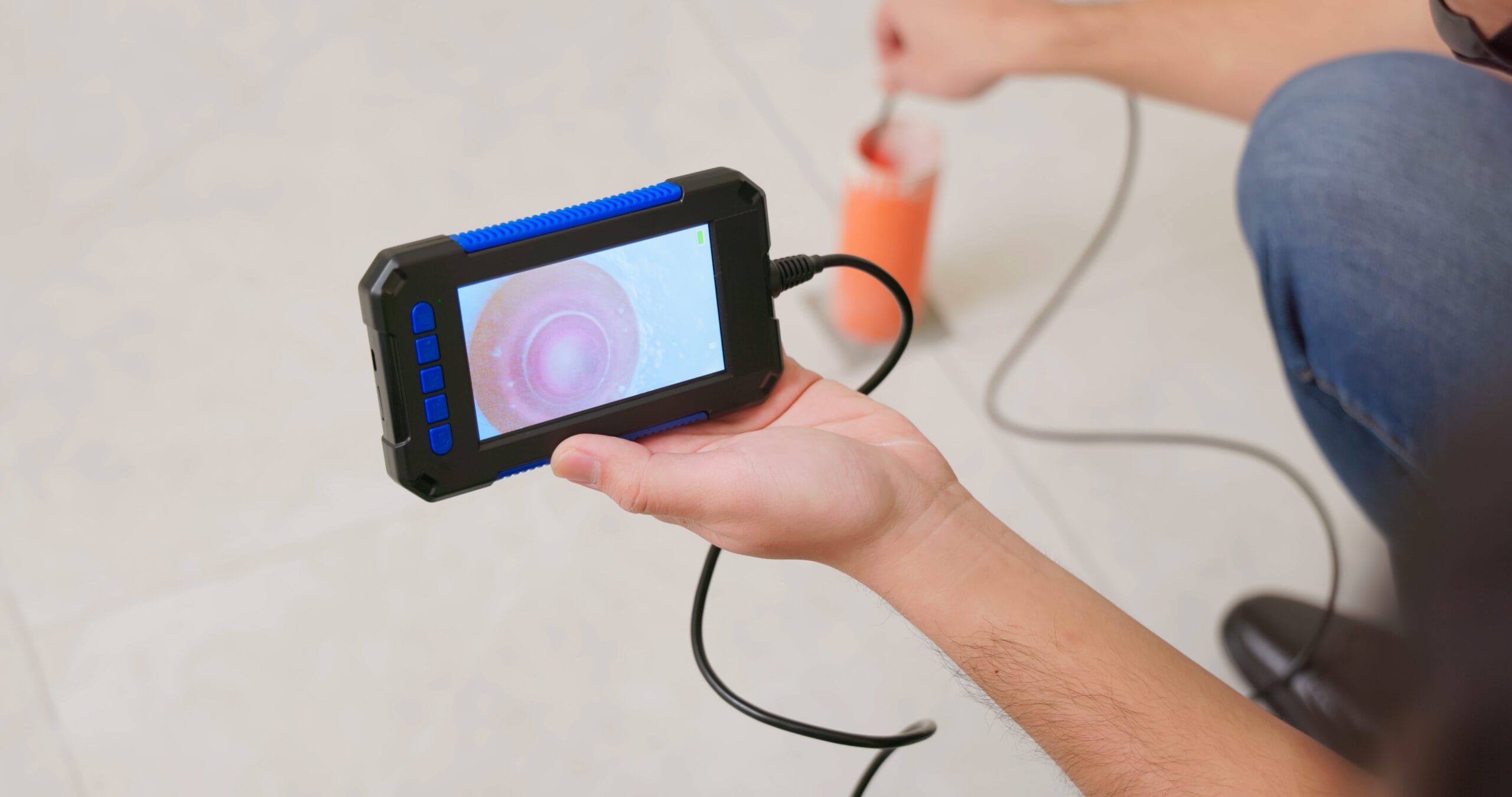
CCTV drain inspection is the gold standard for diagnosing blockages and drain line problems. A flexible, waterproof camera head is fed through the pipe from an access point — either the inspection opening at the boundary of the property, a cleanout cap inside the home, or in some cases directly through the toilet after it is removed.
What the Camera Can See
The camera transmits a live, high-resolution image to a screen at ground level. The plumber can see exactly what is inside the pipe in real time:
- The blockage itself: Whether it is a mass of wet wipes and grease, a solid tree root intrusion, a foreign object, or a section of collapsed pipe, the camera reveals it clearly.
- The condition of the pipe wall: Root fibres entering through cracked joints, scale build-up, corrosion in older pipes, or misaligned sections caused by ground movement are all visible.
- The pipe material: Knowing whether the pipe is clay, PVC, cast iron, or cement helps determine the appropriate clearing method and whether relining is a suitable repair option.
- Offset or cracked joints: Ground movement can cause pipe joints to separate or crack, creating ledges that trap debris and cause recurring blockages.
How the Distance Is Measured
The camera head is attached to a flexible push-rod that is calibrated in measurable lengths. As the camera is fed into the pipe, the operator reads off the distance on the rod or from a digital counter on the inspection unit. When the camera reaches the blockage or point of interest, the distance reading tells the plumber exactly how far from the access point the problem is located — often accurate to within 20 to 30 centimetres.
This distance measurement is combined with the known direction of the pipe run (which can be confirmed using a locating transmitter built into the camera head — more on that below) to mark the precise location of the blockage on the ground surface above. This is how a plumber can mark a spot on your garden or driveway and say “the blockage is right here” with confidence, rather than guessing.
High-Pressure Water Jetting: Clearing the Blockage Once Found
Once the location and nature of the blockage is confirmed, the most common method used by licensed plumbers to clear it is high-pressure water jetting, also known as hydro-jetting.
How Jetting Works
A flexible, high-pressure hose with a specialised nozzle is inserted into the drain line. The nozzle delivers water at pressures typically between 1,500 and 4,000 PSI, depending on the pipe material and the nature of the blockage. The forward-facing jets break up the obstruction while the rear-facing jets propel the nozzle through the pipe and drive the debris downstream toward the sewer main.
- For grease and scale build-up: Jetting cuts through and removes fat, grease, soap scale, and mineral deposits from the full circumference of the pipe wall — not just a channel through the middle. This is significantly more effective than a drain snake for build-up-related blockages.
- For wipes and debris accumulation: High-pressure water breaks apart accumulated masses of wet wipes, paper, and organic matter and carries them through to the main sewer.
- For tree roots: Root-cutting nozzles are used in combination with the water pressure to cut through root intrusions inside the pipe. After root cutting, the pipe is inspected again with the CCTV camera to confirm the obstruction is clear and to assess whether the pipe wall damage requires relining.
Drain Snaking: When It Is the Right Tool
An electric drain snake — also known as an electric eel — is a rotating steel cable with a cutting head that physically breaks through blockages. It remains a useful tool for specific situations:
- Isolated solid blockages: Foreign objects, or a single, localised mass of debris, can be punched through or retrieved with a drain snake where jetting might push the object further into the system.
- Smaller diameter pipes: In pipes under 65mm — typically under-sink drains or laundry waste lines — a snake can navigate the tighter geometry more effectively than a jetting hose.
- Where access is limited: In tight under-cabinet spaces where a full jetting setup is impractical, a drain snake may be the more accessible option.
Snaking does not clean the pipe wall — it only clears the blockage at the point of contact. For recurring blockages caused by build-up or root intrusion, jetting is the more thorough solution.
Pipe Relining: The Long-Term Fix for Recurring Blockages
Where camera inspection reveals that a pipe has cracked joints, root intrusion points, or sections of corrosion that will continue to cause blockages, pipe relining offers a long-term solution without the need for excavation.
A flexible liner saturated with epoxy resin is inserted into the existing pipe and inflated against the pipe wall. Once the resin cures, it forms a new, smooth pipe within the old one — sealing cracks, joints, and root intrusion points from the inside. The result is a structurally sound pipe with a smooth interior that drains more efficiently and resists future root intrusion.
For properties with long drain runs, established gardens, or driveways over the sewer line, relining is particularly valuable because it avoids the extensive excavation that a traditional dig and replace approach would require.
Frequently Asked Questions
How deep can a CCTV drain camera reach?
Professional CCTV drain cameras can typically inspect drain lines to depths of 60 to 100 metres from a single access point, depending on the diameter of the pipe and the number of bends in the line. For residential properties, this is more than sufficient to cover the entire drain run from the house to the sewer main connection in most cases.
Will high-pressure jetting damage my pipes?
High-pressure jetting is safe for most pipe materials in good condition, including PVC, clay, cement, and cast iron. The plumber selects the appropriate pressure setting for the pipe type. Where camera inspection has revealed significant existing cracks or structural weakness in the pipe, jetting pressure is moderated accordingly, and pipe relining is typically recommended as the appropriate next step rather than further jetting.
How long does a CCTV drain inspection take?
For a residential property, a CCTV inspection typically takes between 30 and 60 minutes. If jetting is performed before the camera inspection to clear a blockage, or if the post-clear camera run reveals additional areas of interest, allow a little more time. The plumber will give you a time estimate when they assess the job.
Conclusion
Finding a blockage deep inside a drain line is a methodical process using purpose-built tools that give plumbers a precise picture of what is happening inside the pipe.
If you have a recurring blocked drains in Bacchus Marsh, a slow drain that has not improved, or a toilet that backs up without an obvious cause, the right next step is a CCTV drain inspection, not another short-term clearing job that leaves the root cause untouched.
New Image Plumbing & Gas provides CCTV drain inspection, high-pressure jetting, and pipe relining services. Call us on 0489 246 667 or contact us through our online form to book a drain inspection. We use our cameras to show you exactly what the problem is, explain your options clearly, and give you a free quote, no guesswork, no surprises.