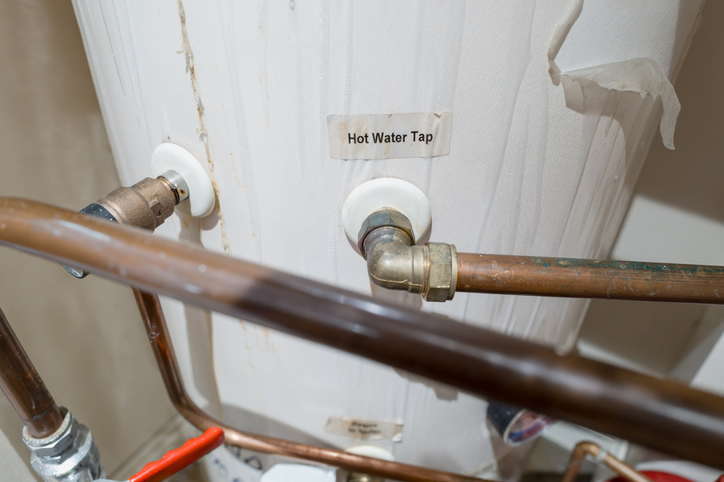
If your water pressure has been dropping gradually, your hot water system in Bacchus Marsh seems to be working harder than it should, or you are noticing a chalky white crust around taps and showerheads, calcium buildup is likely the cause. It is a problem that affects many homes, and one that tends to be overlooked until the consequences become difficult to ignore.
Calcium buildup develops slowly and silently. But left unaddressed, it can restrict water flow significantly, reduce the efficiency of water-using appliances, shorten the lifespan of plumbing fixtures, and in severe cases, cause pipes to fail. Understanding what causes it, how to spot it, and what can be done about it gives you a clear advantage in protecting your plumbing system for the long term.
What Is Calcium Buildup?
Calcium buildup — also referred to as limescale or scale — is the solid mineral deposit that forms inside pipes and on plumbing fixtures when water with a high mineral content is heated or allowed to sit. It appears as a hard, white or off-white crust and, over time, can build up to a thickness that meaningfully reduces the internal diameter of a pipe.
The Science Behind It
- Water absorbs minerals as it passes through rock and soil — primarily calcium carbonate and magnesium carbonate
- Water that carries a high concentration of these dissolved minerals is described as “hard water”
- When hard water is heated, or when it evaporates, the dissolved minerals precipitate out of solution and bond to surfaces as a solid deposit
- This is why limescale tends to be most pronounced inside hot water systems, near taps and showerheads, and inside kettles and dishwashers
- Over many years, the same process occurs inside cold water pipes as well, simply at a slower rate
Hard Water
- Bacchus Marsh’s water supply draws from catchments that pass through limestone and mineral-rich geology, resulting in moderately hard water in many parts of the area
- Water hardness is measured in milligrams per litre (mg/L) of calcium carbonate — levels above 120 mg/L are generally considered hard
- Hard water is not unsafe to drink, but its long-term effects on plumbing, hot water systems, and appliances are well documented
- Properties on tank or bore water can also experience calcium buildup depending on the mineral content of the local groundwater
How Calcium Buildups Cause Plumbing Problems
The impact of limescale on a plumbing system is cumulative. In the early stages, the effects are minor. As the buildup thickens year on year, the consequences become progressively more serious and more costly to address.
Reduced Water Pressure
- As scale accumulates on the inner walls of pipes, the effective internal diameter narrows
- Water must push through a smaller opening, reducing flow rate and pressure at the outlet
- This is most noticeable in showers, where a progressive decline in pressure is one of the earliest signs of significant scale buildup
- In severe cases, a pipe that was once 15mm in internal diameter can be reduced to 5mm or less by scale deposits alone
Hot Water System Inefficiency
- Storage hot water systems are particularly vulnerable because scale deposits form on the heating element and inner tank surfaces
- A layer of scale just 1.5mm thick on a heating element can increase energy consumption by up to 12 per cent — scale is a poor conductor of heat
- The system has to run for longer to reach the set temperature, shortening the element’s lifespan and increasing operating costs
- In gas storage systems, scale on the heat exchanger reduces heat transfer efficiency in the same way
- Continuous flow (instantaneous) hot water systems are also affected — scale builds up inside the heat exchanger and can trigger premature failure
Appliance and Fixture Damage
- Dishwashers and washing machines connected to hard water lines accumulate scale inside their heating elements and water inlets, reducing efficiency and lifespan
- Showerheads develop calcified nozzles that distort the spray pattern and reduce flow rate
- Tap aerators block with scale deposits, causing an uneven or sputtering flow
- Toilet inlet valves can seize or fail to close properly when scale builds up on the internal mechanism
- The cumulative cost of replacing appliances and fixtures prematurely due to scale damage significantly outweighs the cost of addressing hard water at the source
Corrosion and Pipe Damage
- While scale itself is not chemically aggressive, its presence can mask and accelerate corrosion in metal pipes
- In copper pipes, scale deposits can create localised concentration cells where corrosion is accelerated at the boundary between scale and exposed metal
- Heavily scaled pipes become more rigid and brittle over time, making them more susceptible to damage from water hammer or ground movement
- In older galvanised steel pipes, scale and rust combine to create a particularly effective restriction that can become very difficult to clear without pipe replacement
What Are the Signs of Calcium Buildup?
Recognising the signs of scale buildup gives you the opportunity to act before the problem progresses to the point where major plumbing work is required.
Visible Deposits
- White or yellowish crusty deposits around tap outlets, on showerheads, and at the base of the toilet bowl
- Chalky residue inside kettles and coffee machines after boiling
- White film or spots on glassware and cutlery after dishwasher cycles
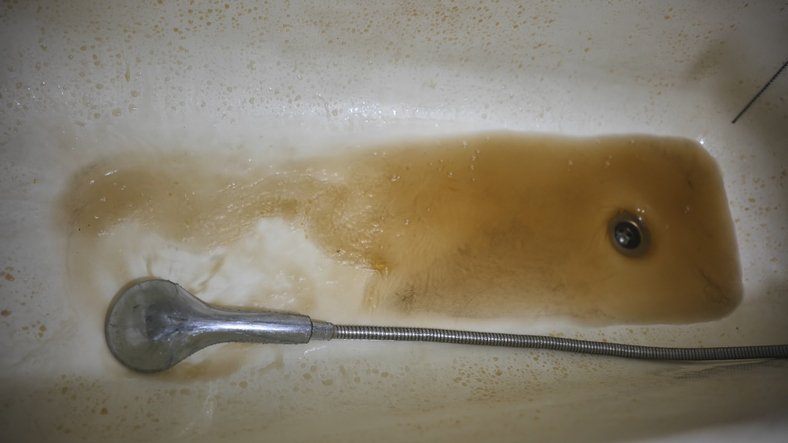
- Staining around the waterline inside the toilet bowl — often brown or white in colour
Performance Changes
- Gradual reduction in shower pressure over months or years
- Hot water taking longer to arrive at outlets — suggesting the system is working harder than it should
- Higher gas or electricity bills without a clear change in usage patterns
- Washing machine or dishwasher cycles taking longer than normal
- Taps that feel stiff or do not shut off completely — scale on the internal mechanism can prevent full closure
Unusual Sounds
- Popping, rumbling, or knocking sounds from a storage hot water system can indicate scale on the heating element — the sound is produced as water trapped beneath the scale layer boils and vaporises
- Kettles that make excessive noise during boiling are often heavily scaled internally
- Reduced flow through a scaled pipe can produce a whistling or hissing noise as water forces past the restriction
How to Treat and Prevent Calcium Buildup
There are several effective strategies for dealing with existing scale deposits and reducing the rate of future buildup. The right approach depends on the severity of the problem and whether you want to treat the symptom or address the root cause.
Descaling Fixtures and Appliances
- White vinegar is an effective natural descaler for showerheads, tap aerators, and kettle interiors — soaking the affected item in vinegar for several hours dissolves calcium carbonate deposits
- Commercial descaling agents are available for dishwashers and washing machines and should be used as part of regular maintenance
- Showerheads can often be unscrewed and soaked without any tools — an easy and cost-effective maintenance task
- Tap aerators should be removed and cleaned every six to twelve months in a hard water area
Professional Descaling of Pipes
- For pipes with significant internal scale buildup, a licensed plumber Bacchus Marsh can use high-pressure water jetting to break up and flush away deposits
- Chemical descaling solutions can also be introduced into the pipe system under controlled conditions to dissolve stubborn scale — this approach requires careful management to protect pipe materials
- A CCTV inspection is useful for assessing the degree of scale buildup before deciding on the appropriate treatment
- In cases where scale buildup has severely restricted a pipe or caused damage, section replacement may be the most practical solution
Water Softeners
- A water softener is installed on the main water supply line and uses an ion exchange process to replace calcium and magnesium ions with sodium ions
- Softened water does not produce limescale, so a correctly sized and maintained water softener effectively eliminates the problem at the source
- Softeners require periodic regeneration using salt — ongoing maintenance is minimal but needs to be consistent
- Softened water is not recommended for drinking by some health guidelines due to its elevated sodium content, so many installations include a bypass tap for the kitchen cold water supply
- Water softeners are particularly cost-effective in properties with a history of scale damage or where multiple hot water systems or appliances have been affected
Electronic and Magnetic Scale Inhibitors
- These devices attach to or around the incoming pipe and use electronic signals or magnetic fields to alter the way mineral crystals form
- The treatment changes the crystal structure of the calcium carbonate so that it remains in suspension rather than bonding to pipe surfaces
- They do not remove minerals from the water — the water remains hard — but the scale does not adhere to surfaces in the same way
- Performance varies and independent evidence is less conclusive than for ion exchange softeners, but many homeowners report noticeable improvements in scale accumulation rates
- These devices require no salt, no ongoing consumables, and are easy to install — making them a low-maintenance option worth considering
Hot Water System Temperature Settings
- Scale formation accelerates significantly at temperatures above 60 degrees Celsius
- Storage hot water systems should be set at 60 degrees to balance legionella bacteria prevention with scale minimisation — this is the recommended safe operating temperature
- Continuous flow systems generally operate at lower temperatures and accumulate less scale, making them a naturally better option in hard water areas
Frequently Asked Questions
Is calcium buildup in pipes dangerous to my health?
The scale itself is not a health hazard, calcium carbonate is a naturally occurring mineral and is not toxic. However, heavy scale buildup can create rough surfaces inside pipes that harbour bacteria. In hot water systems, scale deposits can reduce the system’s ability to reach and maintain temperatures high enough to inhibit legionella bacteria growth, which is why keeping hot water at 60 degrees is recommended. From a health perspective, the water quality concern associated with scale is indirect rather than direct.
How long does it take for calcium buildup to become a serious problem?
In a moderately hard water area, noticeable scale on fixtures typically becomes apparent within two to five years without any treatment. Internal pipe scale takes longer to reach a problematic level — often ten years or more before flow restriction becomes significant. Hot water system elements can be affected more quickly due to the accelerating effect of heat on scale formation. The timeline varies depending on the hardness of your specific water supply and the temperatures involved.
Can I descale pipes myself?
Surface fixtures and appliances are straightforward to descale with vinegar or commercial products — these are safe DIY tasks. Descaling the pipes themselves is a different matter. Chemical introduction into a pipe system needs to be done carefully to avoid damaging pipe materials, particularly older copper or brass fittings. High-pressure jetting requires professional equipment. For anything beyond surface fixtures, a licensed plumber is the appropriate person to carry out the work.
Conclusion
Calcium buildup is one of those problems that rewards early action and punishes delay. In Bacchus Marsh, where the water supply carries a meaningful mineral load, it is a reality that most homeowners will encounter in some form. The good news is that there are practical, proven solutions available — from straightforward descaling of fixtures through to whole-of-house water treatment that eliminates the problem at its source.
New Image Plumbing and Gas works with homeowners across Bacchus Marsh and Western Melbourne to identify the extent of scale buildup, clear blocked or restricted pipes, and advise on the best long-term strategy for their specific water conditions and plumbing system. Whether you are dealing with a hot water system that is working overtime, pressure that has gradually dropped off over the years, or appliances that keep failing prematurely, our team can pinpoint the cause and recommend a solution that makes financial sense.
Get in touch with our team today for an honest assessment. No upselling, just clear advice and quality work from a team that genuinely cares about getting it right for you. Call us at 0489 246 667 or submit our online form.