Dual-flush toilets have been standard in Australian homes for decades, and for good reason. They use significantly less water than single-flush systems, which matters in a country where water conservation is taken seriously at a household level. But despite being a mature and well-understood technology, dual-flush toilets are also one of the most commonly reported plumbing issues. Understanding how they actually work makes it much easier to identify when something has gone wrong and whether the fix is something you can handle or a job for a licensed Melton plumber.
How a Dual-Flush Toilet Works
The mechanism inside a dual-flush toilet is more elegant than most people realise. Rather than a siphon-based system (which is how older single-flush toilets work), dual-flush toilets use a wash-down principle with a tower flush valve at the centre of the cistern.
The Cistern and Flush Valve
- The cistern (the ceramic tank sitting above or behind the toilet pan) stores water between flushes — typically between 6 and 9 litres depending on the model
- At the centre of the cistern sits a tower flush valve, also called a flush tower or canister valve — this is the core component that makes dual-flush operation possible
- When you press the half-flush button, a lifting mechanism raises the flush tower partway and holds it briefly, releasing approximately 3 litres of water into the pan before letting the tower drop back onto its seal
- When you press the full-flush button, the tower rises fully and stays lifted until the cistern drains to its natural level — typically releasing 6 litres
- The Australian Standard AS/NZS 6400 specifies that a full flush must not exceed 6 litres and a half flush must not exceed 3 litres for a toilet to carry a WELS (Water Efficiency Labelling and Standards) rating
The Fill Valve (Inlet Valve)
- Once the cistern has flushed and the water level drops, the fill valve (located at the side or bottom of the cistern) opens automatically to refill
- The fill valve is controlled by a float — either a traditional ballcock-style float arm or a modern side-mounted or bottom-entry float valve
- As the water level rises, the float rises with it and eventually shuts the fill valve off when the cistern reaches its set level
- The set water level in the cistern is adjustable on most modern fill valves — this is the first thing to check if the toilet is using more water than expected
The Flush Tower Seal
- The flush tower sits on a rubber or silicone seal at the base of the cistern, directly above the outlet into the pan
- This seal is under constant water pressure whenever the cistern is full — which is almost always
- The quality and condition of this seal is the single most important factor in whether the toilet runs continuously or holds water correctly
- Seals degrade over time due to mineral deposits, chlorine in the water supply and the natural ageing of rubber — this is the most common cause of a running toilet in Melton homes
What Problems Can Occur with a Dual-Flush Toilet?
Dual-flush toilets are reliable when correctly installed and maintained, but they develop predictable problems as they age. Most of these issues are caused by worn internal components rather than defects in the toilet itself, and many can be resolved without replacing the entire cistern.
The Toilet Runs Continuously
- A continuously running toilet is the most common dual-flush complaint and wastes an extraordinary amount of water — a running toilet can lose between 60,000 and 400,000 litres per year depending on the severity of the leak
- The most common cause is a worn or dirty flush tower seal that no longer creates a watertight seat — water slowly leaks from the cistern into the pan continuously
- A quick test: add a few drops of food colouring to the cistern water and wait 15 minutes without flushing — if colour appears in the pan, water is leaking past the flush tower seal
- Mineral scale and sediment from hard water can prevent the seal from seating properly — sometimes cleaning the seal and its seating surface resolves the issue without replacement
- If cleaning does not resolve it, the flush tower cartridge seal requires replacement — this is a relatively straightforward repair for a licensed plumber
The Fill Valve Runs After Flushing and Won’t Stop
- If you can hear the toilet refilling continuously or running water after the cistern should have filled, the fill valve is not shutting off correctly
- The most common cause is a faulty or worn fill valve diaphragm, which is the internal seal inside the fill valve that controls water flow
- A damaged float that has taken on water and is sitting too low will also prevent the fill valve from reaching its shut-off point — the float appears to float but is actually partially submerged
- High water pressure in the supply line can overwhelm a marginal fill valve, causing it to run even when the float is at the correct level — a licensed plumber can check and adjust the supply pressure
- In some cases, debris from the water supply (particularly in older Melton properties or after mains work in the street) can lodge in the fill valve and prevent it closing — flushing and cleaning the valve resolves this
Weak or Incomplete Flush
- A weak flush that does not clear the pan properly is usually caused by insufficient water reaching the pan during the flush cycle
- The cistern water level may have been set too low — adjusting the fill valve float arm upward (or adjusting the modern float valve’s height) increases the water volume available for each flush
- A partially blocked or scaled rim in the toilet pan reduces the spread of water during the flush — the rim jets around the inside of the pan can become blocked with mineral deposits, particularly in areas with harder water
- A flush tower that drops too quickly (releasing water faster than the pan drain can handle) can also produce what feels like a weak flush — the water hits the pan but much of it exits before scouring the bowl
- In older toilet models, the flush tower button mechanism may have worn or cracked, preventing the tower from staying raised long enough to release a full volume of water
Water Overflowing Into the Pan or Onto the Floor
- If water is overflowing from the cistern into the pan via the overflow tube (often visible as water trickling into the pan constantly), the fill valve is not shutting off and water has risen above the overflow level
- This is different from a leaking flush tower seal — in this case, the water level in the cistern is visibly too high, sometimes reaching the overflow tube
- If water is escaping from under or around the cistern or the base of the pan, this indicates a failed pan collar seal, cistern-to-pan bolt seal, or a cracked cistern — these require immediate attention from a licensed plumber
- Water on the floor from a toilet leak should never be left unresolved — even a slow escape causes water damage to the subfloor and creates a slip hazard
Buttons That Are Stiff, Stuck or Not Operating Correctly
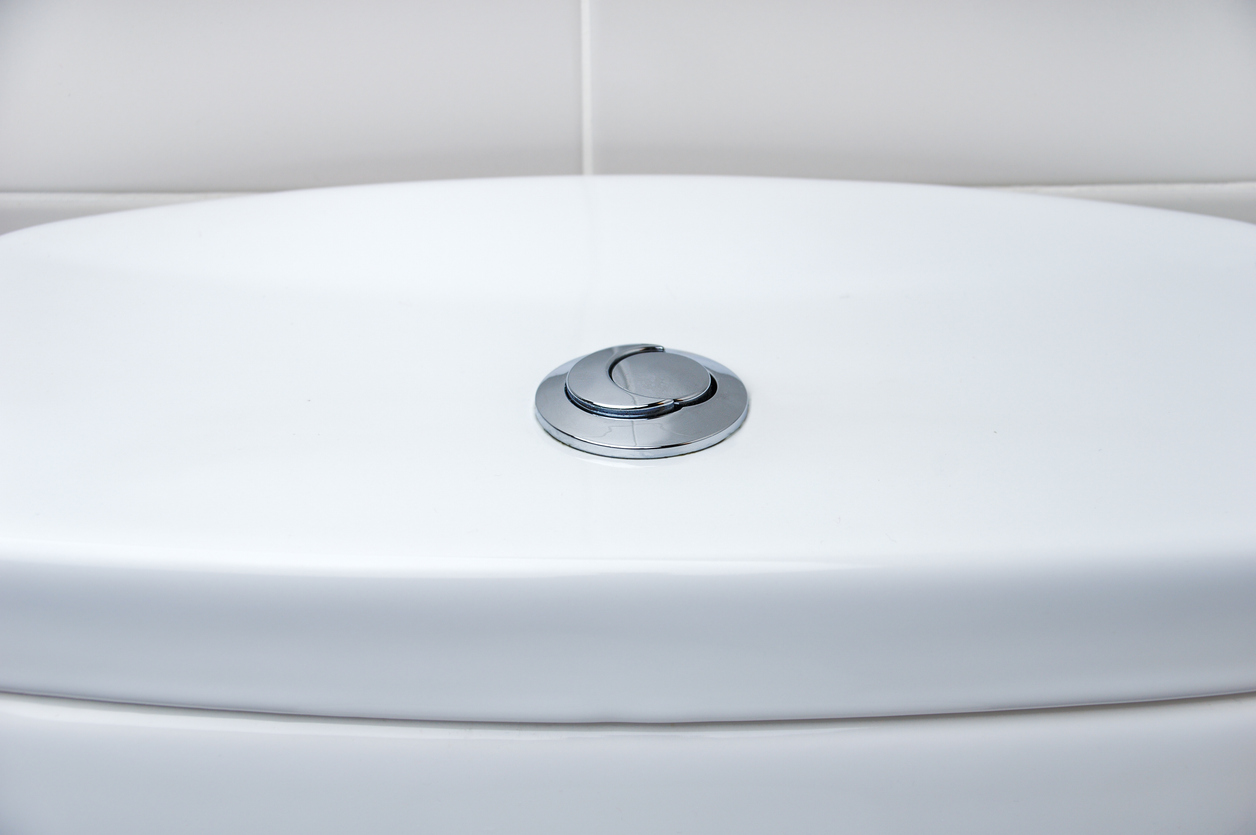
- The push buttons on a dual-flush cistern connect via a rod or cable mechanism to the flush tower lift plate inside the cistern
- Buttons that are stiff to press are often caused by mineral buildup around the button shaft, or by the mechanism inside the cistern binding on scale or debris
- Buttons that stay depressed (do not spring back) indicate a broken return spring or a flush tower that is physically stuck in the raised position
- A cracked or broken button assembly can prevent the mechanism from lifting the flush tower at all — if pressing either button produces nothing, the button mechanism and its connection to the flush tower should be inspected first
- Button assemblies are generally inexpensive components that can be replaced as a unit without replacing the entire cistern
Noisy Cistern During Refill
- A loud, hissing or vibrating fill sound during cistern refill is often caused by high water pressure at the supply line, which causes the fill valve to vibrate as it restricts flow
- Installing a pressure-reducing valve on the supply line or replacing the fill valve with a model designed for high-pressure applications resolves this
- A worn or partially blocked fill valve diaphragm can also produce noise during refill — replacing the diaphragm washer or the fill valve itself eliminates the sound
- Water hammer — a loud bang or knock when the fill valve shuts off — is caused by the pressure surge when fast-flowing water is stopped abruptly and may require a water hammer arrestor on the supply line
When to DIY and When to Call a Plumber
Some dual-flush toilet repairs are genuinely within reach of a confident homeowner. Others require a licensed plumber — both for safety reasons and because the Australian plumbing regulations require licensed tradespeople to carry out specific categories of work.
What Homeowners Can Reasonably Attempt
- Cleaning mineral scale from the flush tower seal and its seating surface
- Adjusting the float height on the fill valve to correct the cistern water level
- Removing and cleaning the fill valve to clear debris
- Identifying which component is failing by observation and the food colouring test
What Requires a Licensed Plumber
- Replacing the fill valve or flush tower cartridge — involves isolating the water supply and working on the water supply line
- Replacing the pan collar seal or cistern-to-pan bolts — requires the cistern to be lifted from the pan
- Any work involving the isolation valve or connections to the water supply line
- Installing a pressure-reducing valve or water hammer arrestor
- Replacing a cracked cistern or toilet pan
Frequently Asked Questions
How much water does a running dual-flush toilet waste?
A leaking flush tower seal can allow water to trickle continuously into the pan at a rate of 1 to 7 litres per hour depending on the severity of the leak. At 3 litres per hour, a running toilet wastes more than 26,000 litres per year. At the higher end, the waste can exceed 60,000 litres annually — a significant cost on your water bill beyond the environmental impact.
Is it expensive to fix a running toilet?
Most running toilet repairs in Melton involve replacing a flush tower seal or fill valve diaphragm — relatively inexpensive components. A licensed plumber can typically diagnose and fix a running toilet in under an hour. The cost of the repair is nearly always recovered quickly through reduced water bills, particularly since a running toilet can add significantly to quarterly water charges.
Do I need a plumber to replace a dual-flush cistern?
Under Victorian plumbing regulations, work that involves connections to the water supply system — including replacing cisterns, fill valves and flush mechanisms — must be carried out by a licensed plumber. Unlicensed plumbing work is illegal in Victoria and can void your home insurance. It also creates liability issues if the work causes water damage. Cleaning internal components does not generally fall under this restriction, but replacement of water-carrying components does.
Why does my toilet seem to flush on its own at night?
This is called a phantom flush or ghost flush, and it is almost always caused by a slow leak past the flush tower seal. Water drips from the cistern into the pan until the water level in the cistern drops low enough to trigger the fill valve. The fill valve then activates to refill the cistern, producing a sound that resembles a flush. The fix is to inspect and replace the flush tower seal.
How long do dual-flush toilet internals typically last?
The internal components of a dual-flush toilet — the fill valve, flush tower and seals — typically last between 8 and 15 years under normal household use. Water quality plays a significant role: in areas with harder water or higher mineral content, rubber seals and valve seats can degrade more quickly. Regular inspection of the cistern internals every few years allows you to replace components before they fail and cause water waste.
Conclusion
Dual-flush toilets are a practical and water-efficient fixture in every Melton home, but they require the same attention as any mechanical system. A running toilet is not just an annoyance — it represents hundreds of dollars in wasted water each year, and the underlying cause (almost always a worn seal or valve component) is straightforward to fix once correctly diagnosed. Understanding how the system works gives you the ability to identify problems early, attempt appropriate minor fixes, and know when it is time to pick up the phone.
If your toilet is showing any of the symptoms described in this article, New Image Plumbing & Gas can help. Call us on 0489 246 667 or reach out through our online form to book a time that suits you. A prompt toilet repair in Melton is far less expensive than months of elevated water bills from a toilet running in the background.