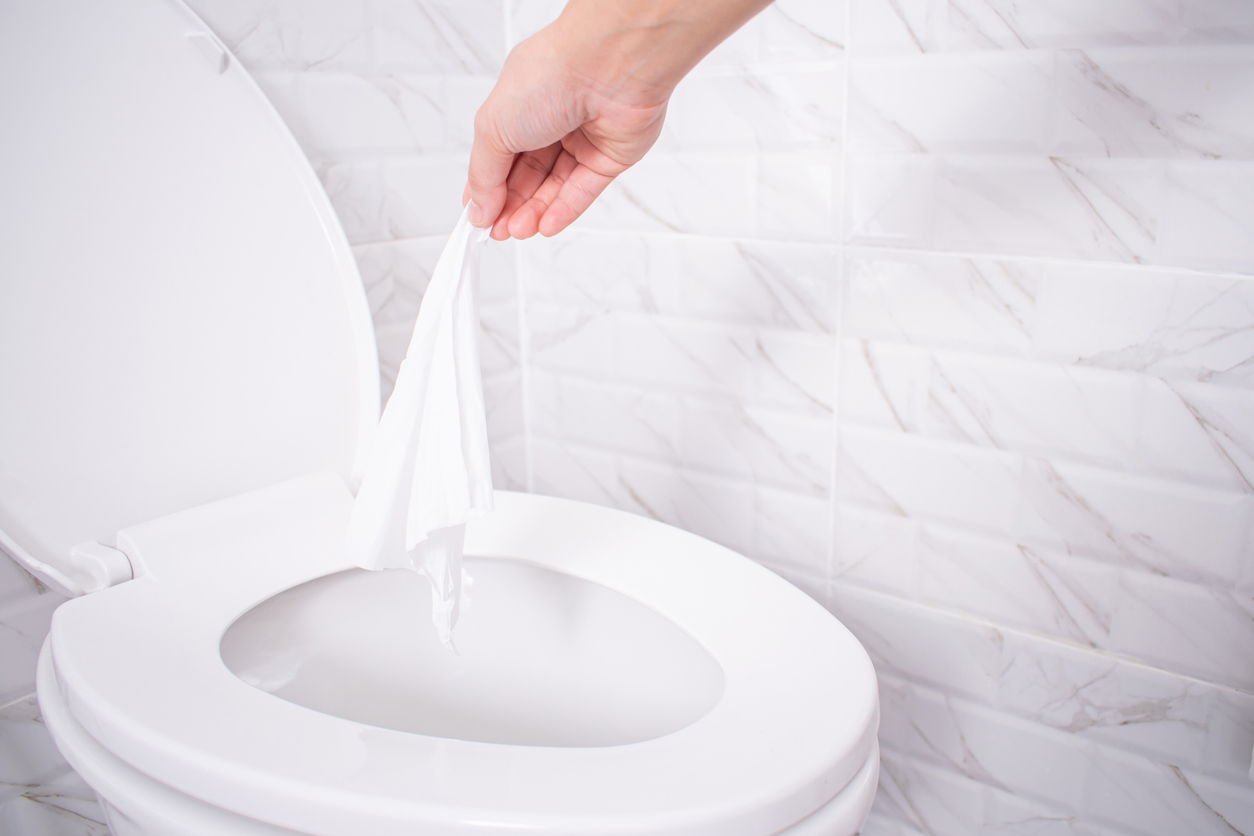
The word “flushable” is printed right there on the packet. It must mean the product is safe to put down the toilet, right? Unfortunately, that is one of the most misleading claims in the household products industry and it is causing blocked drains in Melton homes, damaged sewer infrastructure, and expensive plumbing callouts.
If you have ever wondered whether the wipes, hygiene products, or other items marketed as flushable actually live up to the claim, this blog gives you a straight answer based on how the plumbing systems work.
What Does It Mean When a Product Is Labelled “Flushable”?
In Australia, there is no single enforceable standard that governs whether a product can legally be labelled “flushable.” Manufacturers largely self-certify, meaning they run their own tests and decide for themselves whether their product meets certain criteria. The most widely referenced industry benchmark is the INDA/EDANA Fine to Flush guideline, but compliance is voluntary and the tests used do not always replicate real-world sewer conditions.
What “flushable” means in practice is that the product can be flushed through a toilet bowl without immediately blocking it. That is a very different thing from being safe for your drain pipes, your sewer connection, your septic system, or the broader wastewater network. The toilet bowl clearing is just the first few centimetres of a very long journey.
How Flushable Wipes Contribute to Blocked Drains
Flushable wipes are by far the most common product causing drain blockages in residential properties. They are sold to feel like a premium alternative to toilet paper, and they do clear the bowl. But what happens next is where the problem begins.
They Do Not Break Down Like Toilet Paper
Standard toilet paper is designed to disintegrate rapidly in water. Within seconds of being flushed, it begins to break apart. By the time it travels through your drain line, it is little more than a soft pulp that passes through pipes and treatment systems with ease.
Flushable wipes are made from synthetic fibres — typically polyester or polypropylene — that are bonded together to stay strong when wet. That strength is a selling point for the product, but it is exactly what makes them dangerous in a plumbing system. They do not break down in water. They travel intact through your pipes, snagging on roots, joins, scale build-up, or slight bends, and accumulate until a blockage forms.
Independent Testing Tells a Different Story
Water authorities across Australia, including Melbourne Water, have conducted their own testing on products labelled “flushable” and found that the vast majority do not disintegrate adequately under real sewer conditions. Sydney Water’s testing found that products labelled flushable were consistently recovered intact from sewer infrastructure. Similar findings have been replicated by water utilities across the country.
The industry’s own voluntary guidelines have since been updated, and some manufacturers have reformulated their products in response. However, the majority of flushable wipes currently on supermarket shelves still do not break down within a timeframe that is safe for residential sewer lines.
Other Products That Should Never Be Flushed
Wipes are the most talked-about offender, but they are far from the only product causing problems in plumbing systems. Many items that seem small or thin enough to flush actually cause significant damage:
- Cotton balls and cotton pads: These absorb water and expand, becoming dense and slow-moving in pipes. They do not break down and readily catch on anything that interrupts smooth flow.
- Facial tissues and paper towels: Despite being paper-based, these products are manufactured to stay strong when wet — the opposite of what toilet paper is designed to do. They survive intact through most of the drain system.
- Feminine hygiene products: Tampons and pads are designed to absorb fluid and expand. In drain lines, they expand against the pipe wall, trapping debris and causing blockages that can be significant in size.
- Nappy liners labelled “flushable”: These suffer from the same issue as wipes. Many nappy liners marketed as flushable do not disintegrate at a rate that is safe for residential plumbing, particularly in older homes with narrower or partially scaled drain lines.
- Dental floss: Dental floss is thin enough that it seems harmless, but it does not break down at all. In pipes, it wraps around debris and other accumulations, binding blockages together and making them harder to clear.
What Happens to Your Plumbing When You Flush These Products?
When non-disintegrating products accumulate in drain lines, the consequences are predictable and often costly. Here is what happens at each stage:
Partial Blockages Build Slowly
The first sign is often a toilet that drains more slowly than it used to, or a drain that gurgles when the toilet is flushed. At this stage, a partial blockage has formed — enough material has accumulated to restrict flow, but not enough to cause a complete backup yet. Many homeowners miss this warning sign and continue flushing the same products.
Complete Blockages Cause Sewage Backup
As the blockage grows, it eventually seals the pipe completely. When that happens, wastewater has nowhere to go and backs up through the lowest fixture in the home — often a shower, bathtub, or floor waste. In some cases, raw sewage backs up through the toilet itself. This is an emergency plumbing situation that requires immediate attention and poses a genuine health risk to anyone in the property.
Fatbergs in Shared Sewer Lines
When wipes and non-disintegrating materials reach the broader sewer system and combine with fats, oils, and grease that have been poured down kitchen drains, they form what wastewater engineers call “fatbergs.” These are solid masses of congealed waste that can grow to substantial sizes inside sewer mains, requiring mechanical removal and causing significant disruption and cost to the community. Water utilities spend tens of millions of dollars annually clearing fatbergs from the sewer network — costs that are ultimately passed on to ratepayers.
Damage to Septic Systems
For properties in parts of Melton’s outer fringe that are on septic systems rather than mains sewer, the impact of flushing non-disintegrating products is even more direct. Septic tanks rely on biological breakdown of waste. Synthetic materials like wipe fibres do not break down and accumulate as sludge, reducing the tank’s effective capacity and potentially contaminating the leach field. Premature pump-outs and system failures are common outcomes.
Frequently Asked Questions
Are “Fine to Flush” certified wipes actually safe?
Products that carry the “Fine to Flush” certification from Water UK have been tested to a more rigorous standard than standard industry self-certification. However, this certification scheme is primarily based in the UK, and Australian plumbing conditions, including older pipe infrastructure and different water pressure standards, mean that even certified products may still present risks in some residential drain systems. The safest approach remains to dispose of wipes in a bin.
How quickly can flushable wipes cause a blockage?
This depends on the age and condition of your drain line, the number of people flushing wipes, and whether other contributing factors like tree root intrusion or pipe scale are already present. In a home with older or partially compromised drain pipes, a significant partial blockage can develop within weeks of regular wipe-flushing. In a newer home with clear pipes, it may take months before symptoms appear — but the accumulation is happening either way.
What should I do if my toilet is already blocked?
If your toilet is draining slowly or has stopped draining altogether, avoid flushing it again — each flush adds more water and waste above the blockage and increases the risk of overflow. Do not use chemical drain cleaners on a toilet blockage, as they are unlikely to dissolve synthetic fibres and can damage pipe seals. Call a licensed plumber to assess and clear the blockage using the appropriate equipment.
Conclusion
The label says flushable. The plumbing says otherwise. Despite what manufacturers claim, the vast majority of products marketed as flushable do not break down fast enough to be safe for your drain lines, your sewer connection, or your septic system. The only genuinely flushable materials are human waste and standard toilet paper. Everything else, no matter what the packet claims belongs in the bin.
If you are already noticing slow drains or gurgling sounds, do not wait for a full backup. A blocked drain that is caught early is a simple fix. One that is ignored until sewage comes up through the shower is an emergency and a much more expensive and unpleasant one.
At New Image Plumbing & Gas, our team of Melton plumbers uses high-pressure jetting and CCTV drain inspection to locate and clear blockages properly, not just temporarily. If you are concerned about your drains, call us today on 0489 246 667 or get in touch through our online form to book an inspection. We will give you an honest solution and a fair quote, with no pressure and no surprises.