
What Is a Stormwater Pipe?
Your property has two separate underground pipe systems: sewer pipes (which carry wastewater from toilets, sinks, showers, and appliances to the sewer main) and stormwater pipes (which carry rainwater from roofs, gutters, and surface runoff to the street or a stormwater drain).
Stormwater pipes are typically concrete or PVC, run at relatively shallow depths, and are designed to handle large volumes of water during heavy rain events. Unlike sewer pipes, stormwater pipes only carry clean rainwater — but a leaking stormwater pipe can still cause significant structural and water damage to a property.
What Causes Stormwater Pipes to Leak?
Several factors cause stormwater pipe failure in Melbourne’s west:
- Joint failure: PVC pipe joints rely on rubber O-ring seals that degrade over time, particularly in clay-heavy soils that shift with moisture content. Once a seal fails, water leaks out of the pipe at the joint during rain events.
- Tree root intrusion: Exactly as with sewer pipes, tree roots seek moisture and enter stormwater pipes through joint gaps and hairline cracks. In heavy clay soils like those found across much of Melton and Bacchus Marsh, root spread is particularly aggressive.
- Ground movement and subsidence: Melbourne’s clay soils expand when wet and contract when dry, causing pipe sections to shift, separate, or crack over time. This is especially common in Melton’s western growth corridors where reactive clay profiles are prevalent.
- Physical damage: Concrete cutting, digging, or landscaping work that contacts an underground pipe. Often not discovered until the next heavy rain event reveals a wet patch.
- Age and material degradation: Older concrete stormwater pipes in established suburbs like Sunbury and Bacchus Marsh can crack and spall as the concrete carbonates. Sections can collapse, particularly under vehicle loads in driveways.
What Are the Signs of a Leaking Stormwater Pipe?
Stormwater leaks are often invisible until significant damage has accumulated. Know what to look for:
- Waterlogged lawn or garden after rain — particularly in areas directly above where pipes run. The saturated soil above a leaking pipe takes much longer to drain than surrounding areas.
- Soil subsidence or sunken patches in the lawn, driveway, or paving — indicating that soil is being washed away through the pipe leak beneath.
- Water seeping through the home’s foundation or persistent dampness along a wall — particularly if the pipe runs adjacent to the building.
- Erosion channels or ruts in the garden or along fence lines after heavy rain — water escaping from the pipe is carving channels through the soil.
- Moss or unusually lush vegetation in a line across the garden — the consistently moist soil above a leaking pipe creates a visible growth pattern.
- Overflowing stormwater pits that don’t connect to any visible blockage — indicating a break downstream of the pit that is preventing water from flowing away.
How Is a Leaking Stormwater Pipe Diagnosed?
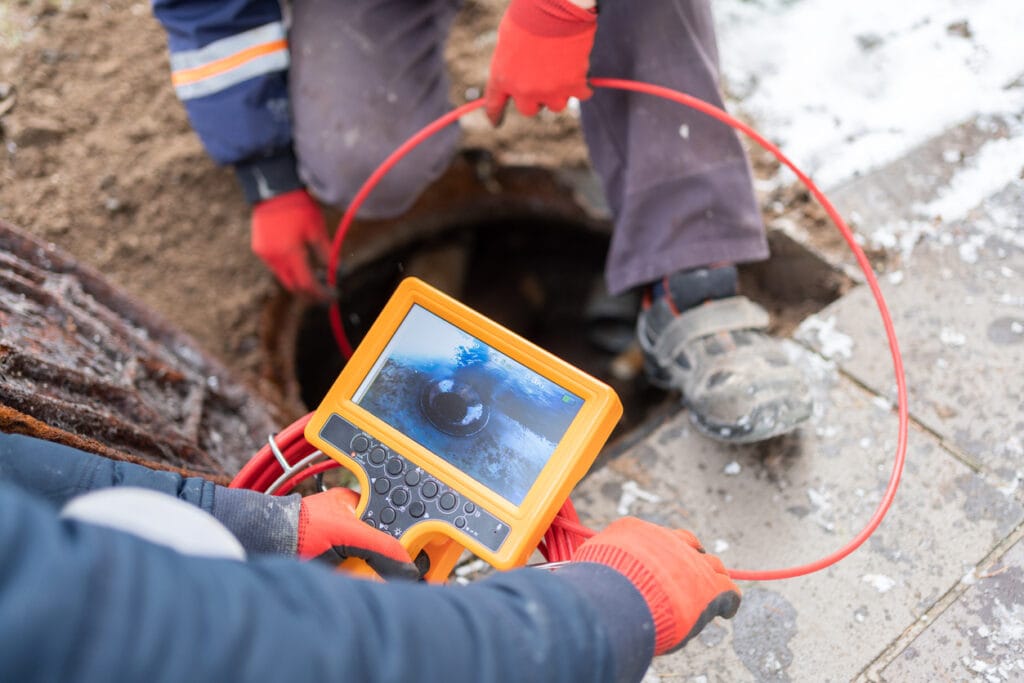
As with sewer pipes, a CCTV drain inspection is the definitive diagnostic tool. The camera travels through the stormwater system from an inspection point or outlet, identifying the precise location and nature of any leak, joint failure, root intrusion, or collapse.
For leaks that are suspected but not confirmed, a smoke test or dye test can identify the exit point of water escaping from the pipe system. These are used when water is appearing somewhere on the property but the source is not immediately obvious from a CCTV inspection.
A water leak detection inspection can also help trace leaks that are occurring in inaccessible areas, using acoustic and thermal imaging technology to locate water movement without excavation.
What Are the Repair Options for Leaking Stormwater Pipes?
The repair method depends entirely on the inspection findings:
| Finding | Likely Repair |
|---|---|
| Open joint, otherwise good pipe condition | Patch lining or section relining |
| Root intrusion through joints | Jetting to clear, then relining to seal |
| Cracked pipe, structurally intact | Full section relining |
| Collapsed or badly displaced pipe | Excavation and replacement |
| Minor crack in accessible location | Point repair (dig and patch) |
Pipe relining is the preferred solution where the pipe retains structural integrity, as it avoids excavation and restores the pipe to a sealed, smooth bore. Our pipe relining service covers both sewer and stormwater systems.
Is a Leaking Stormwater Pipe Covered by Insurance?
This depends heavily on your policy. Most Australian home insurance policies cover sudden, accidental water damage — but many specifically exclude gradual leaks, general wear and tear, or slow deterioration. Stormwater pipe leaks caused by root intrusion or soil movement over time are often classified as the latter.
If the leak was caused by a sudden event — a contractor hitting the pipe, storm damage, or a sudden pipe collapse — you are more likely to have a valid claim. The key is to have a plumber inspect and document the cause promptly. A CCTV report showing the nature and likely cause of the failure is useful evidence for an insurance claim.
Who Is Responsible for Stormwater Pipes on My Property?
In Victoria, the property owner is responsible for all drainage pipes within the property boundary, including stormwater pipes from the roof drains to the connection point at the street. The local council or drainage authority is responsible from the connection point to the public drain.
In Melton, Bacchus Marsh, and surrounding areas, stormwater assets transition to Melbourne Water responsibility at the property boundary. If water is pooling at the street or the public drain appears blocked, that’s a Melbourne Water issue. If it’s occurring within your boundary, it’s yours to address.
Stormwater Pipe Repairs in Melton and Melbourne’s West
New Image Plumbing & Gas provides CCTV stormwater inspections, pipe relining, and full stormwater repairs across Melton, Bacchus Marsh, Sunbury, Caroline Springs, Deer Park, Hoppers Crossing, and surrounding areas. Same-day service is available for urgent stormwater issues causing internal moisture or active flooding.
For more on drain and pipe issues, read our guide on plumbing services across Melbourne’s western suburbs. Call 0468 125 098 or request a free quote online.
Frequently Asked Questions
Can a leaking stormwater pipe damage my house foundations?
Yes. Persistent water from a leaking stormwater pipe saturates the clay soil around your footings. Reactive clay expands when wet and contracts when dry, causing heave and settlement that can crack slabs and walls over time.
How deep are stormwater pipes typically buried?
In residential properties across Melton and Melbourne’s west, stormwater pipes are typically 300–600mm below the surface under lawns and gardens, and deeper (600mm+) under driveways and paving for load-bearing clearance.
How long does stormwater pipe relining take?
A standard residential relining job (10–25 metres) typically takes a single day including CCTV inspection before and after. Larger systems or those requiring multiple sections may take two days.
Can I reline a stormwater pipe myself?
No. Pipe relining requires specialist equipment (inversion drums, resin mixing, inflatable bladders, UV or ambient curing systems) and a licensed plumber. DIY products sold online are unsuitable for pressure-rated drain relining.
What’s the difference between a stormwater and a sewer pipe repair?
Structurally the repair process is similar, but sewer pipe work requires more careful environmental controls to prevent sewage contamination during any excavation. Sewer pipe relining also requires notification to your water authority (South East Water, Western Water) in some cases, whereas stormwater relining is generally completed without authority notification.