A blocked drain in Melton has a way of stopping everything. Whether it is a kitchen sink that will not drain, a shower backing up with dirty water, or a toilet that refuses to flush, the question that immediately follows is the same: how quickly can this be fixed? The answer depends entirely on whether you attempt it yourself or call a licensed plumber, and the difference in outcome can be significant. This article breaks down what each approach involves, how long it realistically takes, and why the right choice depends on the type and severity of the blockage you are dealing with.
What Causes Blocked Drains in Melton?
Before comparing timelines, it helps to understand what you are actually dealing with. Blocked drains in Melton homes fall into a few common categories, and the cause has a direct bearing on whether DIY is even a viable option.
- Grease and food waste buildup in kitchen drain lines, which accumulates gradually until water flow is completely restricted
- Hair, soap scum and personal care products in bathroom drains and shower traps
- Tree root intrusion into older terracotta and PVC sewer lines, which is particularly common in established suburbs around Melton where trees have had decades to spread
- Foreign objects flushed or dropped into toilets, including wipes (even those labelled flushable), nappies and sanitary items
- Scale and mineral deposits in older pipes that gradually narrow the internal bore over time
- Collapsed or offset pipe sections, particularly in homes built more than 20 years ago where pipe joints have shifted with ground movement
The first three on that list are the most commonly attempted as DIY jobs. The last three almost always require professional diagnosis and intervention, regardless of how handy the homeowner is.
DIY Blocked Drain Methods: Realistic Timelines
Most homeowners reach for a DIY solution first, which is understandable. The important thing is to go in with realistic expectations about what these methods can and cannot do, and how long they actually take from start to finish.
Hot Water Flush
- Time required: 5 to 15 minutes
- Effective only for very minor grease blockages very close to the drain outlet
- Not suitable for PVC pipes (boiling water can soften and warp PVC fittings over time)
- Provides no diagnostic information — you will not know whether the blockage has cleared until you run water and observe
- Success rate is low for anything beyond a very fresh, superficial grease coating
Plunger
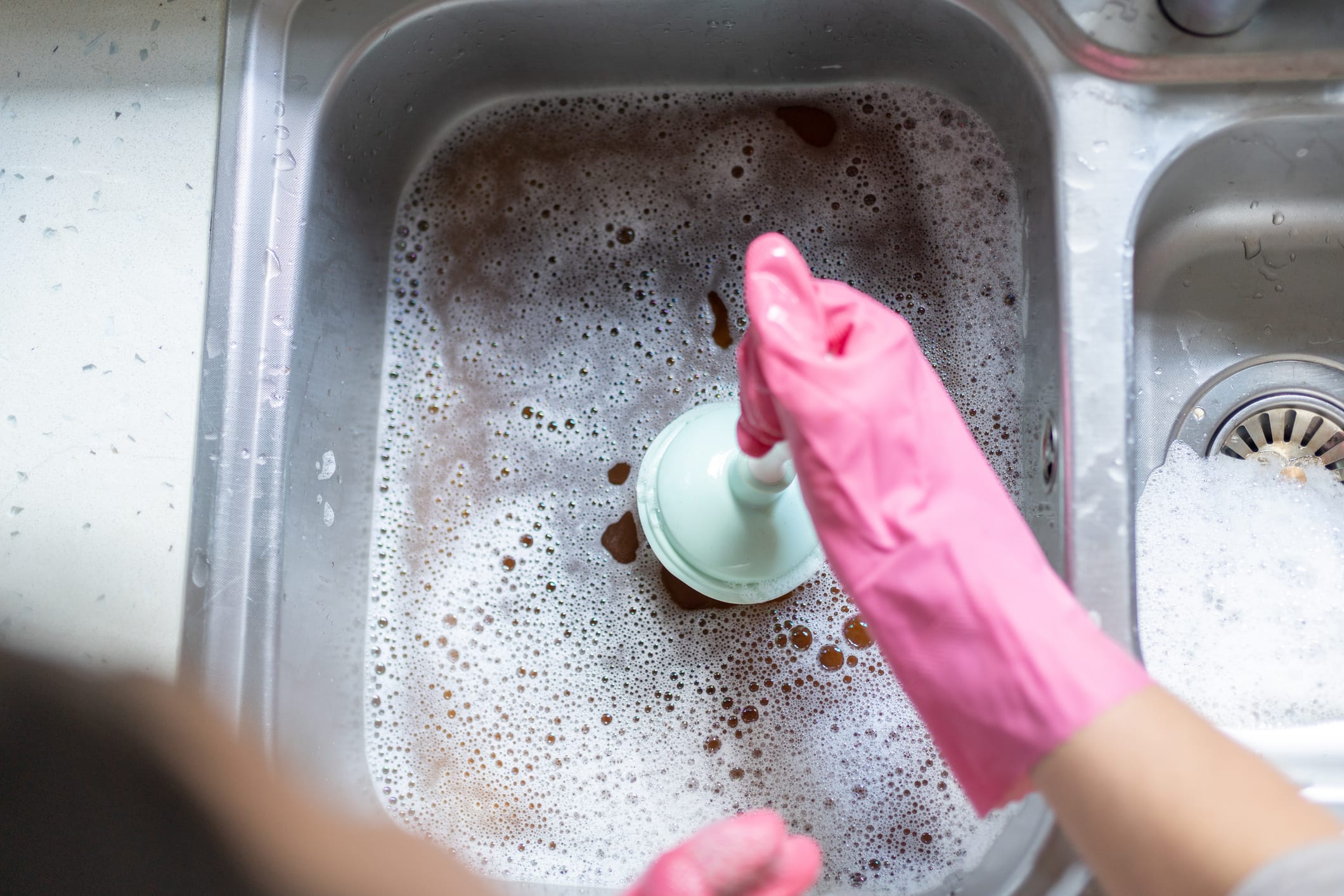
- Time required: 15 to 30 minutes, sometimes repeated across multiple attempts over hours
- Effective for soft blockages located near the drain opening, typically hair and soap scum in bathroom drains or light food waste in kitchen sinks
- Works by creating pressure differential to dislodge the obstruction — this only works if the blockage is soft enough to move and close enough to the opening
- Cup plungers are for sinks and showers; flange plungers are designed specifically for toilets — using the wrong type reduces effectiveness significantly
- Will not clear a blockage caused by root intrusion, pipe damage, or foreign objects lodged deep in the line
Chemical Drain Cleaners
- Time required: 30 minutes to overnight including wait time, plus additional water flushing
- Caustic drain cleaners (sodium hydroxide-based) can dissolve organic matter like hair and grease over time, but require the product to stay in contact with the blockage for extended periods
- Not suitable for complete blockages where the standing water prevents the chemical from reaching the obstruction
- Repeated use damages older pipes, particularly cast iron and older PVC, by degrading joints and seals
- Poses genuine health and safety risks if splashed on skin or inhaled — appropriate protective equipment is essential
- Ineffective against root intrusion, collapsed pipes, or foreign objects
Manual Drain Snake (Hand Auger)
- Time required: 30 minutes to 2 hours depending on the location and nature of the blockage
- A hand auger is a flexible cable that you feed into the drain and rotate to break up or hook the obstruction
- More effective than plungers for reaching deeper blockages in the pipe run
- Consumer-grade hand augers typically extend to around 7 metres, which covers the drain trap and a short section of the drain line but rarely reaches the sewer junction or main line
- Risk of cable tangling or breaking inside the pipe if forced too aggressively, which creates a secondary problem
- Does not remove the blockage material from the pipe — it either breaks it up (which can re-accumulate) or hooks and retrieves it, with retrieval being more difficult in longer runs
Professional Blocked Drain Clearing: How Long the Process Takes
When a licensed plumber attends a blocked drain job, the process is systematic and informed by the right equipment. The timeline looks different depending on the scope of the problem, but the overall approach is far more thorough than anything achievable with household tools.
Initial Diagnosis: 15 to 30 Minutes
- A professional plumber begins by assessing which fixtures are affected and tracing the drain line to identify the likely location of the blockage
- Checking whether just one fixture is blocked (indicating a local blockage close to that fixture) or multiple fixtures (indicating a blockage in the shared drain line or main sewer)
- Inspecting the outdoor inspection openings (IOs) where applicable to confirm whether the blockage is on the property side or in the sewer main
- This 15 to 30 minutes of diagnosis means every subsequent action is targeted rather than trial and error
High-Pressure Water Jetting: 30 to 60 Minutes
- High-pressure water jetting (also called hydro-jetting) uses a specialised hose delivering water at pressures up to 5,000 psi to cut through blockages and scour the pipe wall
- Unlike a plunger or chemical cleaner, jetting removes the blockage material from the pipe entirely rather than pushing it further along
- Effective against grease, scale, soap buildup and minor root intrusion
- The pipe is left genuinely clean, not just passable — this is why professional clearing reduces the frequency of future blockages significantly compared to DIY methods
- For a typical household drain blockage in Melton, the jetting process itself takes 30 to 60 minutes depending on the length of the drain run and the severity of the buildup
CCTV Drain Inspection (Where Required): 30 to 45 Minutes
- For recurring blockages, or where the cause is not obvious from jetting alone, a CCTV camera is run through the pipe to inspect the interior
- The camera identifies root intrusion, pipe cracks, joint offsets, collapsed sections and any areas where the pipe has deformed
- This takes 30 to 45 minutes and provides the homeowner with actual footage of the pipe condition
- CCTV inspection is the only way to accurately diagnose why a drain keeps blocking — without it, you are clearing the symptom without treating the cause
Total Professional Job Time for a Standard Blocked Drain
- A straightforward household blocked drain in Melton typically takes 1 to 1.5 hours from arrival to completion for a professional plumber
- Where CCTV inspection is also performed, allow 2 to 2.5 hours
- More complex issues such as root intrusion requiring root cutting, or a blockage requiring pipe relining or excavation, are diagnosed on the day and quoted separately before any additional work proceeds
DIY vs Professional: A Clear Comparison
To put the above into context, here is a straightforward side-by-side comparison of what each approach realistically delivers for a typical Melton household blocked drain.
Time to Clear the Blockage
- DIY: anywhere from 20 minutes (lucky) to several hours spread across multiple attempts with different methods, often without resolving the underlying cause
- Professional: 1 to 2.5 hours from the plumber’s arrival, with the blockage confirmed clear at the end of the visit
Depth of Clear
- DIY: typically only clears the section of pipe closest to the fixture — the rest of the line is untouched
- Professional: the entire accessible drain line is cleared, with the pipe wall scoured clean of buildup
Knowledge of What Caused the Blockage
- DIY: none — you clear it and hope it does not come back, with no information about the pipe condition
- Professional: diagnosis of the blockage cause is part of the job — if CCTV is used, you receive footage and a written report
Risk of Making Things Worse
- DIY: chemical cleaners can damage older pipes; a hand auger can tangle or break inside the pipe; incorrect plunging can push a blockage deeper
- Professional: a licensed plumber knows which method is appropriate for the pipe type and blockage, minimising the risk of collateral damage
Likelihood of the Blockage Returning
- DIY: high — partial clears leave residue that re-accumulates quickly; underlying structural issues remain completely unaddressed
- Professional: significantly lower — the pipe is properly cleaned and the cause identified, with repair options available if structural issues are found
When to DIY and When to Call a Plumber
It would not be honest to say that DIY is never appropriate. There are situations where a quick attempt with a plunger or trap clean is a reasonable first step. The key is knowing when to stop and call a professional before the situation worsens.
DIY Is Reasonable When
- A single fixture has suddenly slowed or blocked and you suspect a hair or soap blockage at the trap — clean the trap first
- The issue is clearly visible and superficial, such as a shower drain clogged with hair right at the grate
- It is a first-time occurrence in a drain that has been running fine for years — a single plunging attempt is reasonable
Call a Professional Immediately When
- Multiple fixtures are draining slowly or are blocked at the same time — this points to a main line issue that DIY cannot reach
- The blockage has returned within days or weeks of being cleared — this is a strong indicator of a structural pipe issue
- There is sewage odour inside or outside the property
- Water is overflowing from inspection openings or gurgling back up through other fixtures when you use one
- You have already spent 30 minutes or more on DIY attempts without success — continuing increases the risk of pipe damage without improving the outcome
Frequently Asked Questions
Is it safe to use chemical drain cleaners in a PVC pipe system?
Caustic chemical cleaners can be used in PVC pipes but should not be used repeatedly or left for extended periods. The heat generated by the chemical reaction and the caustic nature of the product can soften PVC joints and degrade rubber seals over time. If a single application has not resolved the issue, do not repeat it — call a plumber instead.
Why does my drain keep blocking even after I clear it myself?
Recurring blockages after DIY clearing almost always indicate either a partial clear (the blockage material was moved rather than removed) or an underlying structural issue such as a pipe offset, root intrusion, or a section of collapsed pipe. A CCTV drain inspection is the definitive way to identify the cause and stop the cycle.
Can a plunger make a blocked drain worse?
Yes, in some cases. Vigorous plunging can push a soft blockage further into the pipe system, moving the obstruction from an easily accessible section to a point that requires professional equipment to reach. It can also push water backwards through connected fixtures, creating an overflow in a room you were not expecting. If plunging is not resolving the issue within a few attempts, stop and call a licensed plumber.
Conclusion
DIY drain clearing has its place, but the honest comparison shows that professional results are faster, deeper and longer-lasting in all but the most minor blockage situations. A homeowner spending two hours cycling through hot water, chemicals and a hand auger — and still ending up with a slow drain — has lost both time and the small window where a simple fix was still possible. A professional plumber in Melton arrives with the right equipment, identifies the problem accurately and leaves the drain properly clear, usually within the time it takes to attempt three or four DIY methods without success.
If you are dealing with a blocked drain right now, New Image Plumbing & Gas is available 24 hours a day, 7 days a week. Our team carries high-pressure jetting equipment and CCTV cameras on every van, so we are ready to diagnose and clear your blocked drain from the moment we arrive. Call us on 0489 246 667 or submit an enquiry through our online form and we will get your drains flowing again today.