A single slow drain is a minor nuisance. A blocked drain Melton in a single bathroom can usually be traced to a local blockage, a build-up of hair in the trap, a soap plug in the waste pipe, or a blocked p-bend beneath the vanity. But when multiple drains across the house start backing up or draining slowly at the same time — the toilet, the shower, the laundry tub, and the kitchen sink all misbehaving simultaneously — the situation is categorically different. This is a main sewer line problem, and it demands immediate attention. Homeowners need to understand what is happening, why it matters, and exactly what to do.
How Your Home’s Drainage System Works
To understand why multiple drains backing up at the same time points to the main sewer line, it helps to understand how residential drainage is structured. Every drain in your home — the shower, the bath, the toilet, the basin, the kitchen sink, and the laundry — has its own individual waste pipe. These individual pipes slope toward a central collection point: the main sewer line. This is typically a 100mm pipe that runs under or around the property and connects to the council sewer main at the boundary.
Because every fixture’s individual drain pipe feeds into the same main sewer line, a blockage or failure anywhere in that shared pipe affects every fixture connected to it. The individual branch drains have nowhere to discharge their waste, so it either backs up through the nearest low-lying outlet — usually a floor drain, the shower base, or the toilet — or it drains extremely slowly as it tries to squeeze past a partial obstruction.
What Causes a Main Sewer Line Blockage?
Main sewer line blockages are not always caused by a single dramatic event. Often they develop gradually over months or years, until the restriction becomes severe enough to cause noticeable symptoms. Understanding what causes them helps explain why some older properties in Melton and Bacchus Marsh are more susceptible than others.
Tree Root Intrusion
Tree roots are the single most common cause of serious main sewer line blockages in Australian residential properties. Roots are drawn to sewer pipes because they contain water, nutrients, and warmth. Once they find a small crack, a slightly open joint, or a pipe entry point, they enter and grow. Inside the pipe they fan out into a fibrous mass that catches toilet paper, waste, and grease until the pipe is substantially or completely blocked. The consequences of tree root intrusion:
- The blockage grows gradually — slow drainage can precede a full blockage by months or years
- Even after clearing, roots regrow unless the underlying pipe damage is addressed
- The entry point (crack or joint gap) remains and will be recolonised by roots if left unrepaired
- Trees do not need to be immediately adjacent to the pipe — root systems extend well beyond the drip line of the tree
- Older concrete, clay, or earthenware pipe joints are particularly susceptible as they age and shift
Accumulated Grease, Wipes, and Debris
Cooking grease and fats are liquid when hot but solidify as they cool. When poured or washed down a kitchen drain, they coat the inside of the waste pipes and, further along, the main sewer line. Over time this coating thickens. Combined with the adhesive effect of grease on toilet paper, so-called “flushable” wipes (which do not actually break down), and other debris, the buildup can create a substantial blockage. Contributing factors that accelerate this:
- Regularly disposing of cooking fats, oils, and grease down the sink
- Flushing “flushable” wipes, cotton pads, or sanitary products
- A long run of pipe with low fall (gradient), which allows solids to settle rather than being carried to the sewer
- Infrequent or no maintenance flushing of the drainage system
Collapsed or Sagged Pipe
Sewer pipes are buried underground and rely on stable, adequately compacted soil to maintain their position and gradient. Ground movement — whether from soil shrinkage and swelling in clay-heavy soils common in Melbourne’s west, from nearby excavation, from vehicle loading above the pipe, or simply from the pipe’s own age and weight — can cause a section of pipe to sag, shift, or collapse. When a section sags, it creates a low point where waste and solids accumulate instead of flowing through. A collapsed section creates a partial or complete obstruction. This type of damage cannot be cleared with a jet; it requires pipe repair or relining.
Pipe Failure Due to Age or Ground Movement
Many properties across Melton and Bacchus Marsh have older clay or concrete sewer pipes that were installed decades ago. These materials are durable but not immune to deterioration. Over time, joints can separate, pipe walls can crack from ground movement or root pressure, and sections can fracture. A pipe that has fractured but not yet fully collapsed will allow soil to enter the pipe, gradually building up a blockage from the inside. It will also allow sewage to escape into the surrounding soil — an environmental and health issue separate from the drainage problem itself.
Warning Signs You Should Not Ignore
The symptoms of a main sewer line blockage are distinctive once you know what to look for. Multiple drains backing up simultaneously is the clearest indicator, but there are secondary warning signs that often appear before the situation becomes a full emergency.
Toilet Backup When You Flush
When you flush the toilet and water backs up into the shower recess, the bathtub, or a floor drain, this is one of the clearest indicators of a main sewer line blockage. The toilet flush creates a surge of water that has nowhere to go — so it travels back through the lowest nearby fixture openings. This behaviour should be treated as an emergency. Stop using all fixtures and call a plumber Bacchus Marsh and Melton immediately.
Gurgling From Drains
Gurgling sounds from a drain that is not currently in use — particularly gurgling from the toilet when you run a basin tap, or from a floor drain when you flush — indicates that air is being displaced through the drainage system rather than venting normally. This points to a partial blockage restricting flow through the main line. Gurgling is an early warning sign; ignoring it typically leads to full backup within days or weeks.
Sewage Smell Inside the Property
A persistent sewage odour inside the house — even when all traps appear intact — can indicate that gases are being pushed back through the drainage system by a downstream obstruction, or that sewage is backing up inside a concealed part of the drainage system. Do not dismiss a sewage smell. It warrants investigation.
Multiple Slow Drains Across Different Rooms
Individual slow drains point to local blockages. But if the kitchen sink, the bathroom basin, the shower, and the laundry tub are all draining slowly at the same time — and there has been no single obvious cause — the common element is the main sewer line they all share.
Why This Is Urgent
A main sewer line blockage is not a problem that will clear itself. Unlike a minor localised blockage in a basin trap, where the force of the water may eventually push the obstruction through, a main line blockage is typically solid, entrenched, and growing. Every use of any fixture in the house adds more load to a system that is already overwhelmed. Continuing to use the property’s plumbing once multiple drains are backing up risks:
- Sewage backing up through floor drains, shower recesses, or toilet pans inside the home
- Contamination of flooring, walls, and subfloor materials with sewage — requiring professional remediation
- Exposure of household members to pathogens present in raw sewage
- Significant repair and clean-up costs well beyond what a plumber’s call-out would cost
- Potential structural damage if sewage sits in contact with timber subfloors or wall cavities
Do not wait to see if the problem resolves on its own. It will not.
What to Do While You Wait for the Plumber
Once you identify that multiple drains are backing up, there are steps you should take immediately to minimise the risk of sewage overflow inside the property while waiting for a licensed plumber to arrive.
Stop Using All Fixtures
This is the single most important step. Every litre of water you put into the drainage system adds to the pressure behind the blockage and increases the likelihood of sewage backing up through a fixture. Stop using toilets, sinks, showers, the dishwasher, and the washing machine until the plumber has cleared the line.
Keep Children and Pets Away From Affected Areas
If sewage has already backed up into a shower recess, floor drain, or laundry tub, keep children and animals well away from the area. Do not attempt to clean it up yourself — the sewage will need professional sanitisation after the blockage is cleared.
Document the Situation
Take photographs of any backed-up fixtures and note which areas of the home have been affected. If sewage has overflowed into living areas, this documentation may be required for an insurance claim. Contact your home insurer as soon as practically possible.
What the Plumber Will Do
Clearing a main sewer line and leaving without identifying the cause is an incomplete job. A thorough response to a main sewer blockage involves two stages: clearing and investigation.
Clearing the Blockage
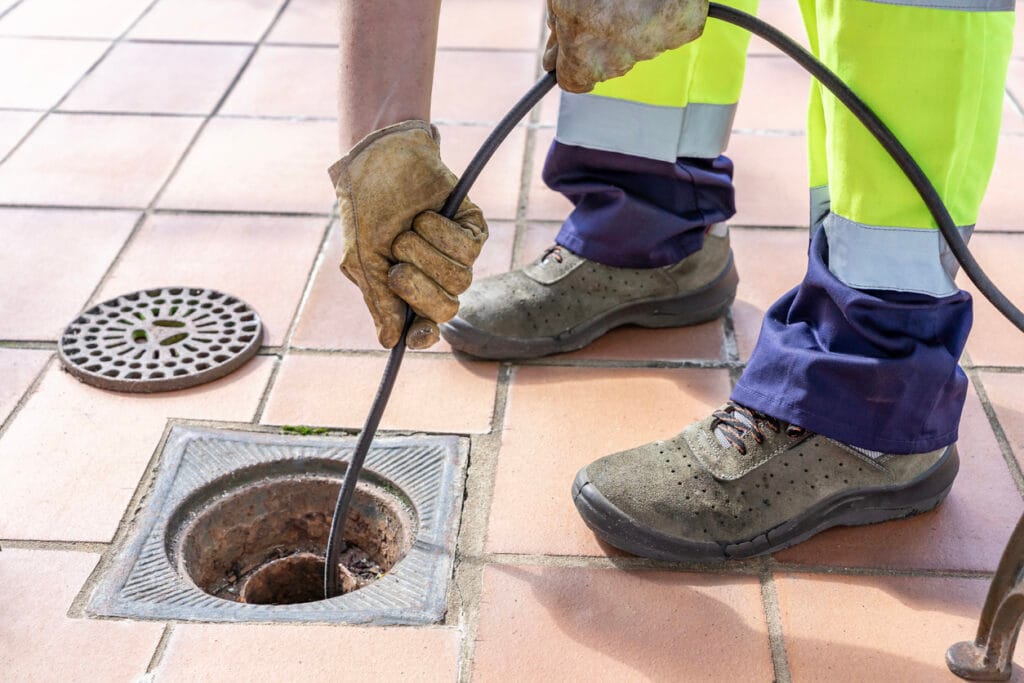
The plumber will locate the sewer access point — typically a cleanout cap at ground level near the house — and use one or more of the following methods to clear the obstruction:
- Electric eel (drain snake): A flexible rotating cable that breaks up soft blockages like grease and root masses
- Hydro jetting: High-pressure water propelled through a nozzle that scours the inside of the pipe, removing grease, scale, and root material far more thoroughly than an eel alone
- Root cutting attachment: Fitted to the electric eel for cutting through root masses before jetting
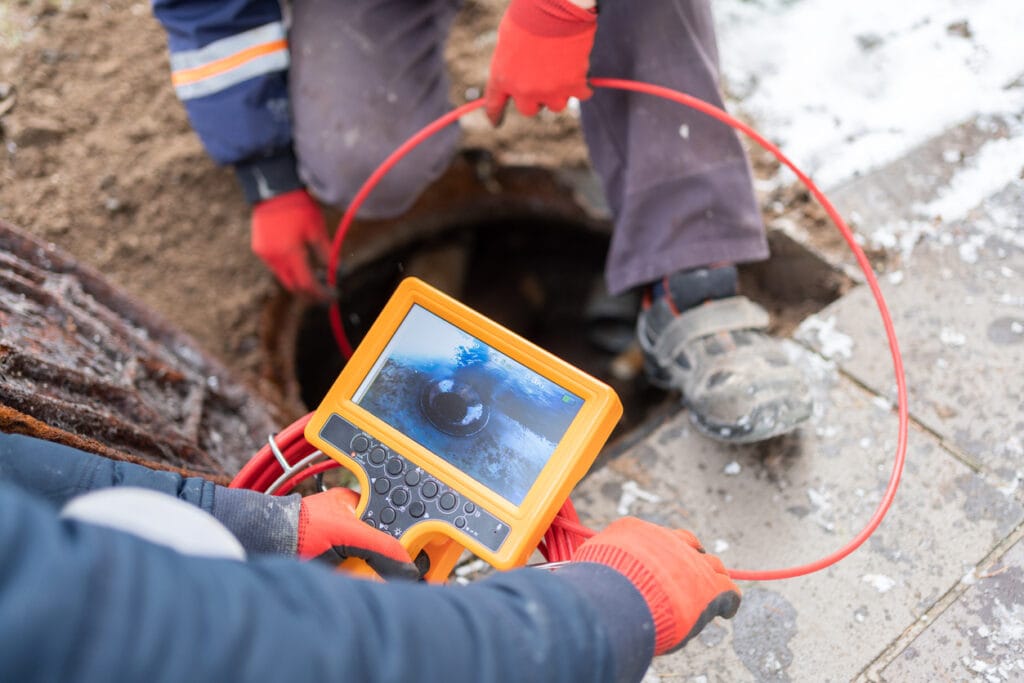
CCTV Camera Inspection
After clearing the line, the pipe should be inspected with a CCTV drain camera. This is not optional for a main sewer blockage — it is essential. Clearing the blockage removes the immediate obstruction but does not reveal what caused it or whether the pipe has underlying structural damage that will cause the same problem to recur. A CCTV inspection will show:
- Whether root intrusion is present and the severity of the entry points
- Whether any sections of pipe have sagged, cracked, or partially collapsed
- The condition of pipe joints throughout the main line
- Whether pipe relining is a suitable remedy or whether excavation and replacement is required
A plumber Melton or Bacchus Marsh who clears a main sewer blockage without offering a CCTV inspection is leaving you without the information you need to make an informed decision about whether the problem will return.
Conclusion
Multiple drains backing up at the same time is one of the clearest plumbing emergencies a household can face. The longer the situation is left, the greater the risk of sewage entering living areas and causing damage that is expensive and distressing to deal with. In Melton and Bacchus Marsh, where many properties have mature trees near sewer lines and older pipe infrastructure, this is not a rare problem — but it is a completely solvable one when addressed promptly and properly.
New Image Plumbing and Gas responds to main sewer blockages across the broader western suburbs. We clear the blockage, inspect the pipe with a CCTV camera, and give you a clear picture of what caused it and what is needed to prevent it from coming back. Call us on 0489 246 667 for urgent assistance, or fill out our online form if the situation is not yet at the emergency stage but you want it looked at before it becomes one.
Frequently Asked Questions
How do I know if the blockage is in the main sewer line or just one drain?
If only one fixture is slow or blocked, the issue is local to that drain. If multiple fixtures across the house are slow or backing up simultaneously — particularly toilets and floor drains — the blockage is in the main sewer line leaving the property. Stop using all fixtures immediately and call a licensed plumber. A main sewer blockage needs urgent professional attention and should not be left overnight.
Is sewage backing up into my home a health hazard?
Yes. Raw sewage contains bacteria, viruses, and other pathogens including E. coli and Salmonella, which present a genuine health risk through skin contact and inhalation of aerosolised particles. Do not attempt to clean up a sewage backup yourself without appropriate personal protective equipment. Stop using all fixtures, ventilate the area where possible, and call a licensed plumber urgently. Professional cleaning and sanitisation of affected areas is required after the blockage is cleared.
What should I do while waiting for the plumber to arrive?
Stop using all water fixtures in the house to avoid adding more waste to the backed-up system. Do not flush toilets, run taps, use the dishwasher, or do laundry. If sewage has already backed up onto floors, keep children and pets away from the affected area and avoid contact. Document the situation with photographs before any clean-up, as this may be needed for any insurance claim.
Why do I need a CCTV inspection after the main sewer is cleared?
Clearing the blockage removes the immediate obstruction but does not reveal what caused it or whether the pipe has structural damage that will cause the problem to recur. A CCTV camera inspection after clearing shows exactly what is inside the pipe — root intrusion, collapsed sections, cracked pipes — and allows the plumber to recommend whether additional repairs such as pipe relining are needed to prevent a recurrence. Without this step, there is no way to know if and when the same problem will return.
Can tree roots regrow after a sewer line has been cleared?
Yes. Clearing roots from a sewer line with an electric eel or hydro jetter removes the existing root mass, but it does not seal the entry point where the roots came in. If the crack or gap in the pipe is left unrepaired, roots will regrow — often faster than before, because the roots already know the path. To prevent recurrence, the damaged section of pipe needs to be relined or replaced so the entry point is permanently sealed.