Most Bacchus Marsh homeowners have dealt with a slow-draining sink or a toilet that refuses to flush properly. But very few stop to think about what is actually happening inside the pipe when a drain blocks. Understanding the mechanics of a blockage — what builds up, how it develops, and why it eventually stops flow entirely — helps you make smarter decisions about prevention, maintenance, and when to call a licensed plumber.
Blocked drains Bacchus Marsh do not happen suddenly in most cases. They are the result of a slow, progressive process happening out of sight, deep inside your drainage system. By the time water stops draining altogether, the blockage has usually been developing for weeks or even months. Here is what that process looks like, from the first accumulation to a full obstruction.
How a Drain Blockage Develops Over Time
A drain blockage rarely starts as a single large obstruction. More often, it begins with a small accumulation that gradually grows until it restricts or completely stops the flow of water. The specific sequence depends on what type of material is causing the build-up and where in the system it is occurring.
Stage One: The Initial Accumulation
- The first stage begins when material starts to cling to the inside walls of the pipe rather than flowing freely through to the sewer.
- In kitchen drains, this is typically grease and cooking oil that has cooled and solidified against the pipe wall, forming a sticky layer that catches other particles.
- In bathroom drains, soap scum, conditioner residue, and shed hair are the first materials to adhere to the pipe interior.
- In sewer and stormwater lines, it may be a small root tendril entering through a crack or joint, a partially misaligned pipe section creating a ledge, or sediment that has settled in a low point.
- At this early stage, drainage typically appears completely normal. There are no visible signs yet.
Stage Two: The Build-Up Phase
- Once a sticky surface exists inside the pipe, it acts as a trap for everything that passes by. Grease catches food particles. Soap scum catches hair fibres. Root tendrils catch wet wipes, toilet paper, and debris.
- The accumulation grows inward from the pipe walls, gradually reducing the internal diameter of the drain.
- Water can still pass through, but it is being forced through an increasingly narrow channel. Flow rate slows noticeably.
- During this phase, you may notice your sink or shower draining more slowly than usual, or a slight gurgling sound when water exits. These are early warning signals that should not be ignored.
- In Bacchus Marsh, homes with older clay or terracotta sewer pipes are particularly prone to accelerated build-up at this stage, because the rougher internal surface of aged clay provides far more surface area for material to cling to than smooth PVC pipe.
Stage Three: Partial Blockage
- As the build-up continues, the channel through which water can pass becomes small enough that it can no longer keep pace with the volume of water entering the drain.
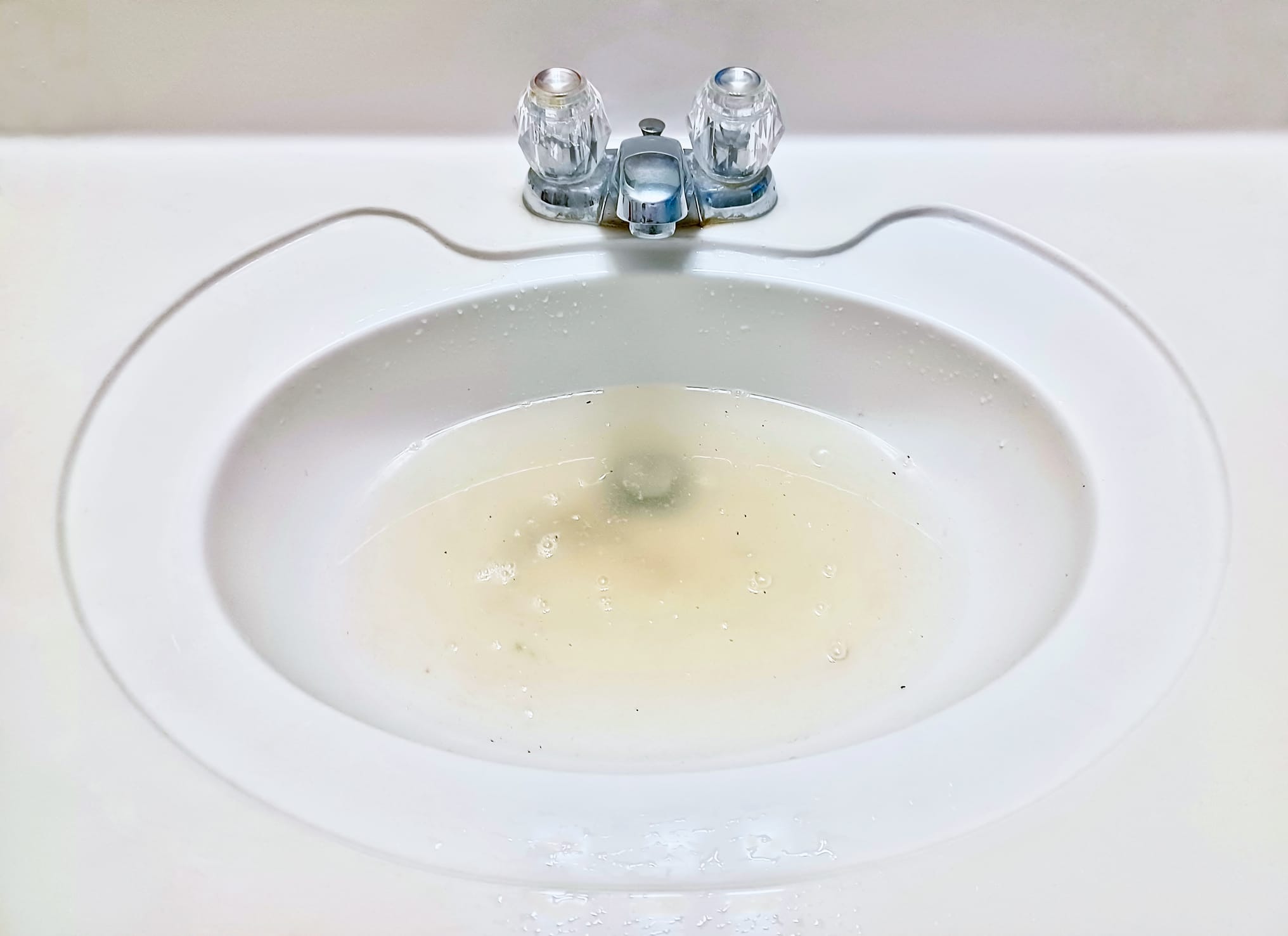
- Water begins to pool or back up temporarily before slowly draining through the partial obstruction.
- You may notice water sitting in the sink for 30 to 60 seconds after turning the tap off, or the shower floor pooling with water before it drains away.
- Gurgling noises become more pronounced as air is forced through the restricted passage and bubbles back up through the water.
- Odours may begin to appear. Trapped organic material in the blockage decomposes and releases sulphur compounds, causing a sewage-like or rotten egg smell from the drain.
Stage Four: Full Blockage
- The channel closes entirely. Water entering the drain has nowhere to go and begins to back up into the fixture — the sink fills, the toilet overflows, the shower backs up onto the bathroom floor.
- In a main sewer line, a full blockage affects multiple fixtures simultaneously. Water backing up from one drain when another is used is a reliable indicator of a main sewer blockage rather than a localised fixture blockage.
- At this stage, the blockage is an emergency. Any continued use of water-related fixtures risks sewage overflow inside or outside the home.
What Types of Material Cause Drain Blockages in Bacchus Marsh Homes?
The specific material causing a blockage determines how it develops inside the pipe, how difficult it is to clear, and what the right solution is. Different materials behave differently once inside the drain system.
Grease and Fat
- Cooking fat and grease enter the drain as a liquid but solidify as they cool, coating the pipe walls with a waxy, sticky film.
- This film builds up layer by layer with every meal cooked. Over months and years, the accumulation can reduce a 100mm diameter drain pipe to an effective opening of 30 to 40mm or less.
- Grease blockages are dense, semi-solid, and difficult to shift with water pressure alone. High-pressure water jetting is the most effective way to cut through and flush away years of grease build-up.
- Pouring boiling water down the drain periodically can help soften minor grease accumulation, but it is not a substitute for professional cleaning once significant build-up has occurred.
Hair and Soap Scum
- Hair does not dissolve or break down in water. Once inside a drain, it coils around itself and around any protrusion inside the pipe, forming dense, matted clumps that trap everything else passing through.
- Soap scum — the white, chalky residue left by soap products reacting with minerals in water — bonds hair fibres together and adheres them to the pipe wall.
- Combined, hair and soap scum form a tough, fibrous mass that resists water pressure but can usually be broken up or removed mechanically with a drain snake or electric eel.
- Bathroom drain hair catchers are one of the most cost-effective preventive measures available. Cleaning them after every shower takes seconds and avoids the need for professional clearing for months or years.
Foreign Objects and Non-Flushable Items
- Wet wipes, sanitary products, cotton wool, paper towels, and children’s toys are among the most common foreign objects recovered from blocked drains.
- Unlike toilet paper, which is designed to disintegrate quickly in water, these items retain their shape and strength inside the pipe, creating immediate and severe obstructions.
- Even products marketed as “flushable” — including many brands of wet wipes — do not break down sufficiently inside a residential drain and regularly cause blockages.
- Foreign object blockages often require mechanical removal rather than jetting, as water pressure alone cannot dislodge solid, non-compressible material.
What Happens to Pipe Structure During a Blockage
A blockage does not just restrict water flow — it can also cause physical damage to the drain system itself. Understanding these secondary effects explains why acting on a blockage quickly is important, rather than waiting to see if it clears on its own.
Pressure Build-Up Behind the Blockage
- As water continues to enter a drain while the path forward is obstructed, hydrostatic pressure builds up behind the blockage.
- This pressure can stress pipe joints, push water into hairline cracks, and in severe cases force water out through the weakest points in the drainage system — sometimes into wall cavities or subfloor spaces.
- In older clay pipes, which are often joined with cement or rubber seals that have deteriorated with age, pressure from a significant blockage can cause joints to separate or sections to shift.
Corrosion and Chemical Damage
- Stagnant waste water sitting against pipe walls accelerates corrosion, particularly in metal pipes. The longer a blockage remains uncleared, the more damage can occur to the pipe interior.
- Hydrogen sulphide gas produced by decomposing organic matter in the blockage is highly corrosive to both metal pipes and concrete sewer infrastructure.
- Chemical drain cleaners, while sometimes useful for minor blockages, can accelerate corrosion in older metal pipes and degrade rubber seals and joints if used repeatedly.
Sewer Gas Backflow
- Drain traps — the U-shaped sections of pipe under every fixture — are designed to hold a small amount of water that acts as a seal against sewer gases entering the home.
- A blockage that alters the air pressure in the drain system can siphon water out of these traps, removing the seal and allowing hydrogen sulphide, methane, and other sewer gases to enter the living space.
- This is the reason why a blocked drain can cause sewage odours throughout the home, even in rooms that are not directly connected to the blocked fixture.
How Plumbers Clear a Blocked Drain
The method a licensed plumber uses to clear a blockage depends on what is causing it, where it is located, and how severe it has become. Understanding the options available helps you have an informed conversation with your plumber about the right approach for your situation.
Electric Drain Snake
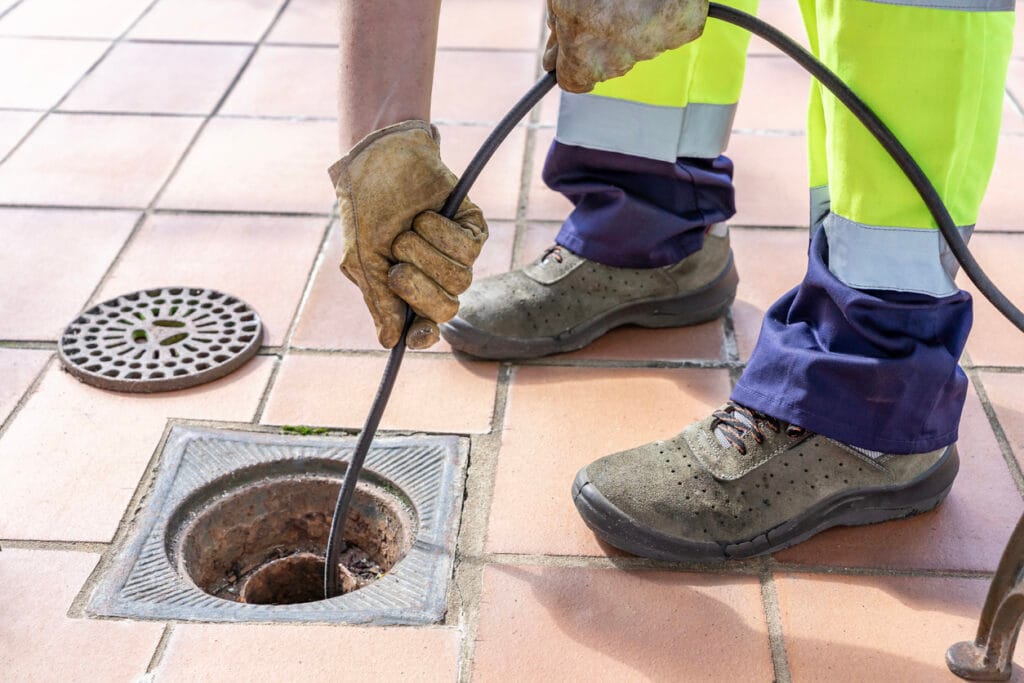
- A drain snake is a long, flexible metal cable with a cutting or retrieval head on the end, driven by a motor. It is fed through the drain and physically breaks up or retrieves the blockage.
- Effective for hair, soap scum, soft grease build-up, and small root intrusions. It is a fast, clean method for localised fixture blockages.
- It clears the immediate blockage but does not clean the pipe walls, so grease or scale build-up that remains can contribute to a re-blockage relatively quickly.
High-Pressure Water Jetting
- A specialised nozzle is inserted into the drain and water is pumped through at very high pressure — typically between 4,000 and 5,000 psi for residential drain work.
- The forward-facing jet cuts through the blockage while rear-facing jets propel the nozzle forward and flush dislodged material back towards the access point.
- Jetting effectively cleans the entire pipe wall as well as removing the immediate blockage, making it the preferred method for grease, scale, and root infestations.
- It is the closest thing to a comprehensive clean-out of the drain and significantly extends the period before a re-blockage occurs.
Frequently Asked Questions
Can I use a plunger to clear a completely blocked drain?
A plunger can be effective for minor, localised blockages close to the fixture opening — such as a ball of hair sitting just below the shower plug hole. However, once a blockage has developed deeper in the pipe or involves grease, root intrusion, or a foreign object, a plunger cannot generate enough force to shift it. Using a plunger on a severely blocked sewer line can also force material further into the system, making it harder to clear. If a plunger does not resolve the issue within two or three attempts, call a licensed plumber.
Why does my drain smell even when it is not blocked?
A drain that smells without being visibly blocked usually has one of two causes. The first is a partial build-up of organic material inside the pipe that is decomposing and releasing sulphur compounds, but has not yet grown large enough to restrict flow noticeably. The second is a dry or compromised drain trap — the U-shaped section of pipe under every fixture — which has lost its water seal and is allowing sewer gases to enter the room. Running water into the fixture and ensuring the trap refills will resolve a dry trap. A persistent smell suggests the blockage has begun to develop and a professional clean is worthwhile.
How long does it take for a drain blockage to develop?
The timeline varies significantly depending on the cause. Grease blockages in a kitchen drain typically develop over months or years of cooking without proper disposal habits. Hair and soap scum can create a noticeable partial blockage in a bathroom drain within a few weeks in a multi-person household. Root intrusions develop more slowly — small roots enter through a joint crack and take months or years to grow into a significant obstruction. Foreign objects, by contrast, can cause an immediate blockage the moment they enter the pipe. There is no single timeline — which is why routine drain maintenance is more reliable than waiting for symptoms to appear.
Is it safe to use chemical drain cleaners on a full blockage?
Chemical drain cleaners should be used with caution and only for minor partial blockages. They contain highly caustic substances — typically sodium hydroxide or sulphuric acid — that can cause burns if they splash back, particularly when the drain is fully blocked and the product cannot flow away. They are also corrosive to older metal pipes and rubber-jointed clay pipes, and can degrade PVC fittings with repeated use. For a full blockage, the risk of chemical products sitting against vulnerable pipe sections outweighs any potential benefit. A plumber with mechanical clearing equipment is the safer and more effective option.
Conclusion
A blocked drain is rarely a surprise — it is the result of a process that has been underway inside your pipes for some time, building up layer by layer until flow is restricted or stopped entirely. Understanding what is happening inside the pipe helps you respond to early warning signs before they become emergencies, and make informed decisions about the right clearing method when a blockage does occur.
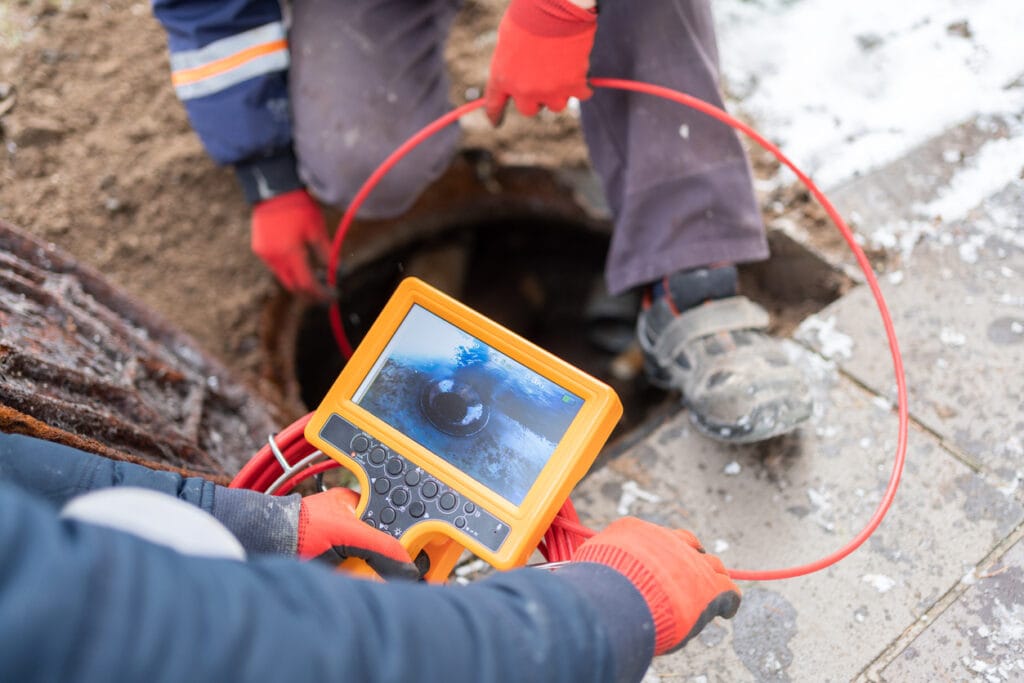
For Bacchus Marsh homeowners, the combination of established gardens, older housing stock, and clay sewer infrastructure that is common across the area means drain issues deserve particular attention. Tree roots, deteriorated pipe joints, and aged pipe surfaces create ideal conditions for blockages to develop — and recurring blockages in older properties almost always warrant a CCTV inspection to properly understand what is happening underground.
At New Image Plumbing and Gas, we provide blocked drain clearing, high-pressure jetting, and CCTV drain inspections across Bacchus Marsh and the surrounding western suburbs. Whether you have a slow drain, a complete blockage, or a recurring problem that other plumbers have not been able to resolve permanently, our team has the equipment and experience to find the cause and fix it properly. Call us on 0489 246 667 or reach out through our online form for same-day service.