
When a plumber Melton quotes you for pipe relining, the number can be surprising. It’s not the cheapest repair, and it’s natural to wonder whether it’s actually worth it, or whether there’s a simpler solution that does the job just as well.
The honest answer is: for most cracked or damaged drains, yes, pipe relining is worth it. But the full picture is more nuanced than a yes or no. Understanding what relining actually does, what it costs compared to the alternatives, and what situations it’s genuinely suited to will help you make the right call for your property.
What Is Pipe Relining and How Does It Work?
Pipe relining is a trenchless repair method. Rather than excavating the ground to remove and replace a damaged pipe, a plumber inserts a resin-saturated liner into the existing pipe through an access point — usually an inspection opening or a cleanout at the end of the drain run. The liner is inflated against the pipe walls and left to cure, creating a new, seamless pipe inside the old one.
The resin used is typically an epoxy or polyester compound. Once cured — either at ambient temperature over several hours, or accelerated using hot water or UV light depending on the system — it bonds to the interior of the host pipe and forms a structurally independent tube. The liner effectively becomes the new pipe, with the old one acting as a casing around it.
The two main installation methods are inversion lining (where the liner is turned inside-out as it’s pushed through the pipe under water or air pressure) and pull-in-place lining (where the liner is pulled into position and inflated). Both achieve the same result. The method used depends on the pipe diameter, length, and the number of bends in the run.
It Avoids Excavation
The biggest cost of traditional pipe repair isn’t the pipe. It’s everything around it. Breaking up a driveway, excavating through a garden, cutting through a concrete slab, and then reinstating all of it after the pipe is fixed can easily double or triple the cost of the plumbing work itself. Relining sidesteps all of that because the pipe never leaves the ground.
In a suburban Melbourne context, this matters a great deal. Many homes in Melton and West Melbourne have drains running beneath concrete paths, driveways, landscaped gardens, or even under the slab of the house itself. Excavating any of those surfaces adds significant cost and time — and the reinstatement work is rarely as clean as the original. A driveway that was poured as a single slab cannot truly be returned to that state after a trench is cut through it; you end up with a visible join, and in some cases differential settlement over time.
Pipe relining avoids all of this. Access is gained through an existing opening, and the work happens entirely from inside the pipe. The surface above stays intact.
It’s a Permanent Fix, Not a Patch
Patching a crack or clearing roots from a drain buys time. The crack will spread and roots will come back. A pipe liner, by contrast, creates a seamless new pipe inside the old one. There are no joints for roots to target and no edges for cracks to extend from. The problem is resolved, not delayed.
Tree root intrusion is one of the most common causes of recurring blocked drains in residential properties. Roots enter through joints — the points where two sections of pipe connect — and through cracks. Once inside, they proliferate and form a mesh that catches debris and causes blockages. Clearing the roots by water jetting removes them temporarily, but it doesn’t seal the entry point. Within months, sometimes weeks, they regrow through the same gap.
A relined pipe has no joints and no cracks. Roots have no entry point. The relining effectively removes root intrusion as an ongoing problem, not just a recurring inconvenience to manage.
The same logic applies to cracks from ground movement, pipe age, or soil settling. A liner covers the crack from the inside and bonds to the surrounding pipe material, stopping any further extension. The structural integrity of the drain is restored, not borrowed against.
It Works on Most Pipe Types
Pipe relining can be used on clay, concrete, cast iron, PVC, and most other drain materials. It works on pipes from 65mm to 450mm in diameter, covers bends and junctions, and can handle both short and long sections of pipe. The range of applications is broad enough that most residential drainage problems are candidates.
Clay pipes are particularly common in older Melbourne suburbs. Homes built prior to the 1980s frequently have clay sewer and stormwater lines. Clay is durable but brittle — it cracks under ground movement and deteriorates at the joints. It’s an ideal candidate for relining because the pipe body is often still intact enough to host a liner, even if individual sections are cracked or the joints have opened up.
Cast iron drain pipes — found in some older homes — can also be relined, though the internal surface sometimes requires cleaning before the liner is installed to ensure proper adhesion. PVC is less commonly a relining candidate because it’s a newer material and less prone to root intrusion or cracking, but it can be relined where damage has occurred.
Junction relining is also possible using specially formed lateral liners that seal the point where a branch drain meets the main line. This is one of the most common entry points for root intrusion and historically one of the hardest spots to repair without excavation. Modern relining equipment handles it without needing to dig.
How Long Does a Pipe Liner Last?
Reputable epoxy pipe liners are rated for a service life of 50 years or more when correctly installed. The cured-in-place materials used in modern relining are resistant to chemical attack, root growth, and abrasion. The resin doesn’t corrode and won’t deteriorate in the way that older pipe materials do.
This longevity matters for the cost calculation. If you spend money on a relining job today, you’re not planning to revisit that section of drain for decades. That’s a meaningfully different outcome from repeatedly clearing roots or patching cracks, which addresses the symptom and not the underlying structural issue.
It’s worth noting that the 50-year figure assumes the pipe was properly prepared before lining (cleaned to remove all scale, roots, and debris), the liner was correctly installed with no voids or delamination, and the access junctions were correctly sealed. This is why the quality of the installer matters. A poorly installed liner may fail within years. A correctly installed one is effectively as durable as a new pipe.
The Long-Term Maths
If you pay to clear a blocked drain caused by root intrusion and the roots come back within a year, you’ve spent money without solving the underlying problem. After several years of repeated call-outs, you’ve likely spent more than a relining job would have cost upfront, while the pipe has continued to deteriorate. Relining stops that cycle.
The comparison becomes even more compelling when you factor in the cost of excavation. In many cases, traditional pipe replacement in Melbourne involves not just the plumbing cost but also the cost of breaking and reinstating concrete, engaging a landscape contractor, and potentially temporary relocation if access to part of the property is blocked during works. These costs can be substantial — in some residential situations, reinstatement alone costs more than the relining would have.
There’s also the disruption factor. Excavation typically takes multiple days and leaves the property in a poor state during the work. Pipe relining is usually completed in a single day, often in a few hours, and the property is functional again immediately.
What Does the Camera Inspection Show?
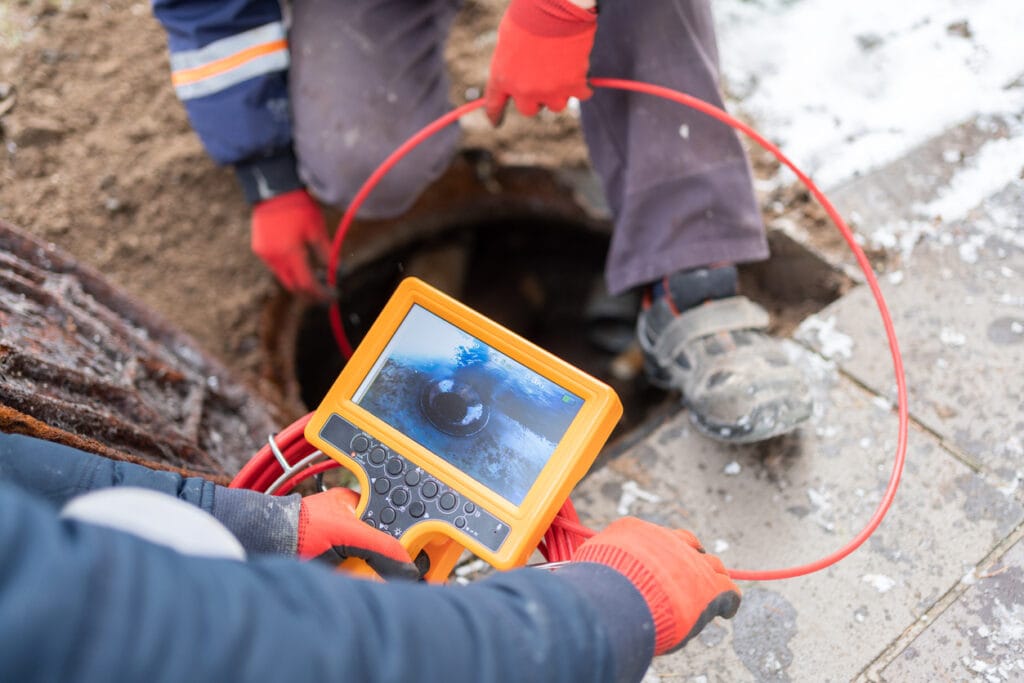
Before any relining is done, the plumber runs a CCTV camera through the pipe. This isn’t a formality — it’s essential diagnostic work. The camera footage tells the plumber exactly what’s there: where cracks are located, how far root intrusion extends, whether any sections have deformed or partially collapsed, and what the pipe material is.
This information determines whether relining is viable, what preparation is needed before lining, and how long the liner will need to be. It also gives you a permanent record of the pipe condition before and after the repair, which is useful if the property is ever sold or if an insurance claim becomes relevant.
A thorough plumber will show you the footage and walk you through what it means. If the footage shows that the pipe is too deformed to host a liner, they’ll tell you that too. The camera inspection protects both parties — it ensures the right repair is recommended, not just the most expensive one.
When It’s Not Worth It
If the pipe is in very poor condition with significant deformation or multiple collapsed sections, relining may not be viable. A camera inspection will tell you. If the pipe genuinely can’t be relined, a plumber who gives you an honest assessment will say so and explain why.
There are a few other situations where relining isn’t the right call. If the pipe diameter is below the minimum threshold for the lining equipment available (typically 65mm for most residential systems), mechanical relining may not be feasible and alternatives such as spot repairs or full replacement need to be considered.
If the pipe has experienced severe root intrusion that has also displaced or buckled sections of the pipe body, the host pipe may not be stable enough to support a liner. The liner requires a reasonably intact host structure to bond to. A heavily degraded pipe that has lost its round profile in multiple places may not qualify.
Finally, if only a very short section — say, 300mm or less — is damaged and it’s easily accessible, a spot repair or collar repair may be a faster and equally effective solution. Relining is most cost-efficient when it addresses longer runs or multiple problem areas in one liner installation. For a very short, isolated problem with easy access, the economics can favour a simpler approach.
Pipe Relining vs Pipe Replacement: A Direct Comparison
It helps to lay the two options side by side. Traditional pipe replacement involves excavating to the pipe depth, cutting out and removing the damaged section, installing new pipe with properly aligned joints, and reinstating everything above. It’s effective and results in new pipe material. But it requires access to the pipe from above, which means disrupting whatever is on the surface.
Pipe relining involves accessing the pipe through existing openings, cleaning it, inserting the liner, curing it, and reinstating the access point. No surface disruption. The result is a new pipe surface inside the old one. It doesn’t require the host pipe to be removed and it doesn’t require any surface above to be opened up.
The trade-off with relining is a slight reduction in internal diameter — a 100mm pipe relined with a standard liner typically has an internal diameter of around 97mm after lining. In practice, this rarely causes flow issues in residential drainage. The liner is smooth, which reduces friction and in many cases improves flow compared to an aged, rough-surfaced or root-obstructed pipe.
Conclusion
The quality of the pipe relining depends heavily on the quality of the preparation work, the resin system used, and the installation technique. A liner installed without proper pipe cleaning won’t bond correctly to the host pipe. A liner installed with voids or air pockets in the resin won’t achieve its rated structural strength.
When selecting a professional for pipe relining West Melbourne, look for a licensed plumber (not just a drain specialist without a plumbing licence), CCTV documentation before and after the work, a written warranty on the liner itself, and a clear explanation of which resin system is being used and why. Be cautious of contractors who quote without conducting a camera inspection first — there’s no responsible way to quote a relining job without seeing inside the pipe.
If you’re dealing with cracked or repeatedly blocked drains, the team at New Image Plumbing and Gas can assess your situation and let you know whether pipe relining is the right call. Melton residents can find out more by calling us at 0489 246 667 or submitting our online form. Start with the camera inspection and you’ll have a clear answer.
Frequently Asked Questions
How do I know if my drain needs relining or just clearing?
If a drain blocks once, clearing it may be sufficient. If it blocks repeatedly — particularly in the same location — there is almost certainly an underlying structural issue that clearing alone won’t fix. A camera inspection after clearing will show whether relining is needed to address a crack, joint failure, or root entry point.
Can I get a quote without a camera inspection first?
Any reputable relining contractor will require a camera inspection before quoting. Without seeing inside the pipe, there’s no way to accurately assess whether relining is viable, how long the affected section is, or whether any preparatory work is needed. Be cautious of anyone who quotes without inspecting.
Does pipe relining smell or release fumes during the process?
Some resin systems have a mild odour during installation and curing. For underground drain pipes, this is usually not noticeable at the surface. Your plumber will advise if any ventilation precautions are needed for the specific resin being used.
Can a drain be relined more than once?
In most cases, a pipe that has already been relined cannot be relined again. The liner reduces the internal diameter, and a second liner would reduce it further, potentially causing flow issues. This is why getting the first relining job right with quality materials and proper installation matters so much.
Is pipe relining covered by home insurance?
Most standard home insurance policies do not cover the cost of pipe relining or drain repairs. Insurance typically covers damage caused by a sudden event rather than gradual deterioration. Check your specific policy, but don’t count on insurance to cover the repair cost. Some insurers will cover water damage resulting from a failed pipe even if they won’t cover the pipe repair itself.
How long does the relining process take?
Most residential relining jobs are completed within a single day. Preparation — cleaning the pipe, camera inspection, setting up access — typically takes two to three hours. The liner installation itself takes one to two hours. Curing time varies by resin system: ambient cure systems take several hours, while hot water or UV cure systems can reduce curing to under an hour. Drains can usually be returned to service the same day.
What warranty should I expect on a relined pipe?
Industry-standard warranties for cured-in-place pipe lining in Australia are typically 10 to 15 years on workmanship, with the liner material itself rated for a 50-year service life. Ask your contractor to provide the warranty in writing and confirm whether it covers both the liner and the installation quality.