If you have ever looked at your quarterly gas bill and wondered how much of it is coming from your hot water, you are not alone. For most households, the hot water system is the single biggest gas appliance in the home. Whether you have a gas hot water system sitting in your backyard, a wall-mounted gas instant water heater on the side of the house, or an LPG hot water heater out on the property, understanding how much gas it actually uses helps you manage your bills, compare your options, and make smarter decisions when the time comes to replace or upgrade. This guide breaks down real gas consumption figures by system type, explains what drives usage up or down, covers LPG vs natural gas costs, and answers the questions homeowners ask us most often about their hot water systems in Melton and Bacchus Marsh.
How Much Gas Does Hot Water Use Per Day?
Gas consumption for hot water is measured in megajoules (MJ). The exact amount your system uses each day depends on the type of system, its star rating, how many people are in the household, and how much hot water you actually use. Here are the realistic daily consumption figures for the most common hot water gas systems in Australian homes.
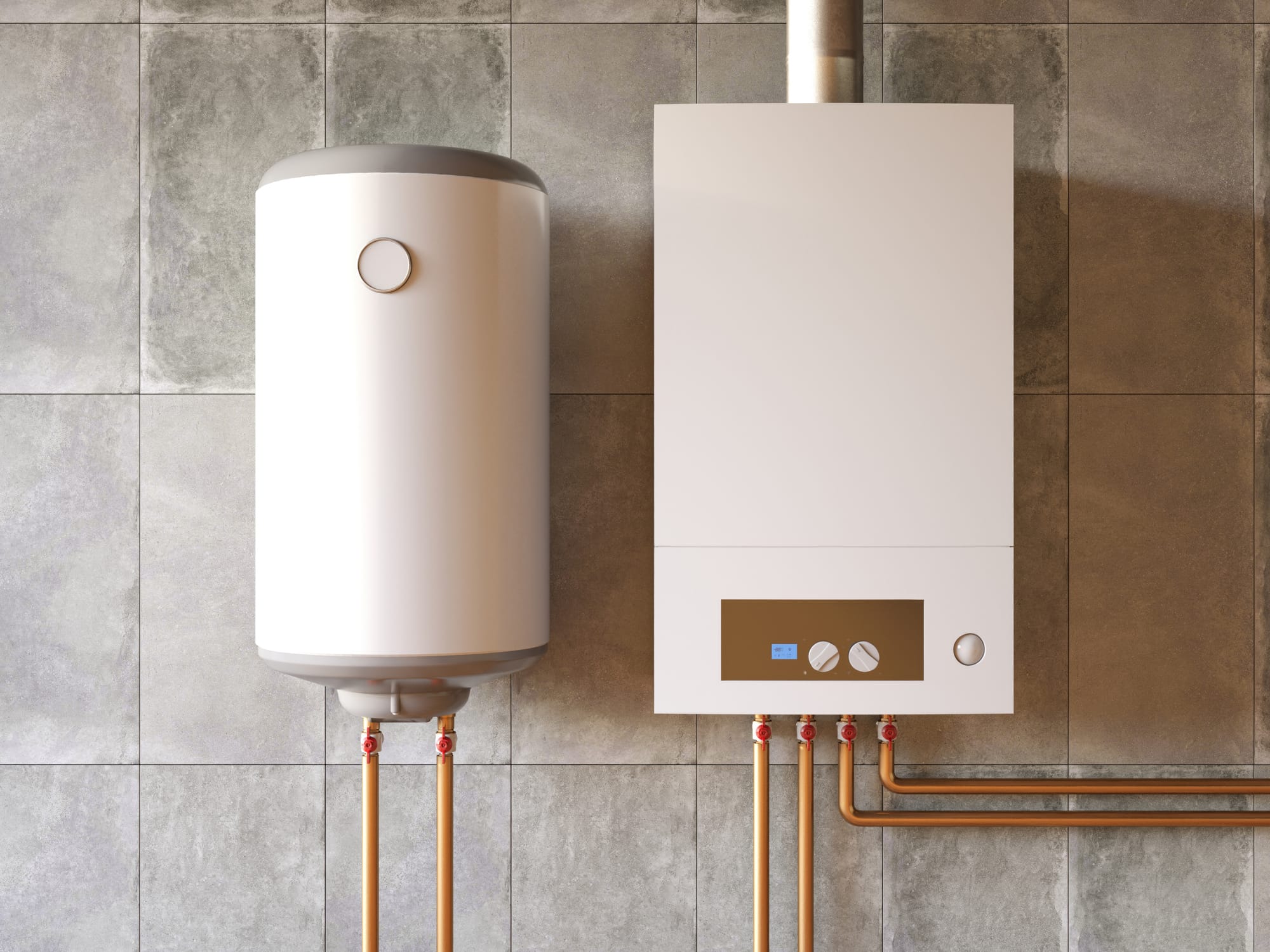
Gas Storage Hot Water Systems
A gas storage system keeps a full tank of water hot at all times, which means it uses gas continuously, even when no one is showering or washing dishes. This standby heat loss is the main reason storage systems use more gas overall than instantaneous alternatives.
- A 1-person household typically uses around 15 to 25 MJ of gas per day for hot water
- A 2-person household typically uses around 25 to 40 MJ per day
- A family of 4 typically uses between 40 and 60 MJ per day, depending on usage habits
- A 4-star gas storage system requires approximately 37.7 MJ of energy to heat 200 litres of water from 15°C to 60°C at 100% efficiency. Real systems use more due to heat loss and efficiency ratings
- Older 2-star storage systems can use 30 to 50% more gas than a modern 5 or 6-star unit for the same hot water output
Instantaneous Gas Hot Water Systems
An instantaneous gas hot water system, sometimes called a continuous flow system, heats water only when you open a hot tap. There is no storage tank, no standby heat loss, and no gas used between uses. This makes the gas instant water heater significantly more efficient than a storage system, particularly for smaller households or households with irregular hot water use patterns.
- A typical 20 L/min instantaneous gas hot water system uses approximately 0.8 to 1.2 MJ of gas per shower at average conditions
- Daily household consumption for a family of 4 with an instantaneous system typically sits between 20 and 45 MJ per day, depending on shower frequency and length
- Because there is no standby loss, a family of 4 on a good instantaneous system can use 20 to 30% less gas for hot water than the same family on a storage system
- A single person or couple using a gas instant water heater may use as little as 10 to 20 MJ per day
LPG Hot Water Systems
If your property does not have access to the natural gas network, which is the case for many homes on larger blocks around Bacchus Marsh and outer Melton, an LPG hot water heater is the gas alternative. LPG systems, including LPG instantaneous hot water systems and LPG gas hot water storage tanks, operate on the same principles as natural gas systems. The difference is the fuel source and its cost.
- LPG gas hot water systems use the same MJ of energy as their natural gas equivalents for the same output
- However, LPG is priced significantly higher per MJ. In the Melbourne area, LPG via bulk 45 kg cylinder supply is priced at approximately 7.07 cents per MJ, compared to around 3.4 to 3.8 cents per MJ for natural gas
- This means running an LPG hot water heater costs roughly double the gas cost of an equivalent natural gas system
- An LPG instantaneous hot water system is still more efficient than an LPG storage system due to the elimination of standby losses, but the per-MJ cost remains higher than natural gas regardless of system type
- For homes on LPG in areas like Bacchus Marsh where natural gas connection may not be available, sizing the system correctly and choosing a high-star-rated unit becomes even more important to keep running costs manageable
How Much Does Gas Hot Water Cost Per Month?
Now that you know how much gas hot water uses, let us translate that into dollars. Using a Victorian natural gas rate of approximately 3.6 cents per MJ (a realistic 2026 benchmark for Melton-area households), and the daily consumption figures above, here is what you can expect to pay for hot water gas alone, before the daily supply charge.
Natural Gas Storage System
- 1 person: approximately 15 to 25 MJ/day = $0.54 to $0.90/day = roughly $16 to $27 per month
- 2 people: approximately 25 to 40 MJ/day = $0.90 to $1.44/day = roughly $27 to $43 per month
- Family of 4: approximately 40 to 60 MJ/day = $1.44 to $2.16/day = roughly $43 to $65 per month
- Annual running cost for a family of 4: approximately $520 to $780 per year in gas for hot water alone
Natural Gas Instantaneous System
Sustainability Victoria’s figures (based on mid-2025 energy prices) show that for a Melbourne household, a gas instantaneous water heater has an effective cost rate of approximately 4.23 to 4.34 cents per MJ after accounting for the electricity used for the unit’s ignition and controls. Annual running cost estimates by household size are:
- 1 person: approximately $655 per year (Choice / Sustainability Victoria data) including the full effective cost rate
- 4 people: approximately $900 to $1,100 per year
- Per month across a 4-person household: roughly $75 to $92 per month for hot water
Keep in mind these are hot water costs only. If your home also uses gas for space heating, cooking, or a gas heater, your total gas bill will be higher. Heating typically accounts for 40 to 60% of total gas use in a Victorian home during winter, while hot water accounts for roughly 25 to 30% of annual gas consumption.
LPG Hot Water
At 7.07 cents per MJ for LPG gas hot water via bulk cylinder in the Melbourne area, the monthly costs roughly double compared to natural gas:
- Family of 4 on LPG storage: approximately $85 to $130 per month for hot water
- Family of 4 on an LPG instantaneous hot water system: approximately $70 to $110 per month for hot water
- The LPG instantaneous system still comes out ahead because eliminating standby losses reduces the total MJ consumed
How Much Gas Does an Instant Hot Water System Use Compared to a Storage System?
This is one of the most common questions homeowners in Melton ask when comparing systems. The short answer: an instantaneous gas hot water system almost always uses less gas overall, especially for small to medium households. Here is why the numbers work out the way they do.
The Standby Loss Problem With Storage Systems
A gas storage system keeps your tank at 60°C or above around the clock. Every hour it sits idle, heat leaks out through the tank walls and pipework. The burner fires up again to compensate. This cycle runs 24 hours a day, even when the household is asleep, at work, or on holiday. That standby heat loss can account for a meaningful portion of your daily gas consumption, particularly with older, lower-rated systems.
- Older 2 to 3-star storage systems can lose significant gas to standby heat loss throughout the day
- A modern 5 or 6-star storage system reduces these losses, but they never reach zero
- The gas instant water heater has zero standby loss because there is no tank to keep warm
What Does This Mean for Your Bill?
For a typical Melton family of 4 replacing an ageing 3-star gas storage system with a modern 6-star instantaneous system, the reduction in gas consumption for hot water can be in the range of 20 to 35%, depending on usage patterns. Over a year, that difference can add up to $100 to $200 in gas savings on hot water alone. The upfront cost of an instantaneous system is higher, but the lower running cost and longer lifespan (discussed below) typically make it the better value over time.
When Storage Can Still Make Sense
Instantaneous systems are not always the right answer. There are situations where a gas storage system remains a practical choice:
- Very low gas pressure at the property (some outer Bacchus Marsh properties on older networks) can affect instantaneous system performance
- Homes with multiple bathrooms all drawing hot water at exactly the same time may need a large and expensive instantaneous unit to keep up with simultaneous flow demands
- Storage systems have a lower upfront purchase price, making them the cheaper option when budget is the primary consideration
- Off-peak gas tariffs on storage systems can reduce overnight costs if your plan has tiered pricing
What Affects How Much Gas Your Hot Water System Uses?
The MJ/day figure on your bill is influenced by far more than just the type of system you have. Several real-world variables can push your consumption well above or below the averages.
Household Size and Hot Water Habits
The more people in the house, the more hot water used, and the more gas consumed. But habits matter just as much as headcount. A family of 3 with long daily showers can easily outuse a family of 5 who take quick showers and wash clothes in cold water.
- Shower length is one of the biggest drivers. A 10-minute shower at 9 litres per minute uses around 90 litres of hot water
- Bath use adds significant hot water demand above showers
- Dishwashers connected to hot water draw gas; those connected to cold water heat internally via electricity
- Washing machines set to hot use more hot water gas than cold-wash cycles
System Star Rating and Age
The star rating on your gas hot water system reflects how efficiently it converts gas into usable hot water. A higher-rated system extracts more heat from every MJ of gas, meaning lower consumption for the same output.
- A 6-star gas instant water heater or storage system is significantly more efficient than a 3-star unit of the same capacity
- As systems age, their efficiency gradually declines due to scale buildup on heat exchangers, worn burner components, and degraded seals
- A 10-year-old storage system may be consuming 20 to 40% more gas than it did when new, due to reduced efficiency from age and scale
- Annual servicing can slow this decline and extend the working life of the unit
Cold Water Inlet Temperature
The colder the incoming water supply, the more gas the system needs to heat it to the set output temperature. This is why gas hot water consumption is noticeably higher in winter than in summer, even if your habits stay the same. In winter around Melton and Bacchus Marsh, ground temperatures and mains water temperatures can drop significantly, meaning your gas hot water system is working harder every time someone turns on a tap.
- Winter mains water can be 8 to 12°C in Victoria, versus 18 to 22°C in summer
- This temperature gap means the system may need to raise incoming water by up to twice as many degrees in winter as in summer
- Expect your hot water gas consumption to be 20 to 40% higher in the coldest months compared to summer
Thermostat and Tempering Valve Settings
Your storage tank should be set to a minimum of 60°C to prevent Legionella bacteria growth. A tempering valve then mixes in cold water to bring the delivery temperature down to a safe maximum of 50°C at the tap. If your thermostat is set too high or the tempering valve is out of adjustment, your system may be using more gas than necessary to maintain an unnecessarily high tank temperature, while simultaneously wasting that heat by mixing in more cold water at the outlet.
How Long Do Instant Gas Hot Water Systems Last?
This is an important question when comparing the long-term value of a gas instant water heater versus a storage system. The lifespan difference between the two is one of the strongest arguments for choosing an instantaneous system.
Instantaneous Gas Hot Water System Lifespan
Because there is no storage tank sitting full of hot water day and night, instantaneous systems avoid the corrosion that gradually degrades storage tanks over time. Without a tank, there is no rusting from the inside, no anode rod to replace, and no thermal cycling stress on a large volume of water. This translates directly into a longer working life.
- A well-maintained instantaneous gas hot water system typically lasts 15 to 20 years
- Some well-serviced units in good water quality areas exceed 20 years
- The main wear components are the heat exchanger (which can scale up in hard water areas), the igniter, and the flow sensor
- Annual descaling and servicing in harder water areas like parts of Melton can significantly extend the heat exchanger life
Gas Storage System Lifespan
Gas storage hot water systems have a shorter expected lifespan than instantaneous systems, primarily because the storage tank corrodes from the inside over time.
- A gas storage hot water system typically lasts 8 to 12 years
- A sacrificial anode rod inside the tank slows corrosion, but it needs to be inspected and replaced every 3 to 5 years. Ignoring this dramatically shortens the tank life
- Signs a storage system is reaching end of life include rust-coloured water, a rumbling or popping sound during heating, and moisture or pooling water around the base of the tank
- If your storage system is approaching or past 10 years, it is worth getting a plumber Melton to assess whether a replacement or service will extend its life
The Long-Term Cost Comparison
When you factor in the longer lifespan of instantaneous systems alongside their lower running costs, the higher upfront price of a gas instant water heater often works out cheaper over a 15 to 20-year period than replacing a storage system twice and paying higher gas bills throughout. For homeowners in Melton and Bacchus Marsh planning a hot water system upgrade, this calculation is worth running before defaulting to the cheapest option at point of purchase.
Natural Gas vs LPG Hot Water: Which Costs Less to Run?
If you have the option of connecting to natural gas, it is almost always the better long-term choice for running costs over LPG. The energy content of the gas is similar, but the price per MJ differs substantially.
Natural Gas
- Current 2026 Victorian residential natural gas rates: approximately 3.4 to 3.8 cents per MJ, depending on retailer and plan
- Best suited to properties already on the gas network, which covers most established suburbs across Melton
- Daily supply charge applies regardless of usage: typically $0.80 to $0.90 per day
LPG Gas Hot Water
- LPG via 45 kg bulk cylinder in the Melbourne area: approximately 7.07 cents per MJ (Sustainability Victoria, mid-2025 data)
- No daily supply charge for LPG, but the higher per-MJ rate more than offsets this in most households
- LPG gas hot water is the practical option for properties not connected to the natural gas network, including many rural and semi-rural blocks around Bacchus Marsh
- For LPG users, choosing a high-star-rated instantaneous hot water system is especially important because you are paying more per MJ, so efficiency gains have a bigger dollar impact
- If a natural gas connection becomes available in your area, switching from LPG gas hot water to natural gas can reduce your hot water gas costs by 40 to 50%
Tips to Reduce How Much Gas Your Hot Water Uses
You do not have to replace your system to bring your gas hot water consumption down. Several practical steps can reduce how much gas your hot water system uses without affecting your comfort.
Fit a Water-Efficient Showerhead
Switching from a standard 12 to 15-litre-per-minute showerhead to a 7.5-litre-per-minute WELS-rated showerhead can cut your hot water use by 30 to 50% per shower. This is one of the single most effective changes you can make without touching the hot water system itself, and it reduces both your gas consumption and your water bill.
Check for Dripping Hot Taps
- A dripping hot tap wastes hot water continuously, which means your storage system is firing up more often to compensate
- A tap dripping at just 1 drop per second can waste over 30 litres of hot water per day
- Getting dripping taps repaired promptly is a straightforward fix that reduces both your water and gas consumption
Insulate Hot Water Pipes
- Uninsulated hot water pipes lose heat between the unit and the tap, meaning you run the tap longer waiting for hot water to arrive
- Pipe insulation on the first metre or two of hot water pipework coming off the system reduces heat loss and cuts the wait time for hot water
- This is particularly relevant for outdoor-mounted systems in Melton and Bacchus Marsh, where winter ambient temperatures increase pipe heat loss
Service Your System Annually
- An inefficient system uses more gas for the same hot water output
- Scaled heat exchangers on instantaneous systems increase gas consumption as the burner works harder to transfer heat through the scale layer
- On storage systems, anode rod checks, thermostat calibration, and burner cleaning all help maintain efficiency
- A licensed plumber Bacchus Marsh or gas fitter should service your system every one to two years, and annually in harder water areas
Adjust Usage Habits
- Shorter showers remain one of the highest-impact changes for reducing hot water gas consumption
- Washing clothes in cold water instead of warm or hot removes a meaningful load from the hot water system
- Running the dishwasher on the eco or cool wash setting rather than a hot cycle reduces hot water draw
- Spreading shower times out rather than having all household members shower simultaneously is particularly relevant for instantaneous systems, which have a flow rate limit
Frequently Asked Questions
How much gas does an instant hot water system use compared to a storage system?
An instant hot water system uses gas only when you draw hot water, so there is no standby loss. A family of 4 on an instantaneous system typically uses 20 to 45 MJ of gas per day for hot water, compared to 40 to 60 MJ per day on an older gas storage system. The savings are most significant for households with irregular hot water use patterns, or homes where the system sits idle for long periods during the day.
How much does gas hot water cost per month for a family of 4?
At current 2026 Victorian natural gas rates of approximately 3.6 cents per MJ, a family of 4 on a gas storage system can expect to pay roughly $43 to $65 per month purely for hot water gas usage. On a high-efficiency instantaneous system, this can come down to approximately $25 to $50 per month. LPG households pay roughly double these figures due to the higher per-MJ cost of LPG.
How long do instant gas hot water systems last?
A well-maintained instantaneous gas hot water system typically lasts 15 to 20 years. Without a storage tank, the main corrosion pathway for storage systems is eliminated, giving instantaneous units a significantly longer working life. Gas storage systems, by comparison, typically last 8 to 12 years. Regular annual servicing, particularly descaling in harder water areas, is the most effective way to maximise the lifespan of an instantaneous unit.
Is an LPG instantaneous hot water system worth it?
For properties without access to natural gas, an LPG instantaneous hot water system is a strong choice. While LPG costs more per MJ than natural gas, an instantaneous system eliminates standby losses entirely, which reduces total gas consumption compared to an LPG storage system. Choosing a high-star-rated LPG hot water heater makes the most of every MJ you pay for. If natural gas becomes available in your area in future, many instantaneous systems can be converted to natural gas by a licensed gasfitter, which will bring your running costs down substantially.
Does hot water use gas even when no one is home?
If you have a gas storage hot water system, yes. The tank constantly loses heat to the surrounding environment and the burner fires up to maintain the set temperature, whether the house is occupied or not. An instantaneous gas hot water system uses no gas at all when no tap is running, making it genuinely zero-consumption between uses. If you go on holiday, you can turn an instantaneous system off completely and pay nothing in gas during your absence.
What is the most efficient gas hot water system?
For most households, a 6-star instantaneous gas hot water system delivers the best balance of efficiency, running cost, and lifespan. Brands like Rinnai and Rheem offer well-regarded continuous flow units in flow rates from 16 to 26 litres per minute, suitable for households from a single person to a large family. For homes on LPG, the same principle applies but efficiency gains have an even larger dollar impact given the higher per-MJ cost. A licensed plumber can help you size the system correctly for your household’s peak flow demand.
Conclusion
Understanding how much gas your hot water system uses is the first step to getting more value from your energy spend. Whether you are on a gas storage system that is getting on in years, considering a switch to an instantaneous gas hot water system, or weighing up natural gas against LPG gas hot water for a new property in Bacchus Marsh, the numbers matter and the differences between systems are significant over time.
At New Image Plumbing and Gas, we work with hot water gas systems every day. If your system is ageing, your bills seem higher than they should be, or you are not sure whether repair or replacement makes more sense, we can give you an honest assessment with no obligation. We install, service, and repair all types of gas hot water systems, including natural gas and LPG instantaneous hot water systems, storage systems, and solar gas-boosted units.
Call Glenn and the team on 0489 246 667 or book via our online form for same-day service across West Melbourne. No surprises on the bill. No unnecessary upselling. Just reliable, expert advice and quality work from a local team you can trust.