A hot water system is one of the hardest-working appliances in your home. It runs every day, often for years, without much attention. Most homeowners never think about their hot water system until they’re standing in a cold shower wondering what happened. Knowing how long yours should last and what shortens or extends that lifespan helps you plan a replacement on your own terms rather than scrambling to deal with an emergency on a cold morning. If you’re unsure about the condition of your system, a plumber Bacchus Marsh can inspect it and help you plan ahead.
Electric Storage Hot Water Systems
Electric storage systems are among the most common type in Australian homes, particularly in areas where natural gas isn’t connected. They work by heating water in a tank and keeping it at temperature continuously, which means the element and thermostat are under constant thermal load.
Expected lifespan and key facts
- A quality electric storage system typically lasts 8 to 12 years with normal maintenance
- The heating element and thermostat are the most common points of failure and can often be replaced individually without replacing the whole system
- Corrosion is the main long-term failure mode, caused by constant water contact with the tank lining
- The anode rod — a sacrificial metal rod inside the tank — corrodes in place of the tank lining, protecting it from rust. It should be inspected every five years and replaced when significantly depleted
- Hard water accelerates corrosion and sediment buildup inside the tank, reducing efficiency and shortening the system’s life
- Systems stored in outdoor, exposed locations tend to have shorter lifespans due to UV and temperature variation
- Off-peak electric systems on controlled load tariffs cycle on and off based on grid signals, which affects element wear patterns differently from continuous load systems
If your electric system is approaching or past ten years old and you’re noticing inconsistent water temperatures, rust-coloured water, or unexplained increases in your electricity bill, it’s worth a professional assessment before it fails completely.
Gas Storage Hot Water Systems
Gas storage systems are a popular choice in areas of Melbourne’s western suburbs where natural gas is connected, including parts of Melton and Bacchus Marsh. They heat water faster than electric storage systems and typically have lower running costs on standard tariffs.
Expected lifespan and key facts
- A quality gas storage system typically lasts 8 to 12 years, with well-maintained quality-brand installations sometimes exceeding this
- The burner assembly, thermocouple, and pilot system are the most common components to fail — these can often be serviced or replaced without replacing the whole system
- The tank lining is subject to the same corrosion issues as electric storage systems, and the same anode rod maintenance schedule applies
- Gas storage systems benefit from annual servicing to check the burner, flue, and safety systems
- Indoor gas hot water systems require adequate ventilation and a functional flue — blocked or corroded flues are a safety hazard and should be inspected regularly
- Natural gas supply interruptions can affect pilot systems on older units — if the pilot won’t relight after a supply interruption, the thermocouple may need replacement
- A safety relief valve (temperature and pressure relief, or TPR valve) is required on all storage systems and should be tested annually by a licensed plumber
If your gas storage system is producing inconsistent temperatures, you can hear the burner cycling irregularly, or the pilot light is unreliable, these are signs that service or replacement is due.
Continuous Flow (Instantaneous) Systems
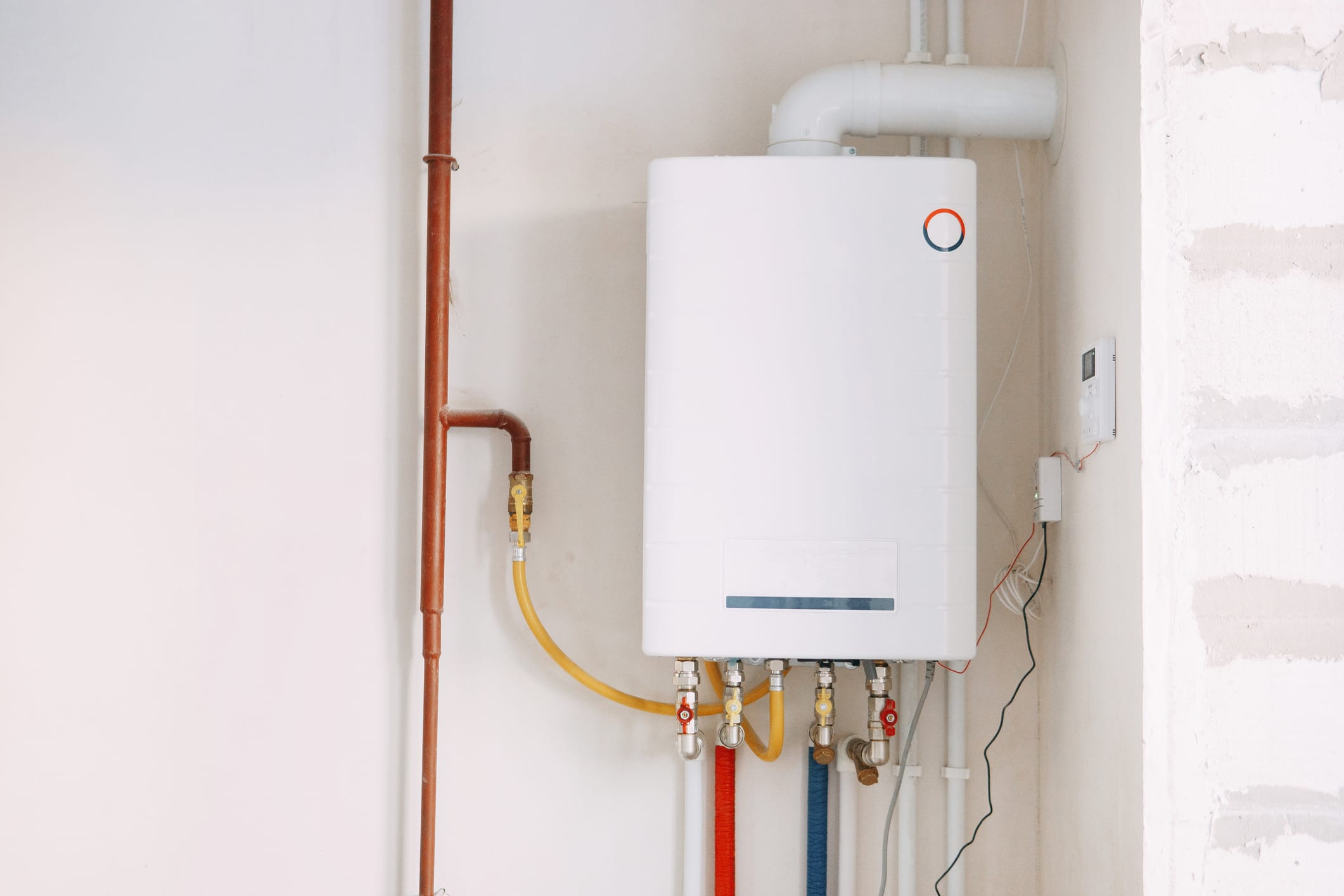
Continuous flow, also called instantaneous or tankless systems, heat water on demand rather than storing it. Because there’s no tank sitting full of water under constant thermal stress, these systems generally last significantly longer than storage systems when properly maintained.
Expected lifespan and key facts
- A well-maintained continuous flow unit can operate for 15 to 20 years — significantly longer than storage systems of either type
- The heat exchanger is the most critical component and the most expensive to replace if it fails
- In areas with hard water, limescale buildup in the heat exchanger reduces efficiency and eventually causes damage — descaling is part of routine maintenance in these areas
- Gas continuous flow units require the same annual gas safety checks as storage systems
- Flow rate matters — a continuous flow system must be correctly sized for your household’s simultaneous demand. An undersized unit will struggle during peak usage
- Electric continuous flow systems require very high amperage — they’re typically used for single-point applications (like a single bathroom) rather than whole-home supply
- These systems are not compatible with certain types of mixer taps and thermostatic shower valves — check compatibility before installation
Continuous flow systems have a higher upfront cost than storage units but their longer lifespan and lower standby energy losses make them competitive over time, particularly in households with high hot water usage.
Heat Pump Hot Water Systems
Heat pump systems work by extracting heat energy from the surrounding air and using it to heat water, in much the same way a reverse-cycle air conditioner heats or cools a room. They are significantly more energy-efficient than conventional electric storage systems and are becoming increasingly common as an upgrade option in Melton and Bacchus Marsh homes.
Expected lifespan and key facts
- Heat pump systems are generally rated to last 10 to 15 years, though the technology is still maturing and long-term field data is still accumulating
- They have moving parts — the compressor and fan — that require periodic servicing, similar to a split system air conditioner
- Performance drops in cold ambient temperatures, which is relevant for Melton’s cool winters. Most units switch to electric element boost below a certain air temperature
- They require adequate outdoor space for the heat exchange unit and should not be installed in small, enclosed areas where they’ll recycle the same air
- Government rebates under the Victorian Energy Upgrades (VEU) program are available for heat pump installations that replace older resistive electric storage systems — ask your plumber about current eligibility
- Noise output from the compressor and fan should be considered when choosing an installation location, particularly near bedroom windows or neighbouring properties
- The tank component carries the same corrosion risks as any storage system, and anode rod maintenance still applies
For homes coming off old electric storage systems in areas of Melton without gas connection, a heat pump is often the most cost-effective upgrade path when government rebates are factored in.
Solar Hot Water Systems
Solar hot water systems use roof-mounted collectors to capture heat from sunlight and transfer it to a storage tank, with a gas or electric booster providing backup during periods of low solar input. They have the lowest ongoing running costs of any system type but the highest upfront cost and most complex installation requirements.
Expected lifespan and key facts
- Solar collectors typically last 20 years or more when well maintained and installed on appropriate roof orientations
- The storage tank component follows the same 8 to 12 year lifespan as other storage tanks, and may need replacement before the collectors do
- North-facing roof orientation at the correct pitch is optimal for Melbourne’s latitude — easterly or westerly orientations reduce efficiency
- Shading from trees, rooflines, or neighbouring buildings significantly reduces output and should be assessed before installation
- The heat exchanger fluid in some systems requires periodic replacement — check your system’s maintenance requirements
- Roof penetrations must be properly flashed and sealed to prevent water ingress over the system’s life
- Government rebates are available under Small-scale Technology Certificates (STCs) for eligible solar hot water installations
Solar hot water is a long-term investment that makes most sense for households with high hot water demand, a suitable north-facing roof, and a 10-plus year horizon in the property.
What Shortens a System’s Life
Understanding the factors that reduce a hot water system’s lifespan helps you make decisions that extend it — or at least understand why a system that failed early did so. Several conditions are within a homeowner’s control to manage.
Factors that reduce hot water system lifespan
- Hard water accelerates corrosion and sediment buildup inside the tank, reducing efficiency and shortening tank life. Melbourne’s water supply is generally soft, but some areas can vary
- High water pressure stresses the tank, fittings, and connections continuously. Pressure above 500 kPa is outside the design operating range for most residential systems and causes accelerated wear
- Deferred anode rod maintenance is one of the most common causes of early tank failure. Once the anode rod is fully depleted, the tank lining begins to corrode rapidly
- Poor original installation — incorrect pipe sizing, inadequate support, wrong tempering valve setting, or a flue that doesn’t meet requirements — reduces lifespan from day one
- Lack of regular servicing means small developing faults go undetected until they become major failures
- Exposure to the elements without appropriate weatherproofing ages outdoor components faster
- An undersized system that is constantly running at full capacity to meet demand will wear faster than a correctly sized unit operating within its design range
Many of these factors are addressable with a single professional service visit. A plumber who checks the pressure relief valve, tests the water pressure, inspects the anode rod, and confirms the tempering valve setting is doing more to extend your system’s life than most homeowners realise.
Signs Your Hot Water System Is Approaching Failure
Hot water systems rarely fail without warning. There are almost always signs in the weeks or months before a complete breakdown. Catching these early gives you the option of a planned replacement rather than an emergency one.
- Inconsistent water temperature — water that alternates between hot and cold, or never gets as hot as it used to
- Rust-coloured or discoloured water from the hot tap specifically, which can indicate corrosion inside the tank
- Water around the base of the tank — not condensation (which is normal in humid conditions), but a visible pool or persistent moisture
- Popping, rumbling, or banging sounds from the tank during heating cycles, indicating sediment buildup on the element or burner
- The system is running more frequently than it used to in order to maintain the set temperature, increasing energy bills
- The pressure relief valve is discharging periodically — this can indicate excessive pressure, a failing valve, or the system overheating
- The system’s age is approaching or past its rated lifespan for its type
If you’re noticing any of these signs in your Melton or Bacchus Marsh home, it’s worth getting a professional assessment. A plumber can give you an honest view of whether the system can be repaired cost-effectively or whether replacement is the better option given the unit’s age and condition.
Frequently Asked Questions
Does the brand of hot water system affect how long it lasts?
Yes. Quality varies significantly across brands. Established Australian brands like Rheem, Dux, and Rinnai generally have better parts availability, more consistent manufacturing quality, and longer track records than cheaper imports. The installation quality also matters — a well-made system installed incorrectly won’t achieve its rated lifespan, and the brand warranty won’t help you if the installation caused the failure.
What is an anode rod and does it affect longevity?
An anode rod is a sacrificial metal rod — usually magnesium or aluminium — inside a storage hot water tank. It corrodes electrochemically in place of the tank lining, protecting the tank from rust. As it depletes over years, the tank itself begins to corrode. Replacing the anode rod every five years can significantly extend the life of a storage system. This is one of the most cost-effective maintenance actions a homeowner can take, and one that many are never told about.
Can a hot water system last beyond its stated lifespan?
Yes. Some well-maintained systems exceed their rated lifespan by several years. Good water quality, correct installation, regular anode rod replacement, and appropriate water pressure all contribute to longevity. However, an older system operating beyond its design life carries a higher risk of sudden failure. The cost savings of delaying replacement may be outweighed by the disruption and potential water damage if the system fails unexpectedly, particularly if it fails in the roof space or inside a wall cavity.
Conclusion
The cost of a planned hot water replacement is always lower than an emergency replacement — in time, money, and stress. If your system is approaching ten years old, showing any of the warning signs listed above, or you simply don’t know when it was last serviced or whether the anode rod has ever been checked, a professional assessment now is worth every penny.
New Image Plumbing and Gas handles hot water services in Melton and Bacchus Marsh. We work across all system types — electric, gas, continuous flow, heat pump, and solar — and can give you an honest recommendation based on your household’s usage, your existing installation, and what’s available through current government rebate programs. No upselling, no pressure. Just a straight answer about what your system needs and what it will cost.
Call us on 0489 246 667 for same-day service on urgent hot water issues, or get in touch through our online form to book a routine assessment. We also offer free quotes on all hot water replacements and upgrades across our service area.