
One of the most common questions we hear before a relining job is: how long is this actually going to last? It is a fair question. Pipe relining Melton is not cheap, and nobody wants to pay for a repair only to deal with the same problem five years later.
The short answer: a properly installed pipe liner is designed to last 50 years or more. Independent field evaluations of CIPP liners in gravity sewer systems have documented strong structural performance after more than 25 years in service, with projected lifespans of 50 to 60 years when installed correctly. That is comparable to new PVC pipe, and in many cases exceeds the remaining life of the host pipe it sits inside.
But there is no single number that applies to every job. The liner’s longevity depends on several specific factors, and understanding them helps you know what to ask before signing off on any relining quote.
What Pipe Relining Actually Does to the Pipe
Before getting into lifespan, it helps to understand what a liner physically is. Cured-in-place pipe (CIPP) relining works by inserting a flexible felt or fibreglass tube, saturated with liquid resin, into the damaged pipe. The tube is inflated so it presses against the interior pipe wall, and the resin is then cured using hot water, steam, or UV light, depending on the system being used. Once hardened, the liner forms a structurally independent pipe inside the existing one, with no joints and no seams along its length.
The resulting inner surface is smooth, chemically resistant, and structurally self-supporting. It bridges cracks, seals corroded sections, and eliminates the joints that tree roots target. The key word is “structurally independent”: a quality liner does not just coat the pipe wall, it becomes the pipe wall.
The Three Resin Types and How They Differ
Most residential relining in Australia uses one of three resin systems. The choice directly affects how long the liner lasts and how well it performs under specific conditions.
Epoxy Resin
Epoxy is considered the gold standard for residential and commercial drain relining. It bonds extremely well to host pipes including clay, cast iron, concrete, and PVC, offers excellent chemical resistance, and maintains dimensional stability under varying thermal and hydraulic loads. Epoxy liners are frequently used for building drains, laterals, and potable water applications when certified for that purpose. The trade-off is that epoxy must be mixed on-site immediately before use, as it cannot be pre-soaked and transported. This requires more skilled installation. When done correctly, epoxy liners are rated for 50-plus years in residential gravity sewer applications.
Polyester Resin
Polyester resin is more commonly used in larger-diameter municipal sewer mains. It is cost-effective at scale and has well-established structural design data. Its drawbacks for residential use include higher shrinkage during curing compared to epoxy, a stronger odour (making it unsuitable for indoor or confined spaces), and slightly lower long-term chemical resistance. Polyester resins can produce a liner that lasts 20 to 40 years in residential gravity drain applications when installed correctly, but they require well-ventilated work conditions during installation.
Vinyl Ester Resin
Vinyl ester sits between epoxy and polyester. It offers better chemical and moisture resistance than polyester, making it well-suited to pipes that carry aggressive wastewater or are exposed to high humidity and intermittent flow. It is more commonly seen in industrial and commercial drainage applications where corrosive compounds are present. For standard residential sewer relining, epoxy is typically the preferred choice, but vinyl ester is specified when the pipe environment demands higher chemical tolerance.
The carrier fabric also matters. Felt liners are the standard for most residential relining jobs and work well paired with epoxy or polyester. Fibreglass-reinforced liners offer higher structural stiffness and thinner wall profiles for the same load rating, and are preferred for larger-diameter or high-load applications. Your plumber should be selecting the liner and resin combination based on your pipe size, material, condition, and what it carries, not just what is cheapest or easiest to handle on the day.
The Quality of the Installation
No resin, regardless of its chemistry, performs to its rated lifespan if the installation is substandard. There are four preparation steps that determine whether a liner lasts 50 years or fails in five.
Pre-Relining CCTV Inspection
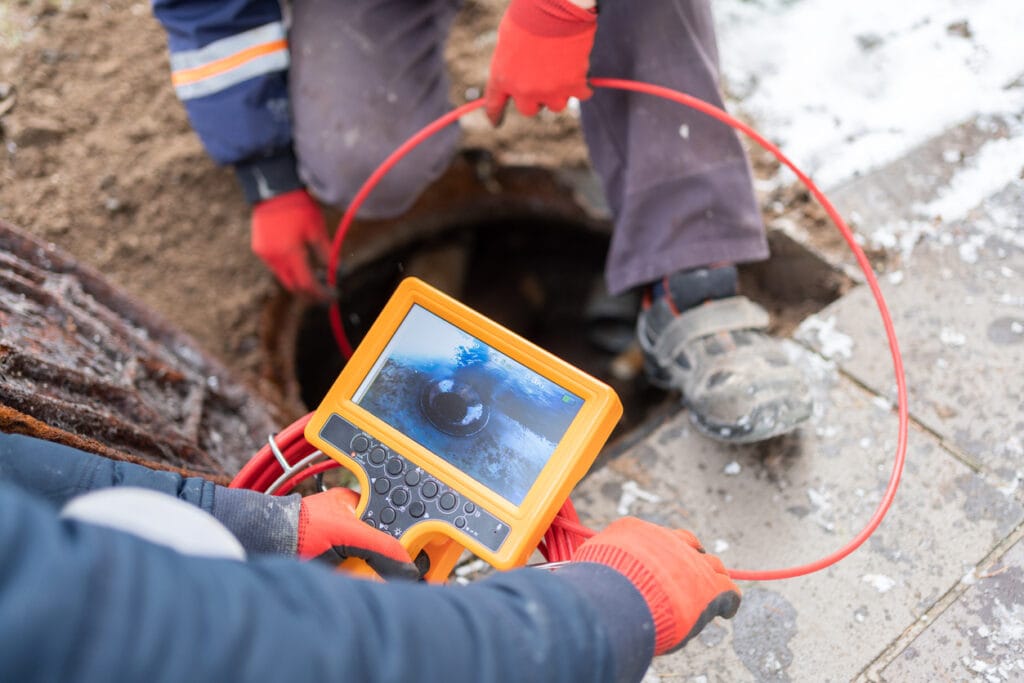
A camera inspection before relining is not optional. It confirms the exact location and nature of damage, identifies any sections that are too degraded or collapsed to accept a liner, and establishes baseline footage so you can compare with the post-installation inspection. If a plumber quotes relining without first running a camera through the pipe, walk away.
High-Pressure Jetting
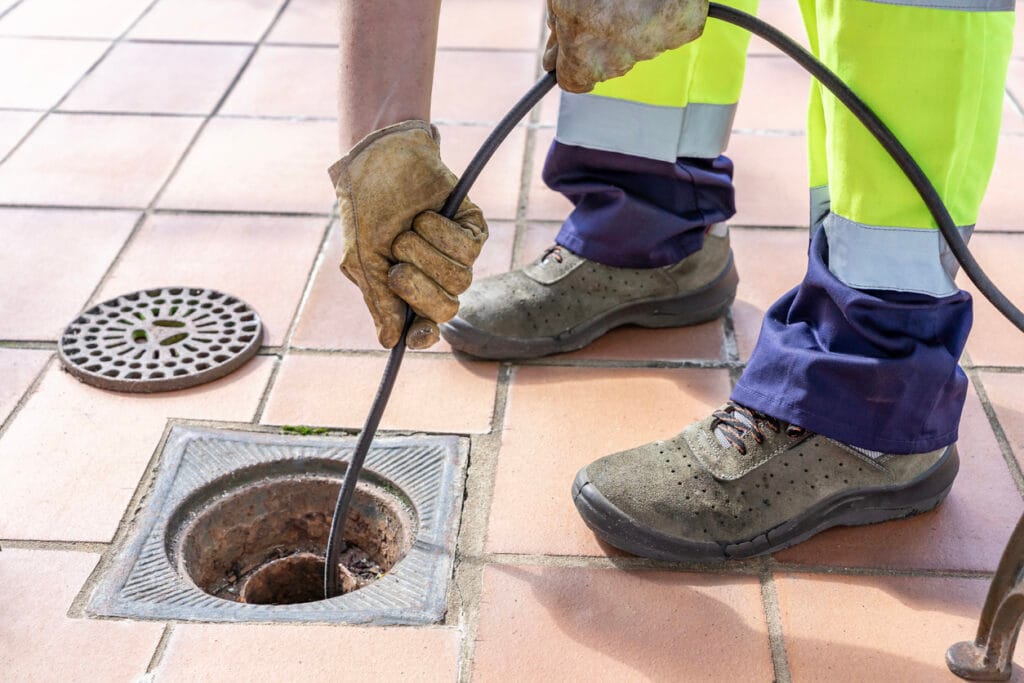
The pipe must be thoroughly cleaned of all debris, root mass, sediment, and grease before the liner goes in. If any of this material remains on the pipe wall, the resin will not bond to the host surface, creating weak spots that can delaminate under load. High-pressure water jetting at the correct nozzle pressure is the standard method. In pipes with heavy root intrusion, robotic cutting equipment may also be needed to remove root mass before jetting.
Correct Curing Conditions
Resin curing is a chemical reaction that is sensitive to temperature. Epoxy resins used in CIPP systems are typically designed to cure between around 15°C and 40°C. Curing in conditions outside the resin manufacturer’s specified temperature range can produce incomplete cross-linking, which leaves the liner with reduced structural strength, porosity, and a shorter service life. A reputable installer will monitor curing temperatures and time, and will not rush the process to move on to the next job.
Junction Reinstatement
When a liner runs through a section of pipe that has connections from branch lines (junctions), those connections must be reinstated after curing. Reinstatement involves robotically cutting an opening through the cured liner at the exact point of each junction, restoring full flow from the branch line into the main sewer. Missed or incorrectly reinstated junctions are a leading cause of drainage problems after relining and can create pressure build-up that damages the liner over time.
The Condition of the Host Pipe
Pipe relining works by bonding to the interior surface of the existing pipe. That existing pipe is called the host pipe, and its condition has a direct bearing on how well and how long the liner performs.
A liner installed into a pipe that retains most of its original shape, even if cracked or corroded, has a solid substrate to bond against and will perform well. A liner installed into a pipe that is heavily ovalled (deformed from its original round cross-section), partially collapsed, or missing sections cannot seat evenly across the entire circumference. Thin spots in the cured liner can develop at these locations, reducing structural capacity and creating potential failure points.
This is why a CCTV inspection before relining includes assessment of pipe ovality and any sections of severe deformation. Relining is appropriate for the vast majority of damaged pipe conditions, but a portion of pipe that is beyond its structural limits may need targeted excavation and replacement before the adjacent sections can be relined. An honest plumber will tell you this upfront rather than relining a section that cannot hold a liner correctly.
Tree Root Resistance After Relining
One of the most significant long-term advantages of relining over other repair methods is what it does to root intrusion. In Melbourne’s western suburbs, established trees are a constant feature of older residential streets. Species including liquid amber, bay trees, and various native gums have root systems that actively seek the moisture and nutrients escaping from drain pipe joints and cracks.
Tree roots do not force their way into intact pipe. They follow a predictable sequence: moisture vapour escapes through a hairline crack or a deteriorating joint, fine root hairs follow the vapour gradient and penetrate the opening, and those fine roots then expand inside the pipe over months and years until flow is restricted or completely blocked. The pipe joint is the primary entry point, and older clay or concrete pipes installed in short sections have a joint approximately every metre.
A CIPP liner eliminates all of those entry points. It is continuous along its entire length with no joints, no seams, and no gaps. Once the liner is fully cured and the resin has formed a chemically stable surface, roots have no mechanism to penetrate it. A root that contacts the outside of the liner simply continues growing along the outside of the pipe rather than finding a way in. This makes relining the only repair method that addresses the cause of root intrusion, not just its symptoms. High-pressure jetting removes roots already inside the pipe, but the entry point remains open and roots will return, typically within 12 to 18 months in areas with established trees.
Liner Thickness and Diameter Reduction
A pipe liner adds material to the inside of the host pipe, which means the internal diameter is slightly reduced. Liner thickness for residential drain applications typically ranges from 4mm to 9mm depending on the pipe diameter, the structural requirements of the installation, and the resin system used. In a 100mm diameter sewer pipe, a 6mm liner reduces the internal diameter to approximately 88mm.
In practice, this rarely creates a flow problem. The interior surface of a cured liner is significantly smoother than the corroded, scaled, or root-roughened interior of an old pipe. The hydraulic friction coefficient of a cured epoxy liner is much lower than that of aged clay or corroded concrete, meaning water flows more efficiently through the smaller diameter than it did through the larger but rougher original pipe. The net effect is typically maintained or improved flow capacity, not a reduction.
The exception is where a pipe was already undersized for its load. If a pipe is carrying more flow than it was designed for, the diameter reduction from relining will make this worse. This is another reason the pre-relining inspection and assessment matters: a competent installer will flag this scenario rather than blindly relining a pipe that cannot carry the required flow rate after lining.
What the Warranty Actually Covers
Reputable pipe relining companies in Australia typically offer warranties of 10 to 35 years on their work. Reading the warranty carefully before signing is important, because the coverage can differ significantly between providers.
There are two distinct things a warranty can cover: the liner material and the installation workmanship. A warranty that covers only the material is of limited value if the liner fails because it was not prepared or installed correctly. The useful warranty is one that covers both the liner performance and the workmanship, with a clear statement of who is responsible for rectification and what that process involves.
You should also receive and retain the post-installation CCTV footage. This footage is your evidence that the liner cured correctly, is fully bonded, and has all junctions properly reinstated at the time of installation. If a warranty claim is ever needed, this footage establishes the baseline condition of the liner immediately after installation and helps determine whether any issue is a material failure, an installation defect, or damage caused after the relining was completed.
When Relining Is Not the Right Answer
Pipe relining is not suitable for every damaged pipe. The main exclusions are pipes that are completely collapsed with no remaining void for the liner to travel through, pipes with significant deformation across multiple sections that prevent even liner seating, and pressurised supply pipes carrying hot or cold water under mains pressure. CIPP relining is a gravity-drain technology, designed for sewer, stormwater, and non-pressurised drainage applications. Supply pipe failures require targeted excavation and replacement, or in some cases pipe bursting, where the old pipe is fractured outward as a new pipe is pulled through in its place.
A camera inspection will identify whether your pipe falls into any of these categories. If relining is not suitable, a good plumber will tell you so and explain why, rather than proceeding with a liner that cannot perform correctly in that pipe’s condition.
How Soil Conditions Affect Liner Performance in Melbourne’s West
Melbourne’s western suburbs, including Melton, Caroline Springs, and the surrounding growth corridors, feature reactive clay soils that expand and contract significantly with seasonal moisture changes. This ground movement places ongoing stress on underground pipes, which is precisely why cracking and joint separation are so common in older pipe runs in these areas.
A correctly specified CIPP liner has sufficient flexibility to accommodate minor ongoing ground movement without cracking. The cured resin is not brittle: it has a degree of elasticity that allows it to flex with the soil without fracturing. This is one of the reasons epoxy resins are generally preferred for residential relining in Melbourne over polyester, which has higher shrinkage during curing and slightly less flex in service.
In areas of severe ground movement, particularly near large trees whose roots are actively altering soil moisture, the liner specification may need to account for elevated ground pressure. Your plumber should be considering local soil conditions as part of the liner specification, not applying a one-size approach to every job.
Maintenance After Relining
A cured CIPP liner can be maintained using the same methods as any PVC drain pipe. High-pressure water jetting is safe for use inside a properly cured liner, and will not damage the liner surface. Standard drain snakes and mechanical clearing equipment are also safe when used correctly. Chemical drain cleaners are generally not recommended for regular use in any drain pipe, as caustic or acidic chemicals can degrade rubber seals in trap assemblies even if the liner itself is resistant.
Having a CCTV inspection of the relined section every five to ten years is a reasonable approach to monitoring liner condition over time. This is especially worthwhile in properties with large established trees over or adjacent to the pipe run. An inspection will show whether any tree roots have found a way to the exterior of the liner, whether junction reinstatements remain intact, and whether any unusual ground movement has affected the liner profile.
Conclusion
New Image Plumbing and Gas provides professional pipe relining West Melbourne using quality materials installed by experienced plumbers. We inspect the pipe first with CCTV, tell you honestly what we find, and recommend the right solution for the specific pipe condition. If relining is right for your situation, we will specify the correct liner and resin for your pipe size, material, and the conditions in your suburb. If it is not the right solution, we will tell you that too. Call us today at 0489 246 667 or submit our online form, and get in touch to book a camera inspection.
Frequently Asked Questions
Does pipe relining last as long as new pipe?
Yes, when correctly installed. A properly cured CIPP liner carries a similar 50-year design life to new PVC pipe. The liner creates a structurally independent new pipe surface inside the existing host pipe, and its longevity is comparable to a full pipe replacement without the excavation. Field data from installations more than 25 years old shows liners in strong structural condition, consistent with the rated design life.
How do I know my pipe liner was installed correctly?
A reputable plumber will always perform a post-installation CCTV camera inspection to confirm the liner has cured correctly, is fully bonded to the host pipe, and that all junctions have been properly reinstated. Ask for a copy of both the pre-installation and post-installation camera footage. This is your evidence of a quality job and your baseline for any future warranty claim.
Will the liner reduce the diameter of my pipe?
Yes, slightly. A liner adds 4mm to 9mm of material to the interior of the pipe depending on the liner thickness required. In practice, this has negligible impact on flow capacity because the smooth interior of the cured liner actually improves flow compared to the rough or corroded surface of the original pipe. The lower hydraulic friction of the liner surface offsets the small diameter reduction in almost all residential applications.
Can pipe relining be used on hot water lines?
Pipe relining is primarily used for drain, sewer, and stormwater pipes operating under gravity. It is not typically applied to pressurised hot or cold water supply lines. If you have a failing supply pipe, the options are usually targeted excavation and replacement, or in some cases pipe bursting. If you are unsure which type of pipe is affected, a camera inspection and plumber assessment will identify the pipe type and the appropriate repair method.
What happens if the liner fails before the warranty period ends?
A reputable relining contractor will repair or replace any failed section under warranty. Make sure your warranty documentation clearly identifies who is responsible for the rectification work and what the process involves if a warranty claim is needed. Keep all job documentation including the post-installation camera footage. If a failure occurs, that footage is the starting point for determining the cause and confirming whether it falls within the warranty terms.
Can relining be done on clay pipes?
Yes. Clay and earthenware pipes are among the most common candidates for relining, particularly in established Melbourne suburbs where clay sewer systems were installed from the early 20th century through to the 1970s. Epoxy resin bonds well to clay surfaces, and relining is often the most cost-effective way to extend the life of an old clay sewer line without excavating garden beds, driveways, or concrete floors. The pre-relining inspection will confirm whether the clay pipe retains sufficient structural integrity to accept a liner correctly.