Derrimut is one of the busiest commercial and industrial precincts in Melbourne’s west. The suburb houses a significant concentration of warehouses, distribution centres, food manufacturing facilities, cold storage operations, and trade businesses. Each of these operations relies on plumbing infrastructure that handles far more volume and far greater pressure than a residential system. When plumbing fails in a commercial setting, the consequences go well beyond inconvenience. Operations stop, compliance obligations are triggered, and the cost of emergency repairs is always higher than the cost of having a plumber in Derrimut address the problem early.
Here are the commercial plumbing problems that affect Derrimut businesses most, what causes them, and how to manage them before they become costly.
Grease Trap Blockages in Food Businesses
What the obligation is
Any Derrimut business that operates a commercial kitchen, food processing line, or food preparation area is legally required to have a grease trap installed. The grease trap intercepts fats, oils, and grease (FOG) before they enter the municipal sewer system. This is a requirement under Victorian plumbing regulations and is enforced by the relevant water authority and local council.
What goes wrong
- Grease traps that are not pumped out regularly accumulate a solid crust of hardened grease and food solids on the surface and a sludge layer at the bottom, reducing the trap’s effective capacity
- Once the trap reaches capacity, FOG bypasses the baffles and enters the drainage system, causing serious blockages in the downstream pipes
- Blocked or overloaded grease traps emit strong odours that can affect adjacent businesses and customer-facing areas
- Council inspectors can and do issue compliance notices for overloaded grease traps, which can result in orders to cease kitchen operations until the issue is rectified
How to prevent it
The standard recommendation for most commercial kitchen operations is a grease trap pump-out every one to three months, depending on the volume of output. High-volume operations such as food manufacturing or catering may require monthly or more frequent service. Your water authority may specify a minimum service frequency. A plumber in West Melbourne can assess your trap’s capacity and recommend the appropriate maintenance schedule, and should issue a service record after each pump-out for your compliance documentation.
High-Volume Drain Blockages
Why commercial drains are different
Commercial and industrial premises generate wastewater volumes that are an entirely different scale to residential properties. Industrial floor drains in warehouses and manufacturing facilities, commercial dishwashers that cycle repeatedly through a shift, and high-use staff amenity blocks all create sustained, high-volume drainage loads. The drainage systems in commercial properties are built to handle this, but they are not maintenance-free.
What causes commercial drain blockages
- Grease and fat entering floor drains from food processing or cooking areas and hardening in the drain line
- Sediment, dirt, and process residue accumulating in industrial floor drains that are cleaned irregularly
- Hygiene products, paper towels, and non-flushable items entering amenity block drain lines
- Tree root intrusion into older concrete or clay drain lines running under the property
- Pipe scale buildup in ageing commercial pipe networks, particularly in older Derrimut industrial buildings
The cost of reactive versus proactive drain maintenance
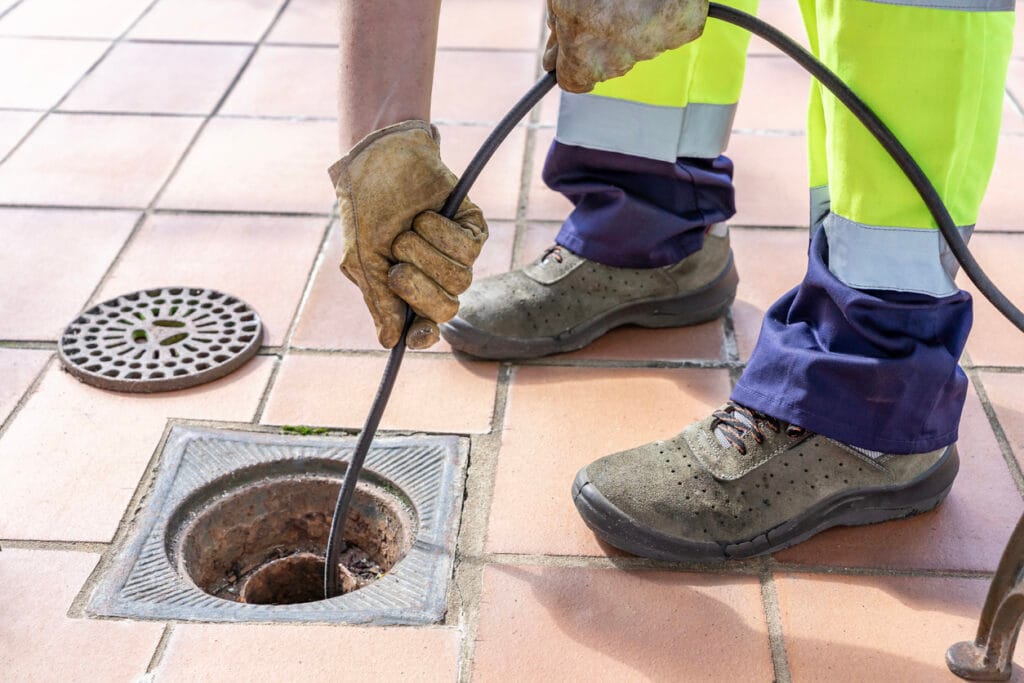
A commercial drain blockage that occurs during operating hours forces an immediate shutdown of affected facilities. For a food processing operation or a distribution centre with time-sensitive dispatch requirements, this directly impacts output. Emergency call-out rates are also significantly higher than scheduled maintenance rates. Proactive hydro jetting maintenance on a scheduled basis keeps lines clear, generates a service record for compliance purposes, and almost always costs less annually than a single reactive emergency clearance with the associated operational disruption.
Inadequate Hot Water Capacity
Why commercial hot water system sizing matters
Commercial hot water systems must be sized to meet peak demand across all fixtures simultaneously. Unlike a residential system that serves one or two people at a time, a commercial system in Derrimut might need to supply a commercial kitchen, multiple staff amenity blocks, and an industrial washdown station at the same time. An undersized system cannot meet this demand and creates operational problems.
Signs your commercial hot water system isn’t adequate
- Staff or customers running out of hot water during peak operational periods
- Hot water temperature dropping noticeably during periods of high simultaneous demand
- The system running continuously without adequate recovery time between uses
- Older gas or electric storage systems that were installed when the business had fewer fixtures or lower occupancy
- Recent premises expansions or kitchen upgrades that added fixtures without a corresponding upgrade to the hot water system
What the fix looks like
A commercial hot water system assessment involves calculating the peak demand across all fixtures and comparing it to the system’s rated output. In many cases, the solution is upgrading to a larger capacity system, adding a second unit in a parallel configuration, or switching from a storage system to a continuous flow system that doesn’t run out of hot water regardless of demand. A plumber can carry out this assessment and provide options based on the specific requirements of the Derrimut premises.
Undetected Water Leaks in Plant and Equipment Areas
Why commercial leaks are harder to detect
In a residential property, a leaking pipe often makes itself known relatively quickly. Damp patches appear on walls or ceilings, or a wet patch shows up on the floor. In a commercial or industrial setting in Derrimut, the situation is very different. Plumbing runs under concrete slabs, through plant rooms, inside wall cavities, and above suspended ceilings. Floors are often concrete and drainage is built in. A slow leak in these environments can run for months before anyone notices.
Signs of a hidden commercial water leak
- Unexplained increases in your water bill without a corresponding increase in operations or occupancy
- Damp patches or staining on walls, floors, or ceilings in plant areas or utility rooms
- Reduced water pressure at fixtures that previously had adequate pressure
- The sound of running water in walls or floors when all fixtures are off
- Mould or mildew growth in areas where there is no obvious moisture source
- Soft or deteriorating concrete in a slab area above a suspected pipe run
How leak detection works in commercial settings
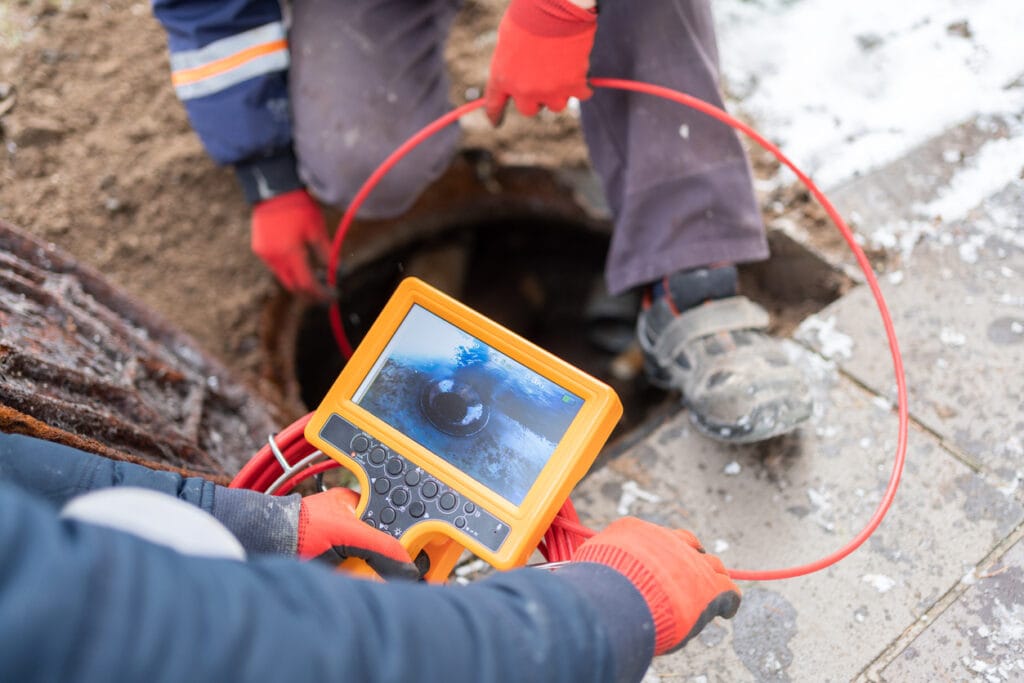
Professional leak detection in a commercial or industrial property uses non-invasive equipment including acoustic listening devices that detect the specific sound signature of water escaping under pressure, and thermal imaging cameras that identify temperature differentials caused by water movement in walls or under slabs. This allows the source to be pinpointed without cutting open walls or breaking up concrete unnecessarily. Once located, the scope of the repair can be assessed and a cost-effective solution proposed.
Gas Line Maintenance for Commercial Appliances
Where the risk lies
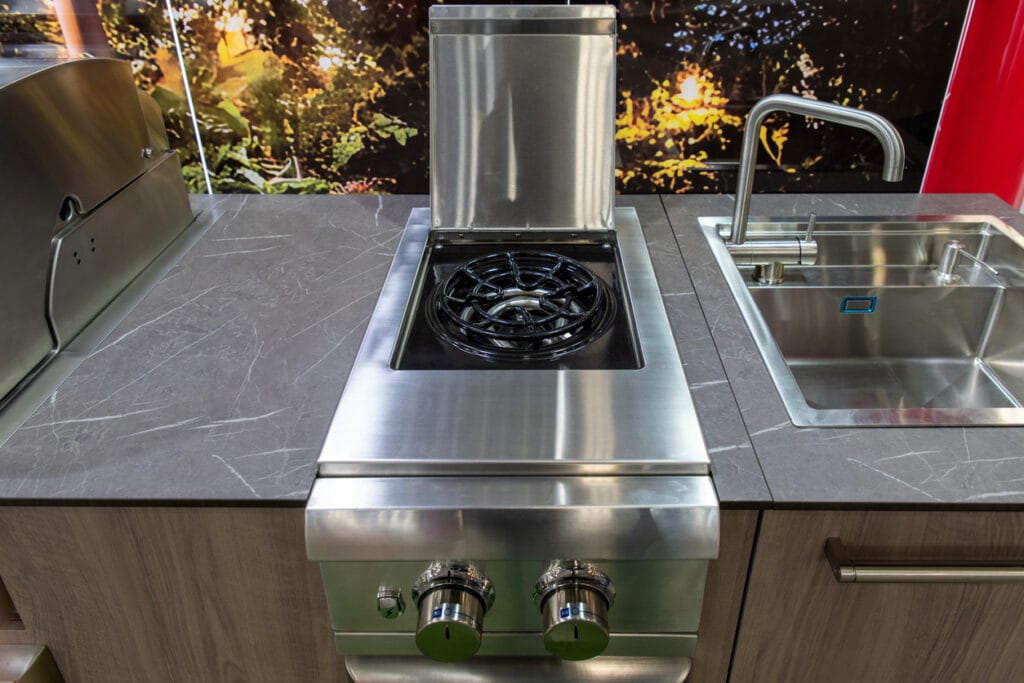
Many Derrimut businesses use natural gas for commercial cooking, space heating, industrial process heating, or hot water. The gas installations servicing these uses include flexible hoses connecting appliances to hard gas lines, regulators, isolation valves, and in some cases complex distribution networks serving multiple appliances across a large premises. Each component has a service life and requires periodic inspection.
Commercial gas risks specific to Derrimut businesses
- Flexible gas hoses connecting commercial cooking appliances have a maximum service life of five years under Australian Standard AS/NZS 1869. Many businesses are unaware of this requirement and operate appliances on hoses that are well past this date.
- Gas fittings in commercial kitchen environments are exposed to heat, grease, cleaning chemicals, and physical movement, all of which accelerate degradation
- Industrial heating systems in warehouses may have gas distribution pipework that hasn’t been inspected in years
- Any new gas appliance installation, relocation, or gas line extension must be carried out by a gas fitter and, in Victoria, notified to Energy Safe Victoria
What a commercial gas safety inspection covers
A gas fitter carrying out a commercial gas safety inspection will check the condition and compliance of all flexible hoses, the integrity of all hard gas line connections, appliance regulator function, isolation valve operation, and the presence and functionality of any gas detection systems. Any defects found are documented, and the business owner receives a clear report of what needs attention and by when. This record is important for insurance compliance and occupational health and safety obligations.
Backflow Prevention Compliance
What backflow prevention is
Backflow occurs when contaminated water flows backwards through a cross-connection into the mains water supply. In a commercial or industrial setting, this could mean process water, cleaning chemicals, or wastewater from equipment entering the public water supply network. Backflow prevention devices are installed at the point where a property’s internal water system connects to the mains supply to prevent this from happening.
The compliance requirement
- Victorian plumbing regulations and water authority requirements mandate that backflow prevention devices at commercial and industrial properties be tested annually by a licensed plumber
- After testing, the plumber issues a compliance certificate that is submitted to the relevant water authority
- If a device fails the annual test, it must be repaired or replaced before a new certificate can be issued
- Properties that do not have a current compliance certificate are in breach of their water authority obligations and can be issued with a notice requiring rectification
What to do if you’re unsure of your compliance status
If your Derrimut business has not had its backflow prevention device tested recently, or you are not sure whether the device is installed, a plumber can carry out an inspection to locate the device, assess its condition, carry out the annual test, and issue the compliance certificate. This is a relatively quick and low-cost piece of preventative compliance work compared to the potential consequences of a notice or a backflow incident.
Conclusion
Every commercial plumbing problem described in this article is more expensive to fix reactively than it is to prevent through scheduled maintenance. A grease trap that is pumped every three months never creates a blockage or a council compliance notice. A drain line that is hydro jetted annually doesn’t fail during peak operating hours. A gas installation that is inspected and certified on schedule doesn’t create a safety incident or an insurance void.
New Image Plumbing and Gas services commercial and industrial properties throughout Derrimut and Melbourne’s western industrial corridor. We offer scheduled maintenance agreements for businesses that want to manage their plumbing obligations proactively rather than reactively. Call us at 0489 246 667 or submit our online form to discuss a maintenance plan suited to your operation.
Frequently Asked Questions
How often should a commercial grease trap be serviced?
Most commercial grease traps should be pumped out every one to three months depending on the volume of kitchen output. High-volume food manufacturing or catering operations may need more frequent service. Your local council or water authority may specify a minimum frequency in your premises approval conditions. A plumber can assess your trap’s capacity and the volume of use to recommend the appropriate schedule, and will issue a service record after each pump-out for your compliance file.
What is backflow prevention and why is it required?
Backflow prevention devices stop contaminated water from a property’s internal system from flowing backwards into the mains water supply. They are required at commercial and industrial properties where there is a risk of cross-contamination between process water or chemicals and the public supply. In Victoria, backflow prevention devices must be tested annually by a plumber who issues a compliance certificate to the relevant water authority. Properties without current certificates are in breach of their obligations.
How can I tell if my commercial property has a hidden water leak?
Watch for unexplained increases in your water bill without corresponding changes in operations, damp patches or staining on walls or floors in plant areas, reduced water pressure at fixtures, or the sound of running water when all fixtures are off. A plumber can carry out a non-invasive leak detection test using acoustic equipment and thermal imaging to pinpoint the source without cutting into walls or breaking up concrete, keeping disruption to operations to a minimum.
Can plumbing problems shut down a business?
Yes. A sewage overflow, lack of adequate hot water, a gas leak, or a failed backflow prevention device can all force a business to suspend operations until the issue is resolved. For food businesses, a plumbing failure can also trigger a mandatory health inspection before reopening. The combined cost of emergency repairs, lost trading hours, and potential compliance consequences is almost always significantly higher than the cost of the preventative maintenance that would have avoided the problem.
How often should commercial gas lines be inspected?
There is no single universal interval that applies to all commercial gas installations, as the appropriate frequency depends on the type of appliances, the intensity of use, the age of the installation, and the environment the pipework and hoses are exposed to. As a general guide, commercial kitchen flexible gas hoses should be replaced every five years as required by Australian Standard AS/NZS 1869, and the broader gas installation should be inspected by a gas fitter at least annually. High-use operations or installations exposed to heat, grease, or chemical cleaning should be inspected more frequently.