Not every blocked drain needs a plumber Melton. Some minor blockages in accessible fixtures can be cleared at home with basic tools and a bit of patience. But there’s a clear line between a DIY-appropriate problem and one that requires professional equipment, and crossing that line in the wrong direction can turn a simple fix into a much more expensive repair. Whether you’re in Melton, Bacchus Marsh, or anywhere across Melbourne’s west, understanding which situation you’re in before you start pulling things apart or pouring chemicals down a drain is worth the two minutes it takes to read this.
This guide walks through what you can reasonably attempt yourself, what you should avoid doing, the specific signs that mean it’s time to call a licensed plumber, and what happens if a blockage is left to develop further than it needs to.
When DIY Drain Clearing Can Work
There are genuine situations where a homeowner can resolve a drain blockage without needing to call anyone out. The key is that these situations share a common characteristic: the problem is localised to a single fixture and close to the surface.
The right conditions for a DIY attempt
- Only one fixture is affected and the others in the house are draining normally
- The blockage developed gradually (slow drainage, not a sudden complete stoppage)
- The drain is easily accessible (a shower, basin, laundry tub, or kitchen sink)
- There is no sewage smell, no gurgling from other fixtures, and no sign of water coming up through any drain
- The issue has not happened repeatedly in the same drain over a short period
What DIY tools are appropriate
- A drain cover removal and manual debris clearance with gloved hands — by far the most effective method for hair and soap build-up sitting in the trap just below the drain opening
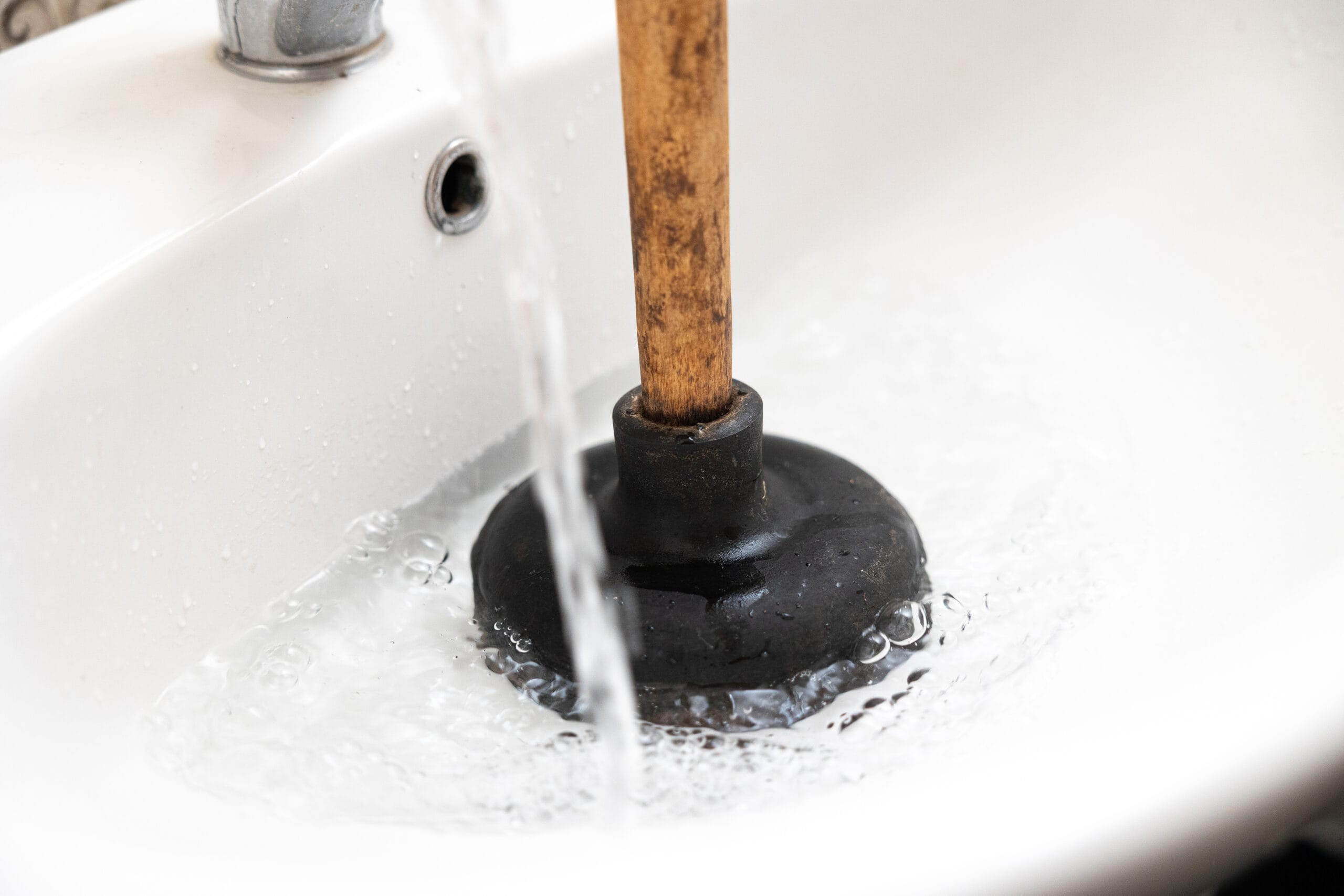
- A plunger — works well for toilets and sinks when there’s enough water in the fixture to create a seal. Use a flange plunger for toilets (the extended rubber cup) and a standard cup plunger for flat sink drains
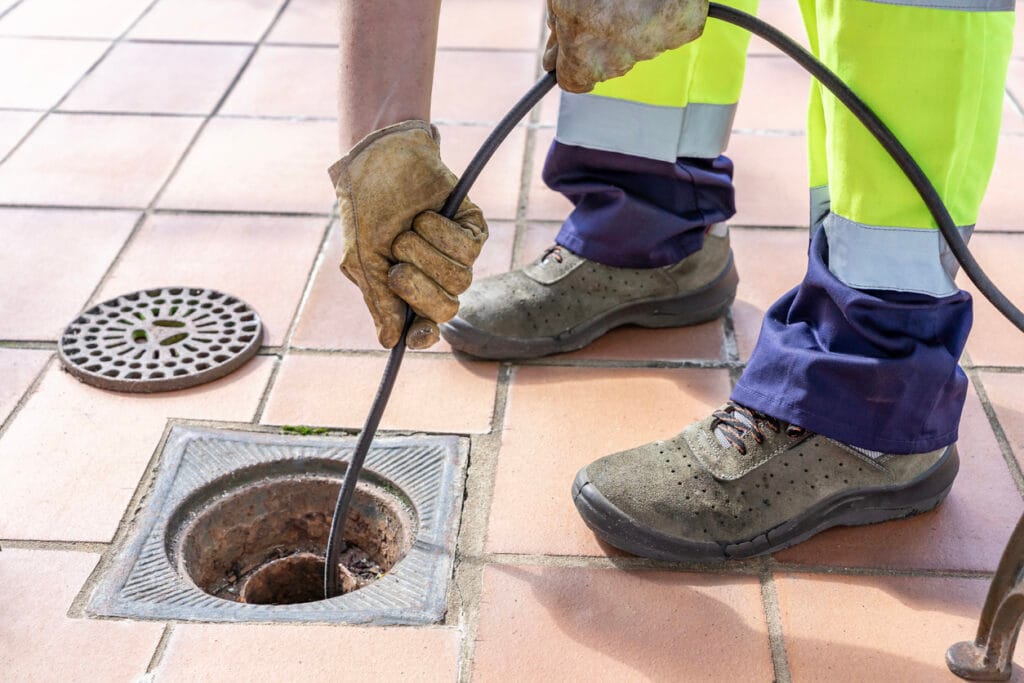
- A hand-operated drain snake (also called a drain auger) — a flexible cable you feed down the drain to break up or hook a blockage within the first metre or two of pipe. Available from hardware stores and suitable for minor blockages in accessible drains
- Hot water flushing — for a kitchen sink with grease build-up, flushing with very hot (not boiling) water can soften and move light accumulations. This is not effective for hair blockages or anything that has hardened in the pipe
What to do if the DIY attempt doesn’t work
If the drain remains slow or blocked after a reasonable attempt with the methods above, stop. Do not escalate to chemicals and do not try to disassemble pipe connections unless you have plumbing experience. At this point, the blockage is either further down the pipe than a hand tool can reach, or it’s a type of blockage that requires professional equipment to clear properly.
What to Avoid When Dealing with a Blocked Drain
The instinct to pour something down a blocked drain is understandable, but several commonly attempted solutions either do nothing useful or actively make the situation harder to resolve. Here is what to avoid and why.
Chemical drain cleaners
- Caustic soda (sodium hydroxide) and sulphuric acid-based cleaners work by dissolving organic matter. They can be effective on fresh hair and soap blockages but are unreliable on anything more substantial
- If the chemical doesn’t clear the blockage on the first use, the drain now contains a pool of corrosive liquid. A plumber arriving to clear that drain must manage the chemical safely before they can even begin work, which adds time and complexity to the job
- Repeated use of caustic cleaners degrades older PVC pipe fittings and rubber seals, and can cause slow-release corrosion in metal pipes over time
- If the blockage is caused by a structural problem (a root intrusion, a pipe collapse, or significant scale build-up), chemical cleaners will have no effect at all and will simply sit in the pipe
- Enzyme-based drain cleaners are a safer long-term maintenance option, but they work slowly (days to weeks) and are not suitable for clearing an active blockage
The baking soda and vinegar method
This popular home remedy produces a fizzing reaction that is largely cosmetic. The chemical reaction between baking soda (sodium bicarbonate) and vinegar (acetic acid) neutralises both substances and produces water, carbon dioxide, and sodium acetate. None of these products have meaningful drain-clearing ability. The fizzing creates the impression of action without delivering results. For a minor, fresh blockage you might see marginal improvement, but for any established blockage it is not an effective method.
Disassembling pipe connections without experience
- P-trap access under a sink is within reach of a confident DIYer, and clearing a P-trap is a reasonable task with the right preparation (a bucket underneath and gloves on)
- Any pipe connections beyond the P-trap, or any work involving the drain line inside the wall or under the floor, should be left to a licensed plumber. These sections are harder to access, harder to reassemble correctly, and a mistake can result in a slow leak inside the wall that causes significant water damage before it’s discovered
- Never use a high-powered garden hose or improvised pressure equipment to try to blast a drain clear. The pressure can damage pipe connections and push debris further into the line
When to Call a Licensed Plumber
Some signs are clear enough that you should call a plumber Bacchus Marsh directly rather than attempting any DIY work at all. The situations below indicate a blockage or problem that is beyond the scope of a hand tool or household product.
Signs that need professional attention
- Multiple fixtures are draining slowly or not at all at the same time — this is almost always a main sewer line blockage, which requires a professional drain machine or hydro-jetting equipment to clear
- The blockage has returned after being previously cleared, whether by you or by another plumber. Recurring blockages in the same drain indicate an underlying issue (root intrusion, pipe damage, or structural narrowing) that needs a camera inspection to diagnose
- Gurgling sounds are coming from a different fixture to the one you’re using — for example, the toilet gurgles when you run the bathroom basin tap, or a floor drain gurgles when the washing machine drains. This cross-fixture gurgling is a reliable indicator of a shared drain line problem
- A sewage odour is coming from outdoor inspection points, floor drains, or multiple fixtures inside the home. Sewer gas contains hydrogen sulphide and methane, both of which are health hazards at higher concentrations, and the smell should not be ignored or masked
- The toilet is not flushing, is draining very slowly, or the water level in the bowl is rising higher than normal before settling. A toilet that is close to overflowing is an emergency situation
- Water is backing up into a fixture when a different fixture is used — for example, water appearing in the shower when you flush the toilet. This indicates a severe main line restriction and requires immediate professional attention
- A plunger and basic drain snake have been used without any improvement in drainage
- The blocked drain is an outdoor stormwater drain, a subfloor drain, or a drain in a garage or laundry that connects to the stormwater system. These often require specialised equipment to clear and may have council compliance implications if they’re shared with the street drainage network
What a plumber does that you can’t
- High-pressure water jetting (hydro-jetting) at pressures up to 4,000 PSI, which scours the inside walls of the pipe clean rather than simply pushing debris through. This is significantly more thorough than any hand tool and is the preferred method for recurring blockages and main line clearing
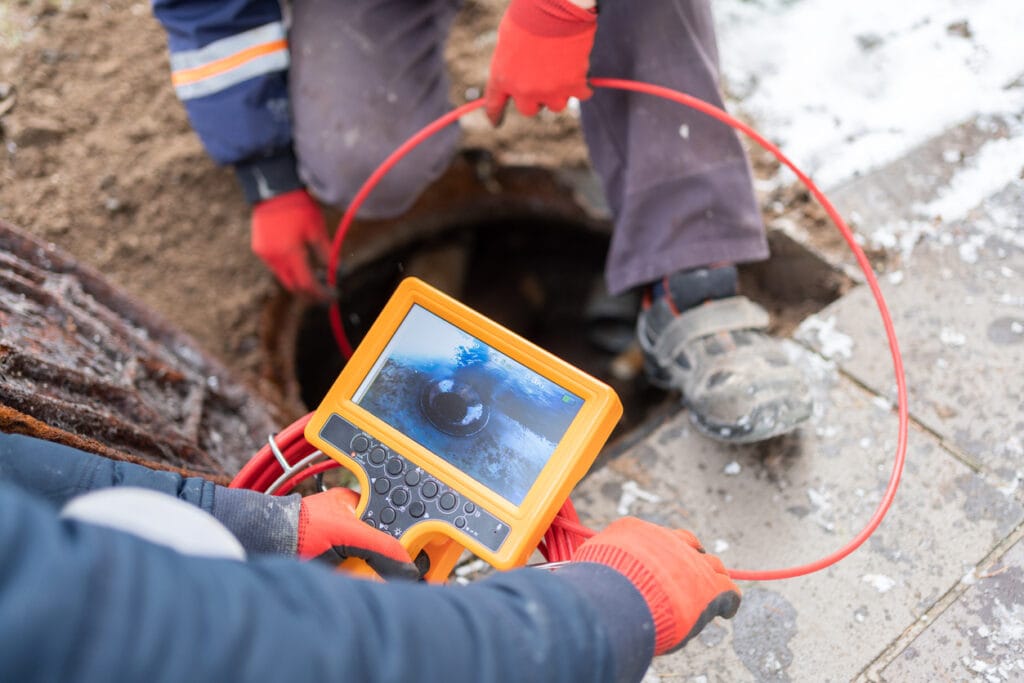
- CCTV camera inspection, which puts a live-feed camera into the drain to identify the exact location and nature of the blockage. This is the only reliable way to diagnose a recurring blockage, to find a root intrusion point, or to assess whether a pipe has cracked or deformed
- Electric eel (drain snake) machines that are significantly more powerful than consumer hand tools and can reach much further into the pipe system
- Pipe relining, if the inspection reveals structural damage that is causing the recurring blockage — this allows damaged pipe sections to be repaired from the inside without excavation
The Risk of Leaving a Partial Blockage
A slow drain that is draining slowly rather than not at all is easy to put off. It works, sort of, so it doesn’t feel urgent. This is the most common reason blockages escalate to the point where they cause real damage or a sewage overflow.
How a partial blockage progresses
- A partial restriction traps debris more easily than an open pipe. Hair, grease, and food particles that would otherwise pass through the system get caught on the narrowed section and add to the build-up over time
- Tree roots, once they find a crack or a joint gap in a pipe, grow progressively. A root intrusion that causes slow drainage today will become a complete blockage within months if not removed
- A partial blockage in a main sewer line that is ignored long enough will eventually cause a sewer overflow, where sewage backs up into the lowest fixtures in the home. Sewage overflow inside a property is a health hazard requiring professional remediation, not just drain clearing
- In properties on slopes or with long drain runs, a blockage that appears to be a slow drain can escalate quickly when subjected to high-volume use (a full load of laundry, multiple people showering before work)
Conclusion
A standard drain clearing call-out from a licensed plumber is a relatively modest expense. A sewage overflow that requires the drain to be cleared, the affected fixtures to be sanitised, and potentially the floor or wall to be opened to access a damaged pipe section is an order of magnitude more expensive. The cost difference between addressing a slow drain early and dealing with the consequences of ignoring it makes acting sooner the more cost-effective choice in almost every case.
Contact New Image Plumbing & Gas for professional drain clearing and plumbing services. Call 0489 246 667 or complete our online form to book a service or request assistance with your drainage issue.
Frequently Asked Questions
Is it safe to use a caustic drain cleaner before calling a plumber?
One careful attempt with a caustic cleaner is generally not going to cause lasting pipe damage on its own. The problem is what happens if it doesn’t work. The drain now contains a pool of corrosive liquid that a plumber has to manage safely before they can begin any work. The greater concern is repeated treatments without result, which does degrade older PVC fittings and rubber seals over time. If a single application hasn’t cleared the blockage within the recommended contact time, stop and call a plumber rather than applying a second dose.
How long does drain clearing take?
A straightforward single-fixture blockage in an accessible drain typically takes between 30 and 60 minutes to clear, including the time to set up and pack away equipment. A main sewer line blockage involving a drain machine or hydro-jetter, followed by a CCTV camera inspection, is more likely to take two to three hours. If the inspection reveals a structural issue requiring discussion of repair options, the plumber will usually complete the clearing on the same visit and then provide a separate quote for any follow-up work. Your plumber should be able to give you a reasonable time estimate once they’ve seen the access point and assessed the nature of the blockage.
Why does my drain smell even when it is draining normally?
A drain that flows freely but produces an unpleasant smell usually has one of three causes. The first is a biofilm build-up on the pipe walls, where bacteria feeding on accumulated organic matter (grease, soap, hair residue) produce sulphur compounds. The second is a dry P-trap, which is the U-shaped section of pipe below a drain that normally holds a small amount of water as a seal against sewer gases. A fixture that is used infrequently, such as a floor drain in a laundry or guest bathroom, can lose this water seal and allow sewer gas to escape directly into the room. The third cause is a cracked drain pipe inside the wall or floor, which allows sewer gas to escape before it reaches the P-trap. Flushing the drain with hot water and adding a drain guard addresses the first cause. Running water down an infrequently used drain weekly restores the P-trap seal. The third cause requires a camera inspection to locate and a plumber to repair.
What should I do if a drain blocks suddenly and completely rather than slowly?
A sudden complete blockage is more likely to have a physical cause than a gradual build-up — a foreign object, a large mass of material that displaced and lodged downstream, or in older homes, a pipe that has partially collapsed. If a single fixture suddenly stops draining completely and you have not recently introduced anything that could have caused it, a plumber with camera equipment is the right first call rather than a DIY attempt. If multiple fixtures stop working at the same time, that is a main sewer line emergency and should be treated as one. Stop using water-drawing fixtures where possible and call a plumber immediately.