If you live in an older property in Bacchus Marsh, there is a good chance your home is sitting on a network of clay or terracotta drain pipes. For decades, clay was the standard material for residential sewer and stormwater drainage, and it was built to last. But last does not mean last forever — and after 40, 50, or 60 years of use, many clay drain systems in the area are showing their age through cracked joints, root intrusion, partially collapsed sections, and chronic blockage problems.
The traditional answer to failed clay pipes was excavation: dig up the yard, replace the damaged sections with new PVC pipe, and reinstate the ground. Today, however, pipe relining Bacchus Marsh offers a genuine alternative for many clay pipe situations — one that achieves comparable results with far less disruption, cost, and time. The question is whether relining is the right solution for your specific pipes and your specific problem.
What Are Clay Drain Pipes and Why Are They Still Common in Bacchus Marsh?
Clay and terracotta pipes were the dominant material for residential drainage in Australia from the early 1900s through to the 1970s and 1980s, when PVC became the preferred alternative. Many properties across Bacchus Marsh that were developed during this period — including much of the original township and its surrounding residential areas — still have their original clay sewer drainage in place today.
Characteristics of Clay Drain Pipes
- Clay pipes are typically laid in short sections, between 300mm and 600mm long, joined with cement mortar or rubber ring joints rather than welded or solvent-cemented connections.
- These joints are the primary weakness of a clay drain system. Over decades, cement joints crack, deteriorate, and open up — creating the gaps through which tree roots enter.
- The internal surface of aged clay pipe is rougher and more porous than new PVC, providing more surface area for scale, grease, and debris to adhere to.
- Clay is chemically inert and resistant to the acids and alkalis present in sewer waste, which is why many clay pipe bodies remain structurally sound even after 60 or 70 years of use — the problem is typically the joints rather than the pipe itself.
- Clay is also relatively brittle. Soil movement, heavy vehicle loads above ground, or the pressure of encroaching tree roots can crack clay pipe sections that would flex or absorb movement in a PVC installation.
Common Problems in Aging Clay Drain Systems
- Joint deterioration and open gaps allowing root entry and soil ingress.
- Cracked or fractured pipe bodies, particularly in areas with reactive clay soils that shrink and swell with moisture changes.
- Root intrusions that recur frequently even after the roots are cleared, because the entry point remains open.
- Offset or misaligned joints caused by soil settlement over time, creating ledges inside the pipe that catch debris and contribute to blockages.
- Partial pipe collapse in sections where the pipe body has become too brittle to support the soil load above it.
- Scale and grease build-up on the rough internal surface, resulting in narrowed flow and recurring blockages.
How Does Pipe Relining Work on Clay Pipes?
Pipe relining installs a new pipe inside the existing old pipe, without the need to excavate. The process uses a flexible liner — typically made from fibreglass or felt — saturated with a thermosetting resin. Once positioned inside the host pipe and inflated into contact with the existing pipe wall, the resin is cured to form a hard, smooth, jointless new pipe within the old one.
The Relining Process Step by Step
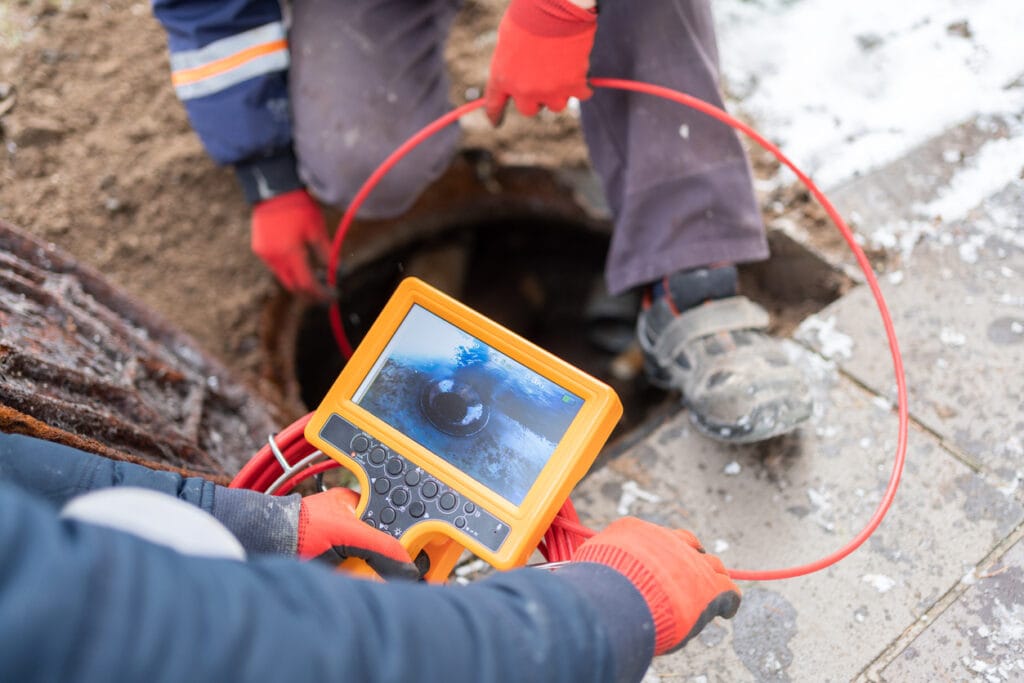
- Step 1 — CCTV inspection: A drain camera is used to assess the internal condition of the clay pipes before any relining is attempted. This identifies all cracks, root intrusions, joint gaps, offsets, and any collapsed sections that may affect the suitability of relining.
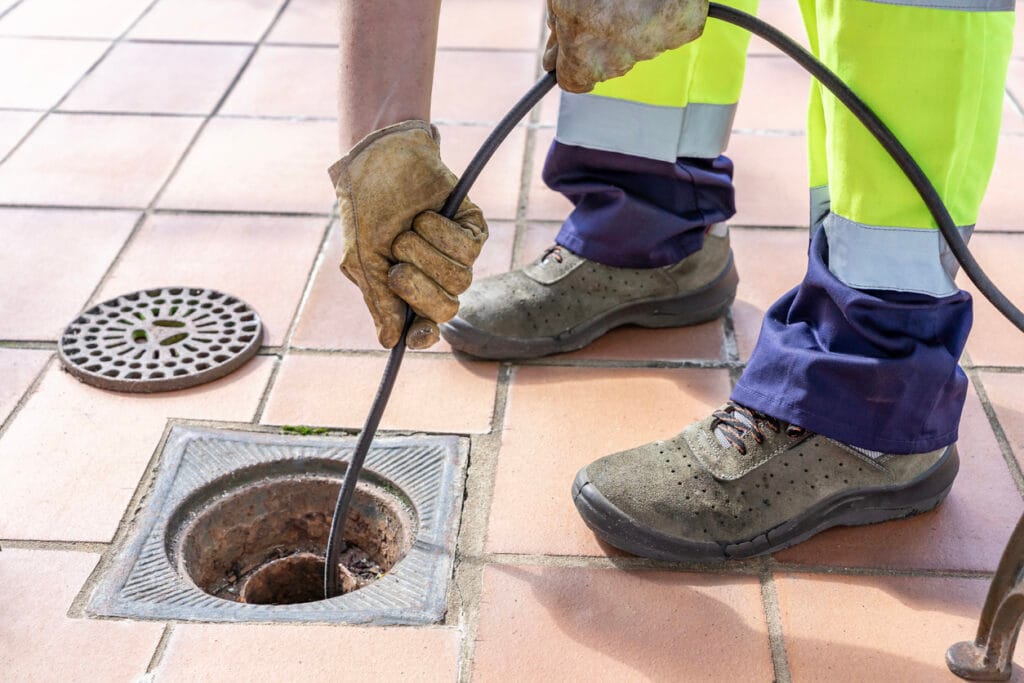
- Step 2 — Drain cleaning and root removal: The existing pipe is cleared of all blockages, root material, scale, and debris using high-pressure water jetting. The pipe interior must be clean and clear for the liner to make proper contact with the host pipe wall.
- Step 3 — Liner preparation: The fibreglass or felt liner is cut to the correct length and saturated with epoxy or polyester resin. The liner is then loaded into the inversion drum or pulled into position using a winch, depending on the access method used.
- Step 4 — Liner insertion and inflation: The liner is inserted through an existing access point — a clean-out, inspection shaft, or in some cases a removed toilet — and inverted or pulled through the pipe to the correct position. An inflation bladder is inserted and inflated to press the saturated liner firmly against the interior wall of the clay pipe.
- Step 5 — Resin curing: The resin is cured using ambient temperature, hot water, steam, or UV light depending on the specific product and system used. Curing typically takes between 30 minutes and a few hours, after which the bladder is deflated and removed.
- Step 6 — Post-inspection: A second CCTV inspection confirms the liner has cured correctly, bonded fully to the host pipe wall, and that all junctions and connection points are clear and open.
What the Finished Liner Does
- Creates a seamless, jointless new pipe surface within the clay host pipe, eliminating all existing joint gaps and cracks that were allowing root entry.
- Restores the structural integrity of cracked or fractured sections — the cured liner is rigid enough to function as a self-supporting pipe even if the surrounding clay is significantly deteriorated.
- Provides a smooth, non-porous internal surface that resists future grease adhesion and scale build-up, significantly reducing the frequency of future blockages.
- Carries a typical service life of 50 years or more when correctly installed, comparable to new PVC pipe laid by excavation.
When Can Clay Pipes Be Relined and When Can They Not?
Pipe relining is an effective solution for a wide range of clay pipe conditions, but it is not appropriate for every situation. Understanding when relining is viable — and when excavation remains the right answer — is essential for making an informed decision about your drainage.
Clay Pipe Conditions Suitable for Relining
- Pipes with cracked or deteriorated joints, root intrusions through joints, and open gaps between sections — these are ideal relining candidates because the pipe body is structurally sound and the liner bridges and seals all the joint gaps.
- Pipes with hairline cracks or minor fractures in the pipe body that have not resulted in significant displacement or collapse of the pipe wall.
- Pipes with moderate offset at joints — a slight misalignment can be bridged by the liner, although significant offsets may require assessment on a case-by-case basis.
- Pipes suffering from scale, grease, and roughness-related flow problems that recurring blockages suggest are chronic — relining smooths the interior and resolves the underlying surface issue.
- Long, continuous runs of clay sewer pipe running under established gardens, driveways, or structures where excavation would be extraordinarily disruptive or expensive.
Situations Where Relining Is Not the Right Solution
- Sections where the pipe has fully collapsed and the internal profile is no longer circular or accessible — a liner cannot be inserted or inflated in a crushed or fully deformed pipe.
- Where the pipe diameter after relining would be unacceptably reduced — relining reduces internal diameter by approximately 6 to 12mm depending on liner thickness. For very small-diameter pipes already at minimum acceptable flow, this may not be appropriate.
- Where the pipe has severely offset joints creating steps or obstructions that prevent the liner from being pulled or inverted through to the correct position.
- Where the pipe is too short, too sharply bent, or too shallow to allow liner insertion and curing equipment to be positioned correctly.
- Where excavation and replacement is more cost-effective because the affected section is short, accessible, and under easily reinstated ground surface.
Pipe Relining vs Excavation: Comparing the Two Options
For homeowners trying to decide between relining and traditional excavation, the decision usually comes down to five factors: disruption, cost, timeline, pipe condition, and access. Here is how the two methods compare across each of these areas.
Disruption to Property
- Excavation requires trenching along the entire length of pipe being replaced. Driveways, gardens, footpaths, and in some cases concrete slabs must be broken up, removed, and later reinstated.
- Relining is performed through one or two existing access points. No trenching is required. The property is left in the same condition it was found, with the exception of cleaning around the access point.
- For properties with established gardens, ornamental features, paved driveways, or structures built over or near the drain line, the difference in disruption can be substantial.
Cost
- Relining typically costs more per metre of pipe treated than the pipe replacement materials alone, but significantly less than the total cost of excavation when you factor in earthworks, disposal, and reinstatement of the surface.
- For pipes running under concrete, pavers, or structures, the cost of excavation and reinstatement can far exceed the cost of relining the same section.
- For short, accessible runs under soft lawn or garden bed where reinstatement is inexpensive, excavation may be more cost-effective than relining.
Timeline
- A standard residential pipe relining job can typically be completed within one day, including the CCTV inspection, pipe cleaning, liner installation, and post-cure inspection.
- Excavation and replacement involves multiple trades — plumber, excavator operator, concreter or paver — and often takes two to five days or more depending on site conditions and reinstatement requirements.
- During an excavation job, drainage is often unavailable for the full duration of the work. Relining restores drainage service as soon as the liner has cured.
Frequently Asked Questions
Will the relined pipe last as long as a new PVC pipe?
A correctly installed pipe liner has an expected service life of 50 years or more, comparable to new PVC pipe laid by traditional excavation. The cured epoxy or polyester resin creates a rigid, chemically resistant pipe within the host pipe that does not corrode, degrade, or develop joint gaps. Manufacturers of quality relining systems typically provide warranties of 10 years or more, and independent studies of installed liners have shown no significant structural degradation over multi-decade observation periods. The longevity of the result depends heavily on correct installation — particularly proper pipe cleaning and preparation before liner insertion.
Does relining stop tree roots from coming back?
Yes — a properly installed liner seals all existing joint gaps and cracks, eliminating the entry points through which roots were accessing the pipe. Roots cannot penetrate a sound, cured liner. However, roots that are not completely removed from the pipe during the cleaning stage can become trapped behind the liner and continue to apply pressure to the pipe wall over time. This is why thorough root removal with high-pressure jetting and mechanical cutting prior to relining is a critical part of the process. After relining, the smooth interior surface also reduces the likelihood of debris catching and causing future blockages.
How do I know if my clay pipes need relining or replacement?
The only reliable way to determine this is a CCTV drain camera inspection. The inspection reveals the internal condition of the pipe in real time — the plumber can see whether the pipe body is cracked, whether joints are open, whether sections are collapsed or significantly offset, and whether the pipe is still round enough for a liner to be installed. Based on this footage, your plumber can advise specifically which sections are suitable for relining, which may require excavation, and which are still serviceable without any intervention. At New Image Plumbing and Gas, we provide clear, honest advice based on what the camera actually shows — not what is most profitable for us.
Can relining be done through a toilet opening?
In many cases, yes. Where no suitable external access point is available, the toilet can be temporarily removed to provide access to the drain below. This allows the liner to be inserted and the access point reinstated without the need to dig an external access pit. The toilet is refitted once the liner has cured and the post-inspection is complete. This approach adds a small amount to the overall job time but is far less invasive than excavating an external access point. Your plumber will advise on the best access strategy based on the layout of your drainage system.
Is pipe relining covered by home insurance?
This varies depending on your policy and the circumstances of the damage. Some home and contents insurance policies cover sudden and accidental damage to underground pipes — for example, a pipe cracked by soil movement or a falling tree root. Gradual deterioration of clay pipes over time is generally not covered as it is considered wear and tear rather than an insurable event. Root intrusion is also typically excluded. It is worth checking your specific policy and speaking with your insurer before work commences. Your plumber can provide documentation, photos, and a CCTV inspection report that may assist with an insurance claim if the damage is covered.
Conclusion
Old clay pipes in Bacchus Marsh are not necessarily a death sentence for your drainage system. In the majority of cases — cracked joints, root intrusions, scale build-up, minor fractures — pipe relining is a proven, cost-effective solution that restores full function to the drain without excavating your property. The process is fast, minimally disruptive, and delivers a result that lasts for decades.
The key is getting an accurate picture of your pipe condition before committing to any solution. A CCTV drain inspection takes the guesswork out of the process entirely — you see exactly what the pipe looks like inside, and your plumber can give you a clear, evidence-based recommendation rather than an assumption.
At New Image Plumbing and Gas, we carry out pipe relining, CCTV drain inspections, and drain clearing across Bacchus Marsh and the surrounding western suburbs every day. If your drainage system is older, if you are experiencing recurring blockages, or if a previous plumber has suggested excavation, contact us first for an honest assessment of your options. Call 0489 246 667 or submit an enquiry through our online form. We offer same-day service and free, no-obligation quotes.