
Hidden water leaks West Melbourne are the most damaging plumbing problem a homeowner can face. Unlike a burst pipe or blocked drain, a concealed leak can quietly destroy walls, floors, and structural timber for months before showing any obvious sign. Here are 6 warning signs to watch for.
The challenge with hidden leaks is that by the time they become visible, significant damage has usually already occurred. Knowing the early indicators gives you a better chance of catching the problem while the repair is still straightforward and the damage is still limited. This guide explains each sign, why it happens, and what it means for the pipe system behind it.
1. Your Water Bill Has Gone Up for No Reason
If your household usage hasn’t changed but your water bill keeps climbing, water is going somewhere. A hidden leak — even a slow one — can waste thousands of litres before it becomes visible. This is the most reliable early indicator, and it warrants immediate water leak detection.
To give this context: a pinhole leak in a copper pipe — one so small you’d never hear it and wouldn’t see it without opening the wall — can lose around 250 litres per day. Over a month, that’s 7,500 litres. On a standard Melbourne residential water tariff, that’s a meaningful and unexplained cost increase that should prompt investigation.
The most reliable way to check whether a leak is contributing to your bill is to use your water meter. Turn off all taps, appliances, and your toilet’s water supply valve. Note the meter reading, then leave everything off for 30 minutes. If the meter has moved, water is escaping somewhere in the system. The faster the meter moves, the larger the leak.
Compare your current quarter’s bill against the same quarter in the previous year. If usage has gone up by 15% or more with no change in household habits, leak investigation is warranted. Yarra Valley Water and Western Water (which serve Burnside Heights and the broader West Melbourne area) both have online usage tracking tools that make this comparison straightforward.
2. Damp or Soft Patches on Walls or Ceilings
Moisture trapped inside a wall cavity shows up as discolouration, paint bubbling, or a soft sponginess when you press the wall surface. If the ceiling below a bathroom or wet area feels damp, a pipe or fitting above it is almost certainly leaking.
Paint or plasterboard that shows bubbling, blistering, or dark staining is absorbing moisture from behind. The discolouration is usually brownish or yellowish. Staining that appears on an internal wall — away from exterior walls where condensation could be a factor — is particularly telling, because there’s no weather-related explanation for moisture inside an internal cavity.
A ceiling that feels soft or spongy to the touch has had water sitting on the plasterboard long enough to begin breaking it down. This is an advanced sign — by this stage the water has been present for some time. Plasterboard that is saturated can fail suddenly, dropping chunks of wet ceiling material. If you find a soft ceiling patch, do not press it further and stay clear of the area until a plumber has assessed the leak source.
Damp patches on walls can also appear as efflorescence — a white, chalky deposit on the surface of plasterboard or masonry. This is mineral residue left behind as water evaporates through the surface. It indicates ongoing moisture movement through the wall material and is a reliable sign that water is present inside the cavity.
3. Mould or Mildew That Keeps Coming Back
Mould that reappears after cleaning — especially in areas that aren’t typically damp, like skirting boards, internal walls, or wardrobes — usually indicates a moisture source behind the surface. A hidden pipe leak is the first thing to rule out.
Mould requires three things to grow: moisture, a nutrient source (such as timber or plasterboard), and warmth. If you clean mould from a surface and it returns within a week or two, you’ve removed the visible growth but not the conditions that created it. The moisture source is still active.
Surface condensation can cause mould in bathrooms and on cold external walls — this is a ventilation problem, not a plumbing problem. The distinction is location: condensation-related mould appears on surfaces that regularly experience temperature differentials, such as bathroom ceilings and external-facing walls near windows. Mould that appears on internal walls, on skirting boards along an internal partition, or inside built-in wardrobes is unlikely to be explained by condensation. These are the locations where a leaking pipe inside the wall is the more likely cause.
Certain mould species found in water-damaged buildings — particularly those associated with prolonged moisture exposure — produce mycotoxins that can affect respiratory health, particularly in children, the elderly, and people with asthma or existing respiratory conditions. If you find mould in an unusual location, cleaning it is insufficient. Finding and eliminating the moisture source is the priority.
4. The Sound of Running Water When Everything Is Off
If you can hear water moving through pipes when all taps, appliances, and toilets are off, that water is going somewhere it shouldn’t. Turn off all water-using appliances and check your water meter — if it’s still moving, you have a leak.
The sound of running water with everything off is a direct indicator — not a vague warning sign, but an active observation of a system that’s doing something it shouldn’t. The sound might be faint, like a trickle or a hiss, or more pronounced depending on the size of the leak and how close the pipe is to the surface.
Where to listen: press your ear against wall surfaces, particularly in rooms that have pipes running through them — bathrooms, laundries, kitchens, and anywhere near a hot water system. Listen at floor level near the base of walls, where pipes often run horizontally. At night when the house is quiet is the best time to do this.
A toilet that sounds like it’s constantly running — even subtly — is a different but related issue. A leaking toilet cistern can lose hundreds of litres per day through the overflow or through a faulty flapper valve. Place a few drops of food colouring in the cistern and wait 15 minutes without flushing. If the colour appears in the bowl, the flapper valve is leaking. This is a separate issue from a pipe leak but contributes equally to unexplained water usage.
5. Low Water Pressure Without a Cause
A sudden or gradual drop in pressure — particularly when other fixtures in the house aren’t showing the same drop — can indicate water escaping from a pipe before it reaches the tap. This is often accompanied by a higher-than-normal water bill.
Residential water pressure in Melbourne is typically supplied by Western Water or Yarra Valley Water at a regulated mains pressure. A drop in pressure throughout the entire house simultaneously is usually a supply-side issue or a main shut-off valve problem. A pressure drop at specific fixtures only — for example, just one bathroom while the kitchen tap is unaffected — points to a problem in the branch line serving that fixture.
A pressure drop that develops gradually over weeks or months, rather than occurring suddenly, is more consistent with a slow leak that is increasing in volume over time. As the leak point grows, more water escapes before reaching the fixture, and the pressure drop becomes more noticeable. This pattern often accompanies corrosion-related leaks in copper or galvanised steel supply lines, where the leak point starts as a pinhole and widens as the corrosion spreads.
If the pressure drop is sudden and accompanied by a wet patch on a floor or wall, you likely have an acute failure rather than a slow leak. If it’s gradual and there’s no obvious visible moisture, a slow concealed leak is the more likely cause and warrants professional leak detection.
6. Cracks in Walls or Uneven Flooring
Water that saturates structural timbers, subfloors, or concrete slabs causes expansion and warping. This shows up as new cracks in walls, doors and windows that suddenly don’t fit properly, or flooring that’s buckling or feels soft underfoot. By this stage the leak has been ongoing for some time.
Timber expands when it absorbs moisture. A subfloor that has been exposed to a slow leak for months will show this as boards that cup (curl upward at the edges), gaps between boards that close as the timber swells, or in severe cases, boards that lift from the fixing points and feel springy underfoot. Timber floor damage from water exposure is often not immediately repairable — saturated boards need to be dried slowly and assessed for structural integrity before any cosmetic work is considered.
Concrete slabs are less susceptible to expansion but can develop efflorescence or surface cracking when moisture migrates through them under sustained hydrostatic pressure. A pipe that has been leaking beneath or within a slab creates localised saturation that can lift floor coverings, cause adhesive failure in tiled areas, and in severe cases compromise the reinforcement within the slab through corrosion.
Doors and windows that stick or no longer close properly are often a sign of frame movement caused by subfloor or wall moisture. A door that was fitting perfectly six months ago and now requires force to close is telling you the timber in the surrounding structure has changed shape. If this happens in a door near a bathroom or kitchen — rather than on an external-facing wall where seasonal timber movement is normal — water is the most likely cause.
How Non-Invasive Leak Detection Works
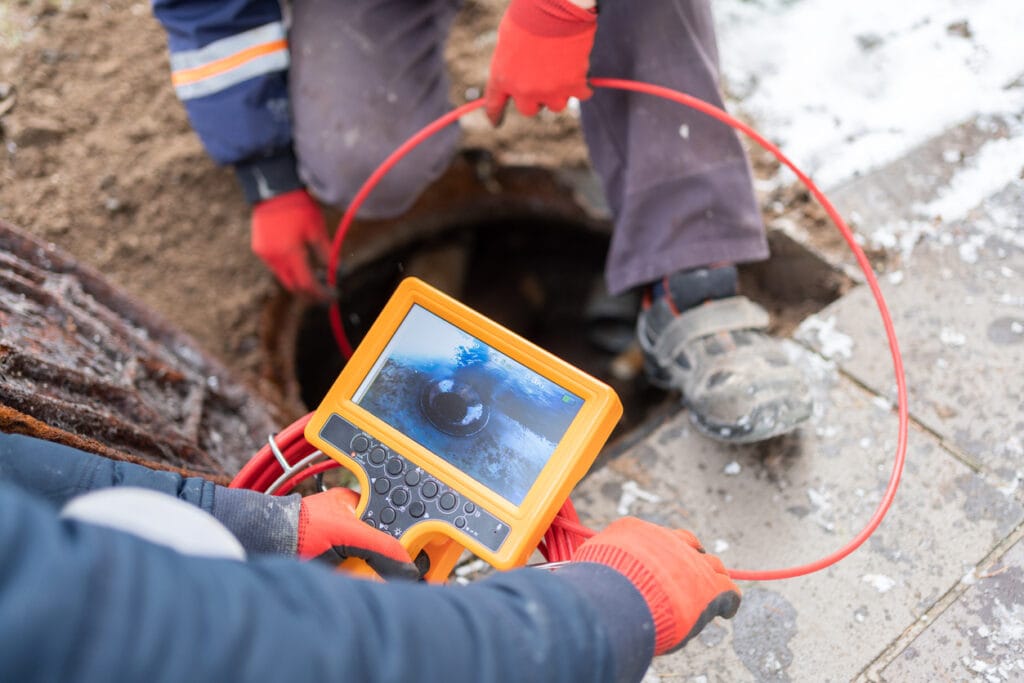
The tools used for professional leak detection fall into a few categories, each suited to a different type of leak and property construction.
Acoustic leak detection uses sensitive microphones placed on pipe access points, floor surfaces, or wall surfaces to detect the sound signature of water escaping under pressure. Pressurised water escaping through a crack produces a distinctive frequency that acoustic equipment can identify and triangulate. This works effectively on supply lines, which are under mains pressure, but is less effective for gravity drain leaks which produce minimal pressure-related noise.
Thermal imaging detects temperature differentials using an infrared camera. Water holds and conducts temperature differently to dry building materials. A wet area inside a wall or under a floor will show a different thermal signature to the surrounding dry area. This is particularly effective for finding leaks in water-heated slab systems (hydronic heating) and for mapping the extent of water spread after a leak has been partially identified.
Tracer gas testing is used for leaks that are too slow to detect acoustically. A non-toxic, hydrogen-based tracer gas is introduced into the pipe system under low pressure. Because hydrogen molecules are very small, the gas migrates through the crack or joint failure and rises to the surface where it can be detected with a gas sensor at concentrations as low as 1 part per million. This method can find leaks that acoustic equipment cannot.
Moisture meters are used after the approximate location has been identified to map the extent of moisture penetration into building materials. This is the tool used to assess how far the water has spread through the wall, floor, or slab, and to determine whether drying equipment will be needed after the repair.
Conclusion
The longer a hidden leak runs, the more damage it does and the more expensive the repair becomes. Our plumber Burnside Heights uses non-invasive methods to pinpoint the exact location without unnecessary demolition. If a pipe has deteriorated to the point of leaking, pipe relining may offer a repair without cutting into walls. For supply line issues, our tapware and pipe repair services cover all fixture types.
New Image Plumbing covers Burnside Heights and all surrounding West Melbourne suburbs. Call us today at 0489 246 667 or submit our online form.
Frequently Asked Questions
How do I check if my water meter is moving when nothing is on?
Turn off all taps, appliances, and your toilet’s water supply valve. Note the meter reading, then wait 30 minutes without using any water. If the reading has changed, you have a leak somewhere in the property.
How accurate is non-invasive leak detection?
Modern acoustic leak detection equipment can pinpoint a leak to within a very small margin. It won’t always identify the exact millimetre, but it narrows the search area enough that repair work is targeted rather than exploratory — significantly reducing damage and cost.
Can mould from a water leak make my family sick?
Yes. Certain types of mould found in water-damaged walls produce spores that can cause respiratory problems, particularly for children, the elderly, and anyone with asthma or allergies. If you find mould in an unusual location, don’t just clean it — find the water source.
Is a hidden water leak covered by insurance?
This varies by policy. Sudden leaks are generally covered; slow leaks that developed over time due to lack of maintenance are often excluded. Document everything, get a plumber’s report of the cause, and submit this to your insurer promptly.
How long can a hidden leak go undetected?
A slow pinhole leak can go undetected for months or even years if it’s in a location where visible signs don’t develop — inside an internal wall cavity, beneath a concrete slab, or under the subfloor where access is limited. The only reliable way to detect these is through unexplained water bill increases or professional leak detection equipment. This is why unusual bill increases should never be ignored.
What should I do if I find mould in an unusual location?
Clean the visible mould surface with an appropriate fungicidal product, but treat this as a symptom rather than the problem. The next step is to investigate the moisture source. If you can’t identify a clear cause — condensation, rising damp from a known issue — call a plumber for a leak inspection before investing in remediation that won’t last if the water source remains active.