
Bonnie Brook is one of West Melbourne’s newer residential estates, and while new homes come with fresh plumbing, that does not mean blocked drains cannot happen. In fact, new estates bring their own specific risk factors that most homeowners do not know to look for until a drain backs up for the first time. Understanding what causes blocked drains Bonnie Brook, and what to do before they become a problem, is genuinely useful.
Why New Estates Are Not Immune to Blocked Drains
There is a common assumption that a new home means no plumbing problems for years. The reality is more complicated. A new home in a new estate goes through a construction process that creates specific drainage risks, and the surrounding environment in a newly developed suburb creates others. These are different from the root intrusion and pipe degradation problems you would typically find in a 40-year-old house in Deer Park or Sunshine, but they are real and they can cause significant blockages relatively quickly.
Construction Debris in the Pipe
This is the most common cause of early drainage problems in new homes, and it is largely invisible until a blockage develops. During construction, sand, concrete residue, mortar, plaster dust, and grit from tile cutting all find their way into drain pipes. Wet concrete in particular can enter drainage points during slab pouring and set inside the pipe, forming a hard partial blockage that restricts flow from day one and worsens over time as waste accumulates behind it.
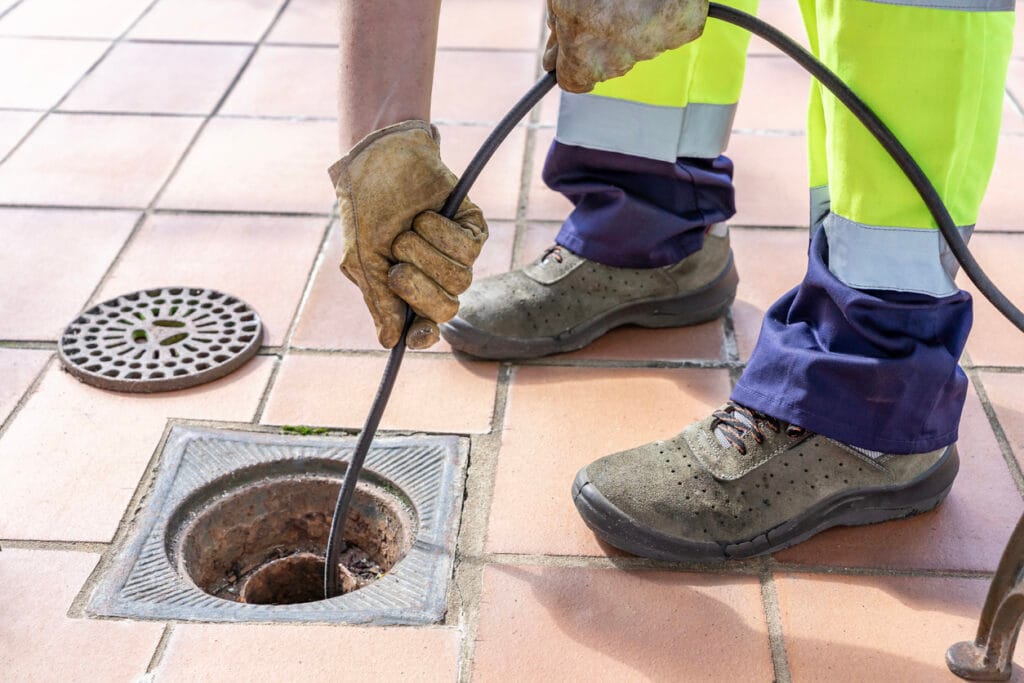
The construction industry generates significant waste volumes on residential sites. Some of this material inevitably enters the drainage system despite best practice requirements to cover drain openings during works. Once inside the pipe, hardened cement and mortar cannot be cleared with household plungers or chemical cleaners. They require professional high-pressure water jetting or, in stubborn cases, robotic cutting equipment to break up and remove the hardened mass.
If you moved into your Bonnie Brook home and noticed slow drainage from day one, particularly at the laundry or bathroom, construction debris is the most likely cause. A professional CCTV drain inspection is the correct diagnostic step.
Inadequate Pipe Grading
Drain pipes work on gravity. For waste and water to flow correctly through a drain pipe, the pipe must be laid at a sufficient gradient to maintain flow velocity. Under AS/NZS 3500.2, the Australian standard for sanitary plumbing and drainage, house drain pipes up to 150mm diameter must be laid at a minimum grade of 1 in 60 (1.67%) for standard applications, with some variation permitted based on pipe diameter and application.
When pipes are laid with insufficient gradient, flow velocity drops below the level needed to carry solids through the pipe. Instead of being flushed through, solid waste settles at low points in the pipe run and builds up progressively. This is a structural installation problem rather than a behavioural one. You will not solve it by changing what you put down the drain. It requires a plumber to inspect the drainage layout and, depending on the finding, either correct the grade or install additional access points to allow regular mechanical clearing.
Poor pipe grading in a new build is a builder defect issue. If your home is still within the statutory defects liability period, any drainage problems caused by incorrect pipe gradient should be raised with your builder in writing before pursuing independent repairs.
New Landscaping and Root Intrusion
Bonnie Brook lots are being landscaped progressively as residents move in. Freshly planted trees and shrubs grow quickly in the conditions present in a new residential estate: disturbed soil, irrigation systems, and seasonal rainfall create ideal conditions for rapid root growth. Tree roots actively follow moisture gradients in the soil, and underground drain pipes, which maintain consistent warmth and humidity year-round, are an attractive target.
Root intrusion in a new estate does not wait for the trees to mature. A young tree with a fast-growing root system can send fine roots into a pipe joint or a construction-related crack within two to three years of planting. The most problematic species are those with shallow, spreading root systems. In new Melbourne estates, this includes many of the ornamental and feature trees used in residential landscaping.
Root intrusion into drain pipes follows a predictable progression. Fine root hairs detect moisture escaping through a crack, joint gap, or construction defect and grow toward the source. Once inside the pipe, the root finds warm wastewater, oxygen, and nutrients, and grows rapidly. Over time, root mass accumulates, catches debris, and eventually causes a full blockage. The entry point does not need to be large: roots can enter through gaps smaller than a millimetre.
When planting trees near your property, check the location of your drainage pipes on your property’s drainage plan (provided at settlement by your developer or builder) and maintain a buffer distance between any fast-growing species and underground pipe runs. For new lots, a minimum of three metres is generally recommended for standard ornamental species, with larger setbacks needed for trees with more aggressive root systems.
FOG Accumulation in Kitchen Drains
FOG stands for fats, oils, and grease. It is the single most common cause of kitchen drain blockages in Australian homes, and new homes are no exception. When hot cooking fat, oil, or grease is poured down a kitchen sink, it flows easily in its liquid state. Once inside the cooler drain pipe, it cools quickly, changes state from liquid to semi-solid, and adheres to the pipe wall. Each additional pour of fat layers on top of what is already there, and the accumulation gradually narrows the internal bore of the pipe.
The pipe does not block overnight. In a household that regularly sends cooking fat down the kitchen sink, a partial blockage typically develops over six to eighteen months, depending on cooking frequency and the type of fats involved. Saturated fats from bacon, mince, and meat drippings solidify harder and faster than unsaturated cooking oils. Both contribute to the problem. As the fat coating thickens, food particles caught in the sticky residue add to the blockage, and eventually water cannot pass through at all.
This blockage almost always sits close to the kitchen itself, typically in the first few metres of drain pipe under the sink or within the under-slab section just outside the kitchen wall. High-pressure water jetting can clear a FOG blockage effectively, but unless the habits that caused it change, the blockage will return on the same timeline.
Non-Flushable Products in Toilets
Wet wipes, including products marketed as “flushable”, are a significant cause of sewer blockages in residential properties. Unlike toilet paper, which is specifically designed to break apart rapidly in water, wet wipes retain their structural integrity for extended periods in the sewer system. When combined with FOG residue from kitchen drains entering the sewer main, wet wipes form the core of what the water industry calls “fatbergs”: dense, compacted masses that can completely occlude a sewer pipe.
Other toilet blockage contributors include cotton pads, sanitary products, nappy liners, paper towel, and excess toilet paper. In a household with children, toys and small objects flushed down the toilet are also a recurring cause of blockages that require professional clearing with a drain snake or high-pressure jetting to retrieve or break up the obstruction.
Practical Prevention Habits for Bonnie Brook Households
Install Drain Strainers in Every Fitting
Drain strainers are the most cost-effective preventive measure available. A strainer fitted over each shower drain, bath drain, laundry sink, and kitchen sink catches hair, food particles, and debris before they enter the pipe system. In a new home with fresh plumbing, this single habit prevents the majority of early partial blockages. Strainers are inexpensive, widely available at hardware stores, and require only seconds to clean. Clean them weekly by lifting out the strainer and disposing of the collected material in the bin, not back down the drain.
Manage Cooking Fat and Oil Correctly
Never pour cooking fat, oil, or grease down any sink or drain. The correct disposal method is to pour liquid oil into a sealed container and place it in the bin when full. For solid or semi-solid fats like bacon drippings or the fat drained from mince, allow it to solidify in the pan and scrape it into the bin. Wipe greasy pans with paper towel before washing them so the majority of fat goes into the bin rather than the drain. If you use a dishwasher, scrape and wipe plates thoroughly before loading them, as the dishwasher drainage carries any remaining fat directly into the pipe system.
Running hot water down the kitchen sink while washing dishes helps move residual grease further along the pipe, but it does not prevent accumulation. Some of the FOG will cool before it reaches the sewer junction and will adhere to the pipe wall regardless. The only reliable prevention is minimising the amount of fat that enters the drain in the first place.
Be Strict About What Goes Down the Toilet
Only toilet paper should be flushed. Everything else, regardless of what the packaging claims, goes in the bin. This includes wet wipes, baby wipes, cosmetic wipes, cotton pads, sanitary products, nappy liners, and paper towel. A useful practical tip: keep a small bin beside every toilet in the house, particularly in bathrooms used by children. The presence of a bin removes the temptation to flush non-toilet-paper products.
Flush Shower and Basin Drains Regularly
Hair accumulation in shower and basin drains is the most common cause of bathroom drain blockages. Hair tangles and combines with soap scum and the residue from shampoo, conditioner, and body wash to form a dense mat that water cannot pass through. Once a strainer is in place, the accumulated hair stays on top of the strainer and can be disposed of in the bin. In showers without strainers, the hair reaches the drain pipe directly and bonds with soap residue against the pipe wall, requiring mechanical clearing.
Running hot water through the shower and basin drains for 30 to 60 seconds every week or two helps flush soap residue further down the pipe before it has a chance to accumulate. This is not a substitute for strainers, but it complements them in minimising the buildup of soap scum and product residue in the first few metres of drain pipe after the drain opening.
Know Where Your Outdoor Drainage Points Are
New homes in Bonnie Brook have outdoor drainage systems including stormwater grates, paved area drainage channels, and subsoil drainage for the garden. These outdoor drainage points are frequently overlooked. Leaf litter, garden debris, sediment from newly established garden beds, and soil from a garden under construction can all enter stormwater drains and create blockages. Check outdoor drainage grates monthly, particularly in autumn when fallen leaves are most likely to accumulate. Keep garden drainage channels clear of mulch and soil that has migrated from garden beds.
How to Recognise a Partial Blockage Before It Becomes a Full One
Most full drain blockages are preceded by a partial blockage that gives warning signs for days, weeks, or even months before the drain stops working entirely. Catching a partial blockage early is significantly cheaper and easier to resolve than a full emergency callout.
The warning signs of a developing blockage include water draining noticeably more slowly than usual in a sink, shower, or bath; gurgling sounds coming from drain openings after water is run, which indicate air being displaced by a partial restriction in the pipe; unpleasant odours rising from sink or shower drains, which indicate organic matter decomposing inside the pipe; and water pooling around outdoor drainage grates or slow-draining water on paved areas during rain. In a bathroom, water pooling around your feet in the shower is an early indicator of restricted drain flow, not just a slow drain.
If multiple fixtures in the same zone of the house show slow drainage simultaneously, that points to a blockage in the shared drain further down the system rather than individual fixture blockages. Multiple slow fixtures with gurgling sounds is a signal to call a plumber promptly, because the blockage is likely in a section of drain that serves several rooms, and a full blockage at that point will affect all of them at once.
What a CCTV Drain Inspection Shows in a New Home
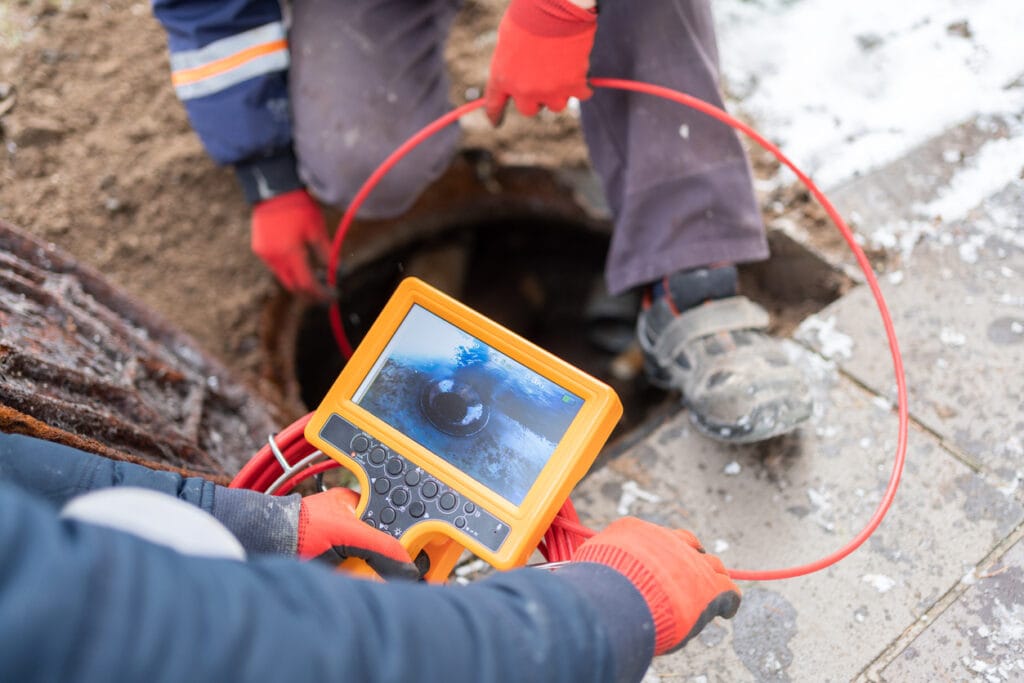
Running a CCTV camera through the drain pipes of a new home may sound unusual, but it is a genuinely useful exercise if you have experienced any early drainage issues or if you want to confirm the drainage system is correctly installed and clear of construction debris before problems develop.
A camera inspection of a new home’s drain system will reveal the presence of any construction debris including concrete, mortar, or grit that has settled inside the pipe; the correct or incorrect gradient of each pipe run; any pipe joints or connections that are misaligned or open, which are potential root entry points; the condition of junction points where branch drains connect to the main sewer line; and the presence of any foreign objects that may have entered the system during construction.
This is the same diagnostic tool we use on older homes before pipe relining. In a new home, the camera footage serves as a baseline record of the drainage system’s condition at handover. If problems develop later, the footage establishes what the pipes looked like at move-in, which is useful when pursuing builder warranty or insurance claims for drainage defects.
When to Call a Licensed Plumber
Not every slow drain requires a plumber. A strainer full of hair that is restricting flow is something you can fix yourself by cleaning the strainer. A minor blockage near the drain opening that responds to a plunger may clear without professional help.
Call a licensed plumber when the drain is not draining at all; when a plunger has had no effect on a slow drain; when multiple fixtures are draining slowly or gurgling simultaneously; when water or sewage is backing up through any drain or toilet; when there is an odour of sewage inside the house rather than just at the drain opening; when outdoor stormwater grates are overflowing during ordinary rain; or when drainage was slow from the day you moved in, which suggests a construction issue rather than a maintenance one.
Conclusion
A plumber West Melbourne attending a blocked drain in a new estate home will assess whether the problem is a simple accumulation blockage that can be cleared with a drain snake or high-pressure jetting, or whether it points to an underlying installation problem such as incorrect pipe grade or construction debris. If a CCTV inspection reveals damaged pipe sections from construction impact or settling, pipe relining offers a no-dig repair option. If a supply-line issue is suspected, water leak detection using acoustic and thermal imaging can locate the source without excavation.
New Image Plumbing covers Bonnie Brook and all surrounding West Melbourne suburbs. If you are dealing with a slow drain, a recurring blockage, or you want a CCTV inspection of your new home’s drainage system, get in touch with our team. Call us at 0489 246 667 or submit our online form.
Frequently Asked Questions
My home is brand new. Can I still get a blocked drain?
Yes. New homes are not immune. Construction debris in drain pipes, new landscaping with fast-growing root systems, everyday household waste, and incorrect pipe grading during installation can all cause blocked drains in a brand new property. Good habits from day one, combined with a baseline CCTV inspection if you suspect issues, make a significant difference.
Are drain strainers worth using?
Absolutely. Drain strainers are one of the cheapest and most effective preventive measures available to homeowners. They catch hair, food particles, and debris before it enters the pipe, and they take seconds to clean. Fitting them in every shower, bath, laundry, and kitchen drain is worthwhile from day one in any home.
How do I know if my drain is partially blocked?
Look for water draining noticeably slower than it used to, gurgling sounds coming from the drain after water runs, unpleasant odours rising from drain openings, and water pooling around outdoor drainage grates. If multiple fixtures in the same area of your home are slow simultaneously, the blockage is likely in a shared drain section further down the system, not individual fixture blockages.
Can I unblock my own drain?
A plunger can dislodge a minor blockage sitting close to the drain opening. For anything further into the pipe, particularly a recurring blockage or one affecting multiple fixtures at once, a licensed plumber with a drain snake or hydro-jetter is the right tool. Household chemical drain cleaners are not effective against solid blockages like construction debris, hardened fat accumulation, or root mass, and caustic cleaners can damage older pipe seals.
How does hot water help with grease in drains?
Running hot water helps move residual grease further down the pipe in its liquid state before it cools and solidifies. It does not prevent FOG accumulation entirely, but it delays it. The correct prevention is keeping fat, oil, and grease out of the drain in the first place by scraping and wiping greasy cookware before washing.
What is the correct pipe grade for a residential drain in Australia?
Under AS/NZS 3500.2, the Australian standard for sanitary plumbing and drainage, house drain pipes up to 150mm diameter must generally be laid at a minimum grade of 1 in 60 (approximately 1.67%). Insufficient gradient causes solids to settle in the pipe rather than flow through, leading to progressive accumulation blockages that are structural in nature rather than caused by household habits.