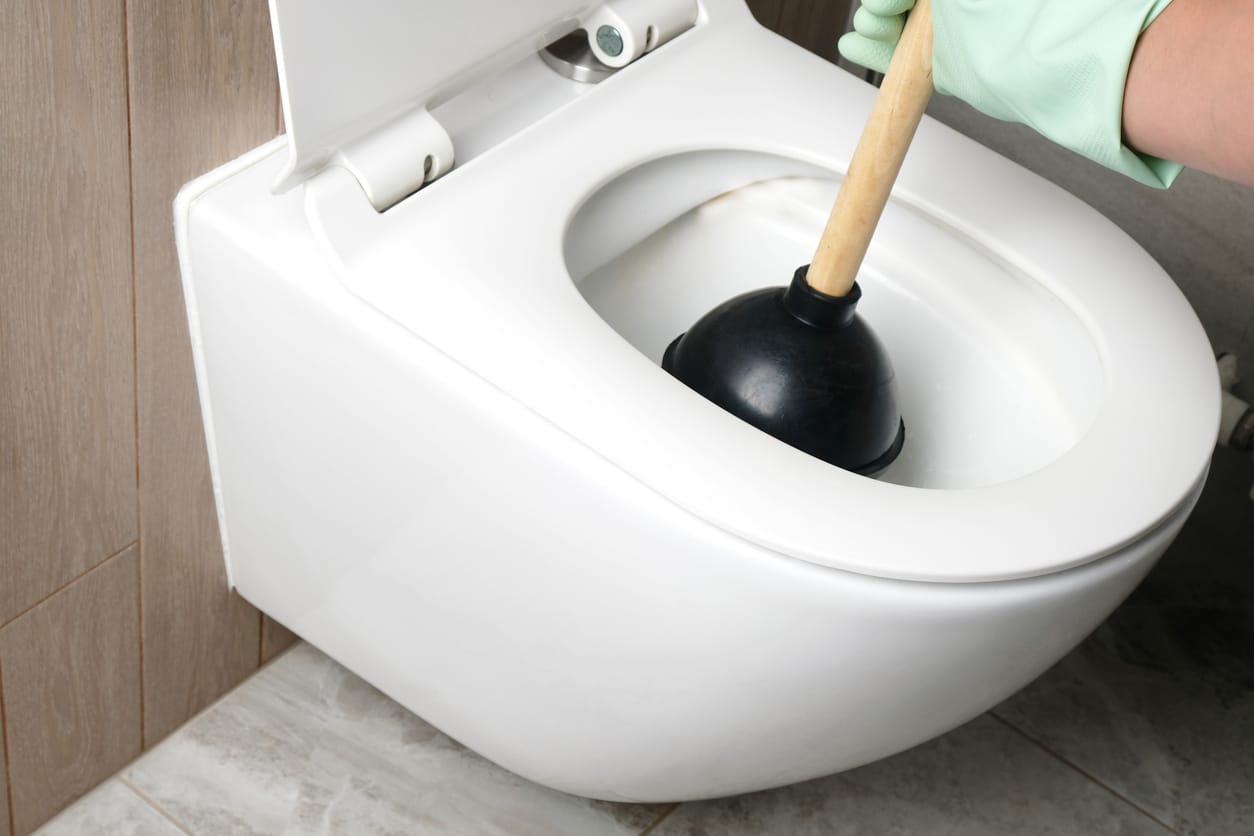
A single toilet blockage is an inconvenience most households deal with at some point. You reach for the plunger, clear it, and get on with your day. But a toilet that keeps blocking, even after you’ve cleared it multiple times, is sending you a very clear message: something is wrong with the drain system beneath it, and plunging your way through it every few weeks is not the answer.
Blocked Drains in Melton and Bacchus Marsh are one of the most common plumbing complaints we attend to. In most cases, the cause is not the toilet itself but a deeper issue in the drain line that needs to be properly diagnosed and fixed. Here is a thorough breakdown of every reason a toilet might keep blocking, and what to do about each one.
A Partial Blockage Further Down the Drain Line
This is the single most common reason for repeat toilet blockages. If the toilet clears with a plunger but blocks again within days or weeks, the plunger has pushed the immediate material through a partial restriction further down the line, but that restriction is still there waiting to catch the next load of waste. Here’s what this situation looks like in practice:
- The toilet flushes and drains slowly after being cleared rather than flushing cleanly and completely.
- The blockage returns with a similar level of severity each time, suggesting the same narrowing point is catching material repeatedly.
- Other drains in the home may drain slightly slowly as well, indicating the restriction is in a shared section of the sewer line rather than the toilet’s private branch.
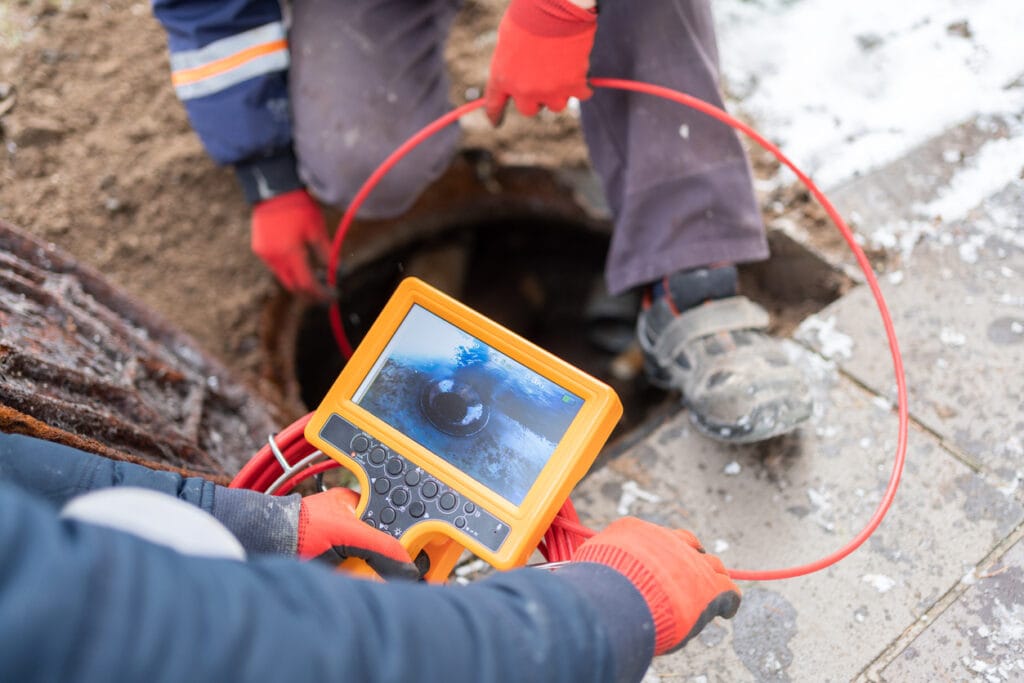
- High-pressure water jetting clears the immediate restriction but does not address the cause. A CCTV camera inspection of the drain line is required to find what is causing material to accumulate and why clearing it keeps providing only temporary relief.
In Melton and Bacchus Marsh, partial restrictions in sewer lines are often caused by the accumulation of non-flushable materials, root intrusion, or structural damage to the pipe that narrows the effective bore. All three of these need to be addressed at the source, not managed with a plunger.
Tree Root Intrusion in the Sewer Line
Root intrusion is one of the most significant causes of chronic toilet blockages in established residential areas. Roots from trees and large shrubs are constantly seeking moisture, and a sewer line is one of the most reliable sources in the ground. Once roots find a joint, a crack, or even a small imperfection in a clay pipe, they enter and begin to grow. Here’s why this causes recurring blockages:
- Roots that enter a sewer pipe act like a filter or a net. Toilet paper, waste, and non-flushable materials accumulate against the root mass and eventually cause a full blockage.
- Clearing the blockage with a water jet moves the accumulated material through, but it does not remove the root mass itself. The root grows back, the accumulation starts again, and the blockage returns.
- Over time, roots cause the pipe wall to crack further, allowing more root mass to enter and making the problem progressively worse with each season.
- A CCTV camera inspection will show the presence, density, and location of root intrusion in the pipe. Pipe relining is the long-term solution, as it creates a smooth, seamless inner surface that roots cannot re-enter.
- Properties in Bacchus Marsh with established gum trees, willows, or any other large-rooted trees near the sewer line are particularly susceptible. Even trees that appear to be a reasonable distance from the pipe can have roots extending well beyond their canopy.
Root intrusion is not something that resolves on its own. If roots are found during a camera inspection, the question is not whether to address it but which method best suits the pipe’s condition, whether that is mechanical root cutting combined with relining, or in severe cases, excavation and pipe replacement.
Flushing Non-Flushable Items
This is the most preventable cause of repeat toilet blockages, and it is more common than most households realise. The problem is that modern marketing has convinced many people that certain products are safe to flush when they categorically are not. Here’s the full picture:
- Wet wipes and “flushable” wipes. Despite being labelled as flushable, wet wipes of virtually every type do not break down in water the way toilet paper does. They travel partway through the system and then accumulate at any restriction, bend, or root mass in the sewer line. They are one of the leading causes of repeat blockages in Australian homes.
- Sanitary products. Pads, tampons, and applicators are designed to absorb liquid and expand, not to disintegrate. They expand significantly in the sewer system and will block even a healthy, well-maintained drain if flushed regularly.
- Cotton pads, cotton balls, and facial wipes. These do not dissolve in water and accumulate in bends and restrictions in the same way wet wipes do.
- Paper towels and tissues. Paper towels are engineered to stay intact when wet. Unlike toilet paper, which begins to break apart almost immediately in water, paper towels hold together and cause blockages.
- Dental floss. Floss is extremely tough, doesn’t dissolve, and tangles with other material in the sewer, binding together masses that then catch additional debris.
- Medications, food scraps, and cooking oils. These don’t cause immediate blockages but contribute to grease and sediment accumulation in the line over time.
If anyone in the household is flushing any of the above, the blockages will continue regardless of how many times the drain is cleared. The fix here is behavioural. The bin beside the toilet needs to be used for anything that is not toilet paper, and all household members, including children, need to understand this.
Low-Flush Toilet With Insufficient Drain Slope
Modern dual-flush toilets are excellent for water conservation, using as little as 3 to 4.5 litres per full flush compared to the 11 litres older cisterns used. But this reduced flush volume can sometimes be insufficient to carry waste through a drain that has an inadequate gradient, known as the fall. Here’s the technical detail:
- Australian plumbing standards require a minimum drain gradient of 1:40 for toilet drains (meaning a 25mm drop for every 1 metre of horizontal run), though steeper gradients carry waste more effectively.
- In older homes, drains may have settled over time due to ground movement or root activity, reducing the original gradient below the minimum.
- When the gradient is too flat, even a correct flush doesn’t carry waste fully through the pipe. Material settles in low points and accumulates over time until it causes a blockage.
- Switching to the full flush button rather than the half flush for solid waste can help manage this in the short term, but the underlying drain gradient problem needs to be assessed by a plumber Melton.
- An older dual-flush toilet with a worn flush valve can also produce a weaker flush than its rated performance, contributing to the same problem. A simple flush mechanism service or cistern component replacement can restore proper flush performance.
If your toilet was installed in the last 10 years but the home itself is older, it’s worth checking whether the drain was assessed for adequate gradient when the new toilet was installed.
A Blocked or Inadequate Vent Pipe
This is less commonly understood by homeowners, but the vent system is critical to how well your drains flow. Every drain in your home is connected to a vent pipe that runs up through the roof. These vents serve two essential functions: they allow sewer gases to escape safely, and they allow air to enter the drain system, which is what lets water and waste flow freely. Here’s what happens when they fail:
- A blocked vent pipe creates a partial vacuum in the drain system. Every time the toilet flushes, the flowing water tries to pull air through the drain rather than through the vent, which causes gurgling, slow drainage, and can result in partial or full blockages.
- Vent pipes can become blocked by bird nests, leaf debris, possum activity in the roof space, or in some older homes, a vent pipe that was never installed to the correct height above the roofline.
- A symptom of a vent problem is hearing a gurgling sound from other drains (such as a basin or bath) when the toilet is flushed. This is air being sucked through those drain openings because the vent is not supplying it from above.
- Vent pipe issues are best diagnosed by a plumber Bacchus Marsh who can pressure-test the drain system and inspect the vent termination on the roof.
Vent problems are worth investigating when all other causes have been ruled out, particularly in older Melton and Bacchus Marsh homes where the plumbing system has not been updated or serviced for many years.
Damaged, Cracked, or Misaligned Sewer Pipes
Clay sewer pipes installed in homes built before the 1990s have a finite service life. The combination of age, ground movement, and corrosion can cause structural failures that lead to repeat blockages. Here’s what to look for:
- Cracked pipes. Longitudinal cracks in a clay pipe allow soil and fine particles to enter the pipe from outside, gradually narrowing the bore and providing rough surfaces where material catches and accumulates.
- Joint displacement. Sewer pipes in older homes are laid in sections. Ground movement can push these sections slightly out of alignment, creating a step or lip inside the pipe that catches material with every flush.
- Pipe belly or sagging. A section of pipe that has dropped below the required gradient creates a sag where water and waste pool rather than flow through. Waste settles in these low points and accumulates until cleared, then settles again because the geometry of the pipe has not changed.
- Deteriorated pipe wall. Older clay and cast iron pipes deteriorate from the inside over decades of use. A pitted, rough interior surface catches material far more readily than a smooth one and causes blockages at significantly lower accumulation levels.
A camera inspection is the only reliable way to identify these structural issues. Once identified, pipe relining is the most cost-effective remedy for most forms of structural damage that haven’t led to full collapse.
Conclusion
A toilet that keeps blocking is not a minor inconvenience to manage. It’s a symptom of something that will not resolve itself and will, in many cases, get worse and more expensive the longer it’s left. Whether the cause is root intrusion, a structural pipe fault, a vent problem, or a household flushing habit that needs to change, the starting point is always the same: get a proper diagnosis before doing any more clearing.
At New Image Plumbing and Gas, we carry out CCTV drain inspections, high-pressure water jetting, pipe relining, and full toilet replacements when required. If your toilet has blocked more than once in recent months, call us on 0468 125 098 or get in touch via online form. We’ll find out what’s actually causing it and give you a clear recommendation, not just clear the drain and leave you with the same problem later.
Frequently Asked Questions
Is it safe to use a plunger every time my toilet blocks?
A plunger is fine for clearing an isolated, one-off blockage caused by excess paper or a foreign object accidentally dropped into the toilet. Using it repeatedly for a toilet that blocks regularly is masking the underlying cause rather than fixing it. Plunging pushes whatever is causing the blockage further into the system, which can make a partial restriction worse over time. If you are plunging more than once every few months, the problem needs a professional drain investigation rather than repeated clearing.
Can wet wipes cause a toilet to keep blocking even if they are labelled flushable?
Yes, they absolutely can. Despite the labelling, so-called flushable wipes do not break down in the sewer system the same way toilet paper does. They remain largely intact, accumulate at any restriction or root mass in the drain, and are one of the most common causes of repeat toilet blockages in Australian homes. Water authorities around Australia have been calling for the use of the word “flushable” on these products to be banned for this exact reason. The simplest action a household can take to reduce recurring blockages is to put all wipes, regardless of labelling, in the bin rather than the toilet.
How do I know if the blockage is in my toilet or further down the sewer line?
If only your toilet is blocking while all other drains in the home (showers, bathroom basins, laundry tub) run freely and drain at their normal rate, the blockage is most likely localised to the toilet’s waste connection or the immediate section of pipe beneath it. If multiple fixtures are draining slowly, if you notice gurgling from other drains when the toilet is flushed, or if water backs up in the shower when you flush the toilet, the blockage is further down the shared sewer line and requires a drain investigation rather than just a toilet inspection.
Does a low-flush toilet block more easily than a standard toilet?
Modern dual-flush toilets are well-engineered and should not block more frequently than older models when installed correctly and used on drains with adequate gradient. The issue arises in two specific situations: an older low-flush model with a worn flush mechanism that produces a weaker flush than it should, or a drain with insufficient fall that the older high-volume flush used to compensate for but the new low-flush model cannot. If your toilet was recently replaced and blocking issues started or increased after the replacement, a plumber should check the drain gradient and the flush performance of the new unit.
How often should I have my sewer drains inspected?
For homes with older clay pipe drainage (generally homes built before the early 1990s), a CCTV camera inspection every three to five years is a sensible preventive measure, particularly if the property has mature trees nearby. For homes with PVC drainage in good condition and no history of blockage issues, a reactive approach is generally fine. If you have had a blockage cleared recently and the plumber did not perform a camera inspection to identify the cause, it is worth requesting one. Catching root intrusion or a developing crack early is significantly cheaper than dealing with a major blockage or a collapsed pipe later.