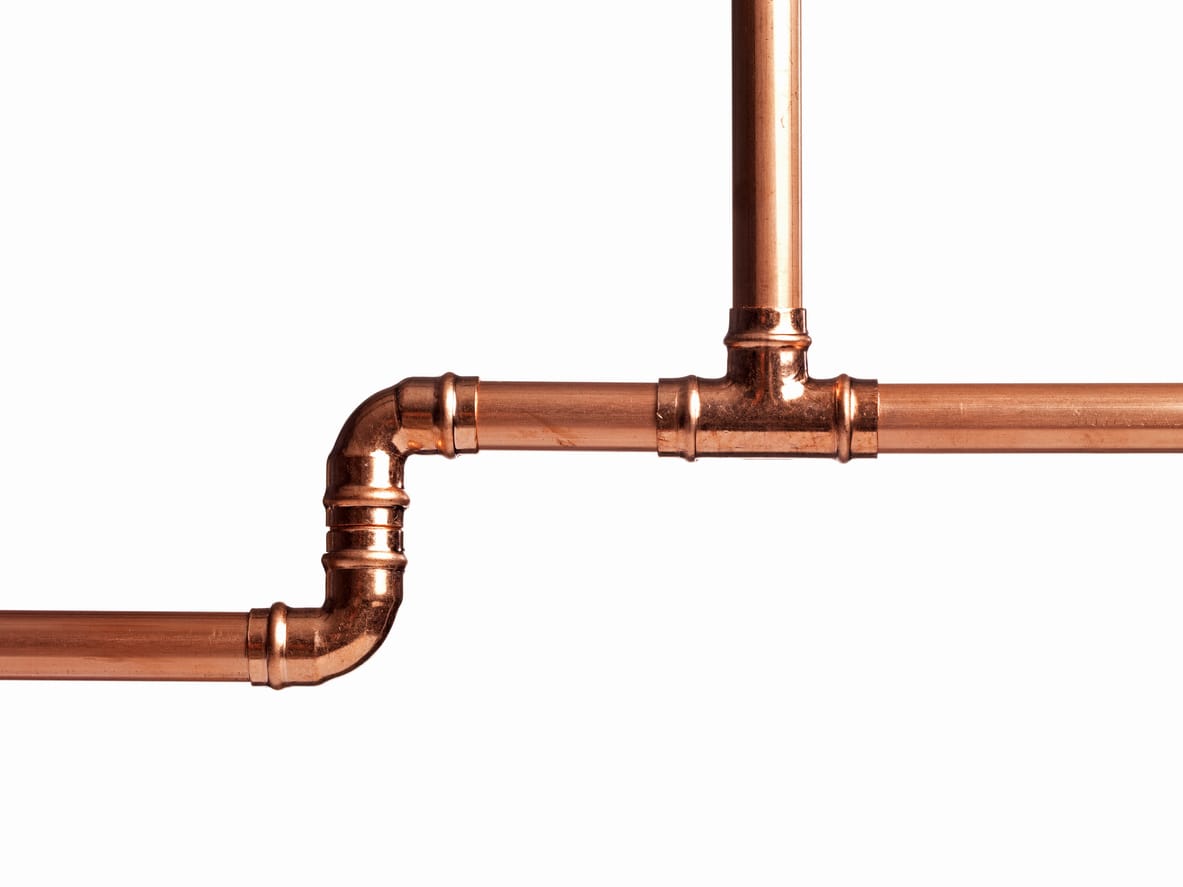
Copper pipes are one of the most common plumbing materials in Australian homes, and for good reason. They are durable, corrosion-resistant, and have been the backbone of residential plumbing systems for decades. If your home was built any time from the 1960s through to the early 2000s, there is a strong chance your water supply lines and much of your internal plumbing are copper.
So how long do copper pipes actually last? The short answer is that well-installed copper pipes in favourable conditions can last 50 years or more. But there are real variables at play, and many homes are reaching the age where copper pipes deserve a closer inspection by Melton plumbers. Knowing what to watch for can prevent a small plumbing issue from turning into a major and expensive problem.
The General Lifespan of Copper Pipes
Industry guidance and real-world experience both point to a lifespan of 50 to 70 years for copper water supply pipes when properly installed and maintained under normal conditions. Drain and waste copper pipes tend to last even longer, often beyond 70 years, because they are not under constant pressure and do not carry chemically treated water in the same way.
However, these figures are averages. Many homes have copper pipes that have already exceeded 50 years and remain in excellent condition. Others show signs of deterioration within 20 to 30 years because of factors specific to that property, its water supply, or the original installation quality. The age of your pipes alone is not sufficient to determine whether they need replacing.
Factors That Affect How Long Copper Pipes Last
Several key variables determine whether your copper pipes will be going strong at 60 years or causing problems at 30:
Water Chemistry and pH
- The chemical composition of your local water supply has a significant influence on copper pipe longevity. Water with a low pH (acidic water) is particularly corrosive to copper, accelerating the rate at which the internal pipe walls thin over time.
- Water that is highly chlorinated, has elevated dissolved oxygen levels, or carries high concentrations of certain minerals can also increase corrosion rates.
- Melton is supplied by Melbourne Water, which treats water to meet Australian Drinking Water Guidelines. However, the naturally occurring chemistry of water can vary between supply zones and over time, affecting copper differently across different suburbs.
Water Velocity and Pressure
- Water flowing through copper pipes causes a degree of physical erosion on the interior pipe wall, particularly at bends, elbows, and fittings where turbulence increases.
- Excessively high water pressure accelerates this erosion-corrosion process. Homes with unregulated or very high mains pressure will experience faster internal wear on copper pipes.
- Undersized pipes that force water to travel at high velocity compound this effect. This is one reason why older homes with 15mm supply lines sometimes develop problems faster than those with appropriately sized pipework.
Soil Conditions Around Buried Pipes
- For external buried copper pipes (such as service lines from the meter to the house), soil chemistry plays a significant role. Highly acidic or clay-heavy soils can cause external corrosion on copper that is not adequately protected.
- Certain types of fill soil used in new development areas can be more aggressive than natural soil profiles, which is relevant for Melton properties built in newer subdivisions that may have non-native fill materials around their service lines.
Quality of the Original Installation
- Copper pipes that were poorly joined, inadequately supported, or installed with incompatible fittings from the outset will not last as long as correctly installed pipework.
- Copper reacts with certain metals (particularly aluminium and some alloys) through a process called galvanic corrosion, where the two dissimilar metals in contact with moisture generate a small electric current that accelerates corrosion at the junction. Correct installation uses compatible materials and isolating fittings where necessary.
- Pipes that were not properly secured and allowed to vibrate or rub against structural elements will wear through at the contact points faster than correctly restrained pipework.
Thermal Cycling
- Copper expands when heated and contracts when cooled. This is normal and copper pipe is designed to accommodate it. However, pipes that are inadequately supported and unable to move freely will develop stress at fixed points over years of thermal cycling.
- Hot water pipes are more susceptible to this than cold water pipes because they experience a greater temperature range.
Past Repairs and Modifications
- The quality and compatibility of any past plumbing work on the system affects the integrity of the whole. Poorly soldered joints, incorrect fittings, or the use of incompatible pipe materials in a repair or extension can create weak points that fail well before the original pipes do.
Warning Signs That Your Copper Pipes Are Failing
Because copper pipe deterioration happens gradually, the early warning signs are easy to overlook. Here is what to watch for in your Melton home:
Discoloured Water at the Tap
- Blue-green tinted water or staining around tap outlets and drains is a classic sign of copper corrosion. The greenish colour comes from dissolved copper compounds leaching into the water supply.
- If you notice blue or green staining in your toilet bowl, on grout, or around drain holes, this warrants a prompt plumbing inspection. Beyond being an indicator of pipe deterioration, elevated copper levels in drinking water are a health concern at sufficient concentrations.
Pinhole Leaks
- Pinhole leaks are one of the most common failure modes for aged copper pipe. They are tiny perforations that develop as the pipe wall thins from internal corrosion, typically at one point first, then progressively at others across the system.
- Because they are small, pinhole leaks often go undetected for extended periods, causing sustained water damage inside walls, under floors, or in ceiling spaces before they are discovered.
- If you find one pinhole leak, treat it as a warning that others may be developing across the same pipe run. A single repair is often a short-term fix if the underlying pipe condition is the issue.
Reduced Water Pressure Throughout the House
- A gradual reduction in water pressure at taps and showerheads can indicate internal mineral build-up or partial blockages developing within aging copper pipes, particularly at fittings and bends.
- It can also indicate that a pinhole leak elsewhere in the system is releasing pressure before the water reaches the fixture.
Visible Corrosion on Exposed Pipes
- External corrosion on visible pipes (under sinks, in utility rooms, around the hot water system) presents as greenish-white powdery deposits, pitting, or surface discolouration.
- While the exterior condition does not always reflect the interior condition, significant external corrosion warrants a professional assessment.
Frequent Leaks at Joints and Fittings
- If you are having recurring leaks at solder joints or compression fittings across the property, this can indicate that the solder quality from the original installation is deteriorating, or that stress from thermal cycling and water pressure has fatigued the joints.
When Should Copper Pipes Be Replaced?
The decision to replace copper pipes is not always straightforward, and a blanket rule based on age alone is not sufficient. Here is a practical framework for Melton homeowners:
Consider Replacement When:
- Your copper pipes are 50 or more years old and you have not had a recent professional inspection of their condition.
- You have experienced multiple pinhole leaks across the property, suggesting systemic deterioration rather than isolated failures.
- Water quality testing reveals elevated copper levels at the tap.
- You are planning a significant renovation that will expose the pipework anyway, making replacement opportunistic and cost-effective.
- A plumber’s inspection using pressure testing or specialist leak detection equipment identifies significant deterioration across the system.
A Single Leak Does Not Always Mean Full Replacement:
- An isolated leak at one fitting on an otherwise young system may simply require a localised repair.
- The decision between repair and replacement should be made after a professional assessment that considers the age, condition, and extent of the issue across the whole system, not just the visible failure point.
Copper vs. Modern Alternative Piping Materials
When it does come time to repipe, homeowners in Melton often ask whether copper should be replaced like-for-like or whether modern alternatives should be considered:
PEX (Cross-Linked Polyethylene)
- PEX is flexible, resistant to corrosion, and increasingly common in modern Australian plumbing installations.
- It is generally more cost-effective to install than copper because it requires fewer fittings and can be run in longer continuous lengths.
- PEX is approved for use in Australia under AS/NZS 2642 and is a legitimate and durable alternative for residential repiping.
CPVC (Chlorinated Polyvinyl Chloride)
- CPVC is approved for hot and cold water supply and is used in some Australian applications, though it is less common than copper or PEX in domestic settings.
Copper Remains a Strong Choice
- Copper has a proven, decades-long track record in Australian conditions. It is naturally antimicrobial, highly durable when correctly installed, and fully compatible with existing copper systems.
- For homes where the existing copper is largely in good condition with isolated issues, repairing or partially replacing with matching copper is often the most practical approach.
Frequently Asked Questions
My Melton home was built in the 1980s. Should I be worried about my copper pipes?
Copper pipes from the 1980s are now around 40 to 45 years old, which puts them within the window where a professional inspection is worthwhile. Many will be in excellent condition; others may show early signs of deterioration depending on water chemistry, pressure history, and installation quality. A licensed plumber can assess the system and give you a clear picture.
Is blue-green staining in my sink dangerous?
Blue-green staining indicates dissolved copper compounds in the water. At low levels, copper in drinking water is not acutely dangerous, but the Australian Drinking Water Guidelines set a maximum of 2 mg/L for copper in drinking water. If you notice significant staining, have the water tested and the pipes inspected promptly.
How long does it take to repipe a house?
A full domestic repipe typically takes one to three days depending on the size and complexity of the home. Access to pipes within walls and under floors affects the timeline. Your plumber can give a more accurate estimate after an on-site inspection.
Does pipe relining work on copper pipes?
Pipe relining is primarily used for drain and sewer pipes rather than pressurised water supply pipes. For water supply copper pipes, replacement is the standard approach when the pipe condition has deteriorated beyond reliable repair.
Conclusion
If your home has copper pipes that have not been inspected in years, or if you have noticed any of the warning signs described above, do not wait for a leak to force the issue. Proactive assessment is always cheaper than emergency repair and the collateral water damage that tends to come with it.
At New Image Plumbing and Gas, we work with copper pipe systems every day across western Melbourne. We carry out thorough system assessments, pressure testing, and water leak detection Melton to give you an accurate picture of your pipework’s condition. From there, we will walk you through your options honestly, whether that is a targeted repair, a partial replacement, or a full repipe, with upfront pricing before any work begins.
Call us on 0489 246 667 or book via our online form for a free quote. We are available seven days a week and offer same-day service for urgent plumbing issues.