A burst pipe in Melton and Bacchus Marsh does not give you time to think. Water moves fast through a home, and the materials it encounters, plasterboard, timber framing, insulation, flooring, and cabinetry, absorb it faster than most people expect. In West Melbourne, where homes range from heritage properties on older lots to brand-new estates on reactive clay soil, what you do in the first hour after a burst is what determines whether you are dealing with a manageable plumbing repair or a full-scale restoration project. This guide covers exactly what to do, in the order you need to do it. Every step is prioritised for a reason. Read through once, then act.
Step One: Stop the Water Immediately
Locate and Close the Main Shutoff Valve
Nothing else matters until the water stops. Your main shutoff valve is located at the water metre, which sits near the street at the front of your property under a small lid in the ground or footpath. Turn it:
- Clockwise until it stops moving (wheel-type valve)
- 90 degrees so the lever sits perpendicular to the pipe (lever-type valve)
Every adult in the household should know where this valve is before an emergency happens. If you cannot find it, contact your water retailer’s emergency line or call a licensed plumber immediately.
Also Turn Off the Hot Water System if Needed
If the burst is on the hot water side of your system, the hot water storage tank will continue pushing water through the break even after the mains are shut. Turn off:
- Electric system: Switch it off at the switchboard
- Gas system: Close the gas isolation valve behind or beside the unit
Open Taps to Drain Residual Water
Once the mains are off, open every tap in the house, cold taps first, then hot. This drains residual water sitting in the pipes so it does not continue flowing out through the burst section. This step alone can significantly reduce the total volume of water that ends up in your walls, floors, and ceilings.
Step Two: Address the Electrical Risk
Turn Off Power at the Switchboard
Water and electricity are a lethal combination. If water is pooling near power points, light switches, downlights, or any electrical fittings, do not enter that area until you have turned off the power at the main switchboard. The switchboard is typically in the garage, laundry, or on an exterior wall.
Key safety points:
- Do not assume shallow standing water is safe. Even a few millimetres of water on a floor can conduct current if a fitting is compromised above it.
- If water has penetrated the ceiling near downlights, treat those lights as live until the circuit is confirmed off.
- When in doubt, turn off all circuits at the board and keep them off until both a licensed plumber and licensed electrician have cleared the property.
Step Three: Document Everything Before You Touch It
Photograph and Video the Full Extent of Damage
This step is critical for your insurance claim and is the one most homeowners skip in the rush to start cleaning up. Before you move a single piece of furniture, remove rugs, or start mopping, take comprehensive photos and video of:
- The burst pipe or the visible water source
- All affected walls, ceilings, and floors
- Any damaged furniture, appliances, or personal belongings
- The full extent of water pooling on floor surfaces
- Staining, bubbling paint, or soft plasterboard in adjacent areas
Contact Your Insurer Immediately
Call your insurer as soon as you have documented the scene. Most home and building insurance policies require prompt notification of a claim. Many also include clauses about taking reasonable steps to prevent further damage, which is why the shutdown steps above are important to have completed before you call. Your licensed plumber’s repair invoice will also be required as evidence of the cause and the fix.
Step Four: Remove Standing Water as Quickly as Possible
Act Before Absorption Accelerates
The longer water sits on a surface, the deeper it penetrates. Timber subfloors can absorb significant moisture within the first hour of flooding. Carpet underlay acts as a sponge and holds water against the structural floor long after the surface appears dry. Plasterboard that has been wet for more than a few hours will almost certainly need to be replaced rather than dried.
Use What You Have
- Mops, towels, and buckets for smaller volumes
- A wet-dry vacuum with a large drum for moderate flooding
- A submersible pump for significant standing water
Lift Carpets and Underlay
Rugs and carpets should be moved outside as quickly as possible. Carpet underlay almost always needs to be replaced after flooding, even when the carpet itself can be cleaned and dried. Lifting both exposes the subfloor underneath and allows it to begin drying much faster.
Step Five: Ventilate the Affected Area Aggressively
Open Everything and Get Air Moving
Once standing water is removed, the priority becomes drying the structure as quickly as possible. Open every window and door in the affected area. Point fans directly at wet walls, floors, and ceiling surfaces. If you own or can hire a dehumidifier, run it continuously in the affected space.
Key facts about drying and mould:
- Mould can begin to establish on wet building materials within 24 to 48 hours in the right conditions
- In Melton and Bacchus Marsh winters, enclosed wall cavities that remain damp create near-ideal conditions for mould growth
- The faster you move warm dry air through the affected space, the lower the risk of mould becoming a secondary problem
Do Not Use Gas Heaters in Enclosed Wet Spaces
Carbon monoxide risk is real in enclosed, poorly ventilated areas. Use electric fans and natural airflow. If heating is needed, ensure the space has adequate ventilation before using any gas appliance.
Step Six: Move Furniture and Personal Items
Protect Undamaged Belongings
After documenting the scene and starting water removal, move furniture away from wet areas to prevent further damage and to allow better access for drying. Important points:
- Timber furniture that sits on wet floors wicks moisture up through its legs and will swell and warp
- Electronics, documents, artwork, and clothing should be moved to a dry area immediately
- Do not place wet items on dry surfaces without protection. Use plastic sheeting, tarps, or towels underneath any wet belongings to prevent spreading the moisture problem to unaffected areas
Step Seven: Call a Licensed Plumber
Get the Repair Done Properly
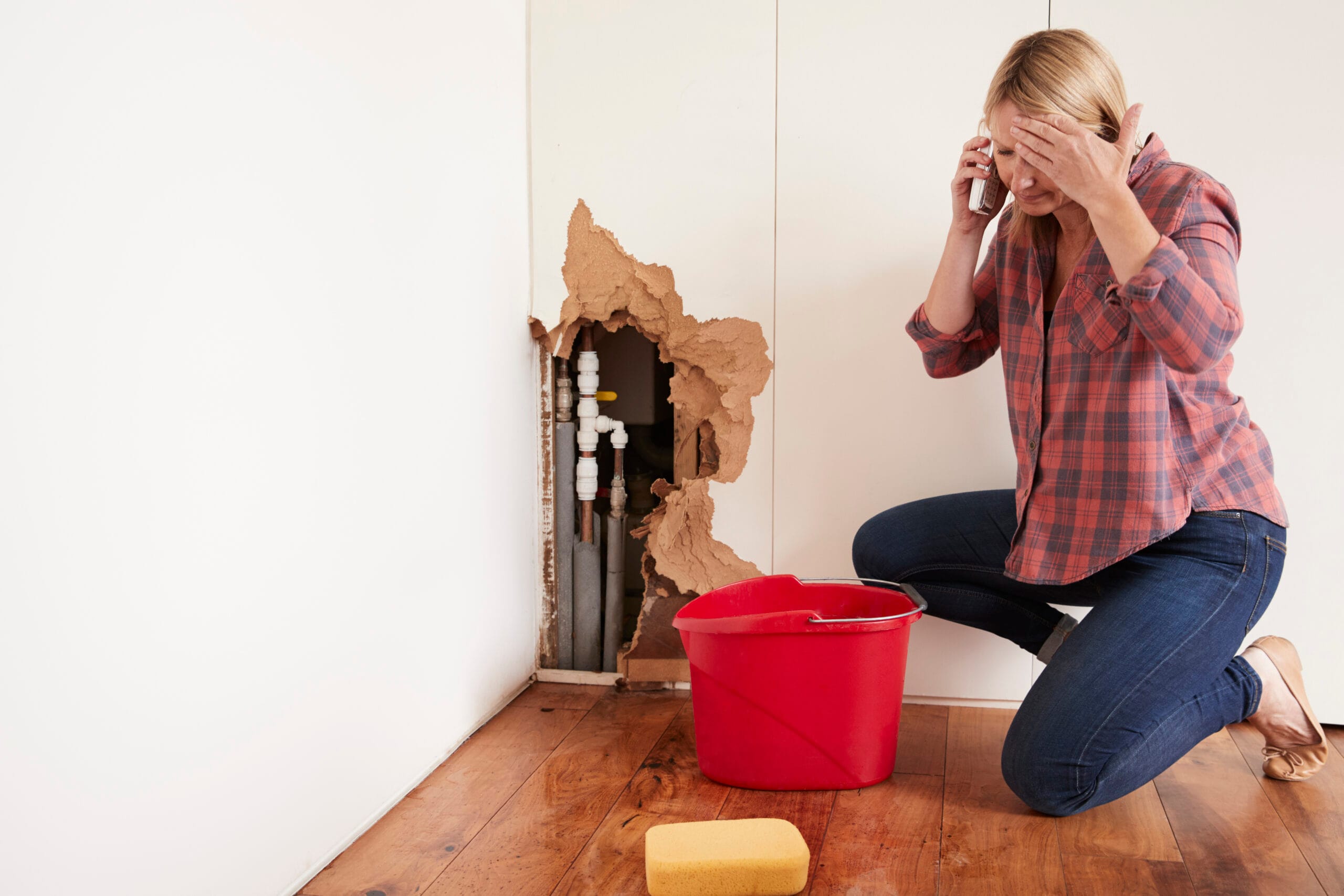
A burst pipe is an emergency repair that requires a licensed plumber. You need the pipe fixed before you can restore water supply to the house, the damage inside the wall cavity assessed, and confirmation that there are no other vulnerable sections of pipework nearby. What to expect from a professional burst pipe callout:
- Identification of the burst location, including inside wall cavities if needed
- Repair or replacement of the failed section of pipe
- Assessment of the surrounding pipework condition, not just the immediate failure
- Advice on whether the failure is isolated or a symptom of broader pipe deterioration
We carry leak detection equipment to assess the full extent of damage and can advise on all repair and replacement work needed beyond the immediate fix.
What Not to Do After a Burst Pipe
Several common responses to burst pipes make the situation significantly worse. Avoid these:
- Do not use electrical appliances in or near the wet area until power has been confirmed safe by a licensed electrician
- Do not patch a burst pipe with tape or sealant as a permanent fix. Temporary patching to slow the flow while you wait for a plumber is reasonable, but it is not a repair
- Do not turn the water back on to test whether the pipe is still leaking. Water stays off until the repair is complete
- Do not leave wet plasterboard in place hoping it will dry on its own. Wet plasterboard left in place accelerates mould growth and will almost certainly need replacement
- Do not assume the damage is limited to what you can see. Water travels through wall cavities, under floors, and along ceiling spaces far beyond the visible wet patch
When Should You Call a Water Damage Restoration Company?
For minor bursts affecting a small, contained area, thorough DIY drying combined with professional plumbing repair is often sufficient. A professional water damage restoration service is the right call when:
- Water has been running undetected for an extended period
- The ceiling or subfloor structures are affected
- There is any visible mould growth already present
- Your insurer requires a drying report before approving reconstruction works
Restoration companies use industrial drying equipment and moisture metres to confirm that structural materials have dried to safe levels before rebuilding. Your plumber Melton can give you an honest assessment of whether professional drying is warranted. Take that advice seriously.
Conclusion
Water damage does not wait for you to work out what to do. The steps above are in priority order for a reason: every minute the water flows, the scope of the repair grows. Stopping the water, eliminating electrical risk, documenting the damage, and getting professional help on the way are the four things that matter most in the immediate aftermath of a burst pipe.
The worst outcomes from burst pipes in Melton and Bacchus Marsh homes come not from the burst itself, but from slow responses, incomplete water removal, and inadequate drying. Get these right and a burst pipe, while disruptive, is a manageable repair. Get them wrong and you are looking at structural repairs, mould remediation, and months of disruption.
New Image Plumbing and Gas is ready to respond to burst pipe emergencies across Melton and Bacchus Marsh. Call 0489 246 667 or submit our online form. Get the water off, then get us on the phone.
Frequently Asked Questions
How long does it take for water damage to become a mould problem?
Mould can begin to establish on wet building materials within 24 to 48 hours under the right conditions, particularly in warmer, enclosed spaces. Plasterboard, insulation, and timber framing that remain wet are all at high risk. Aggressive drying in the first 12 to 24 hours after a burst significantly reduces the chance of mould becoming a secondary problem. If the affected space has been wet for more than 48 hours before discovery, assume elevated mould risk and consider a professional moisture assessment before closing up any opened walls.
Is it worth trying to dry the wall myself rather than calling a restoration company?
For a small, localised burst affecting a single wall section with limited saturation, DIY drying with fans and a dehumidifier can be adequate. For anything more extensive, particularly ceiling damage, subfloor flooding, or situations where water has been running undetected, professional drying equipment is significantly more effective. Industrial air movers and desiccant dehumidifiers dry structural materials far faster than domestic appliances. Getting it wrong means hidden mould appearing inside walls months later.
Can I claim carpet replacement on insurance after a burst pipe?
Most home contents policies cover carpet and flooring damaged by sudden and accidental water from a burst pipe. Keep samples of damaged carpet, document the affected area thoroughly before removal, and retain any receipts or purchase records for the flooring. Your insurer will need to confirm the cause was a sudden burst rather than gradual water damage. The licensed plumber’s repair report and invoice are key supporting evidence. Contact your insurer before discarding any damaged materials.